
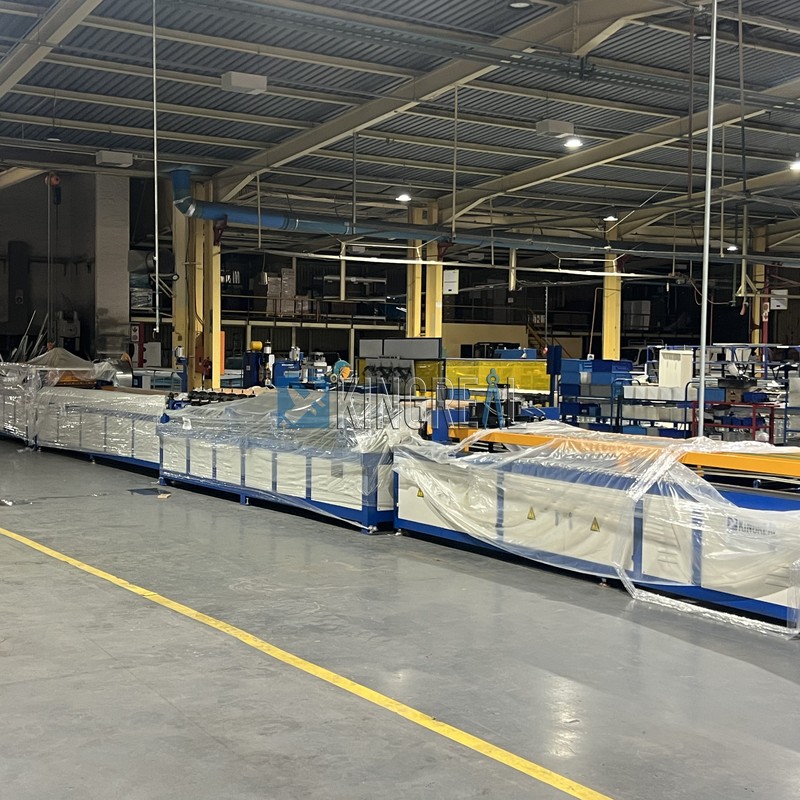
The KINGREAL team recently completed the on-site delivery of damper forming production lines.
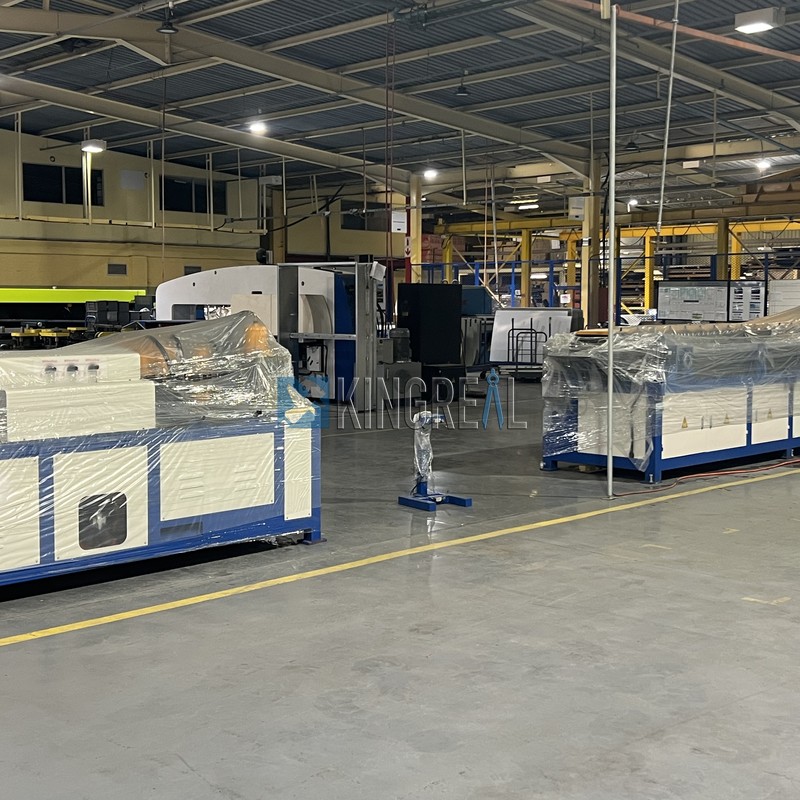
KINGREAL dispatched professional engineers to South Africa to handle the on-site installation and training for the complete line, which includes a ◀ fire damper frame machine, a plug-in type VCD making machine, and a HVAC damper rivet table▶.
Damper Forming Production Line Installation
1. Physical Inspection and Inventory Check
Upon arrival at the client's factory in South Africa, KINGREAL engineers collaborated with the local handling team to unpack the crates shipped by sea. They conducted detailed visual and preliminary functional inspections of the main machine components—including rollers, hydraulic pump stations, PLC control cabinets, and servo motors—to ensure there was no damage caused by impact or moisture.
2. On-site Layout Optimization
The South African factory had specific constraints regarding space and power distribution. Instead of blindly following the blueprints, KINGREAL engineers inspected the raw material storage area, operator stations, and finished product stacking zones. They fine-tuned the machine layout to align with the local workers' production habits and used heavy lifting equipment, such as forklifts, to position each unit precisely.
3. Electrical and Pneumatic Connections
Once the physical positioning was complete, the installation moved into the complex wiring phase. KINGREAL engineers methodically connected the power supply in compliance with local standards and simultaneously installed the communication shielding cables between PLCs.
Additionally, they meticulously connected and leak-tested the pneumatic circuits for the damper forming production line's pneumatic actuators, laying a solid foundation for subsequent automated operation.
Damper Forming Production Line Commissioning
1. Parameter Initialization and Logic Verification
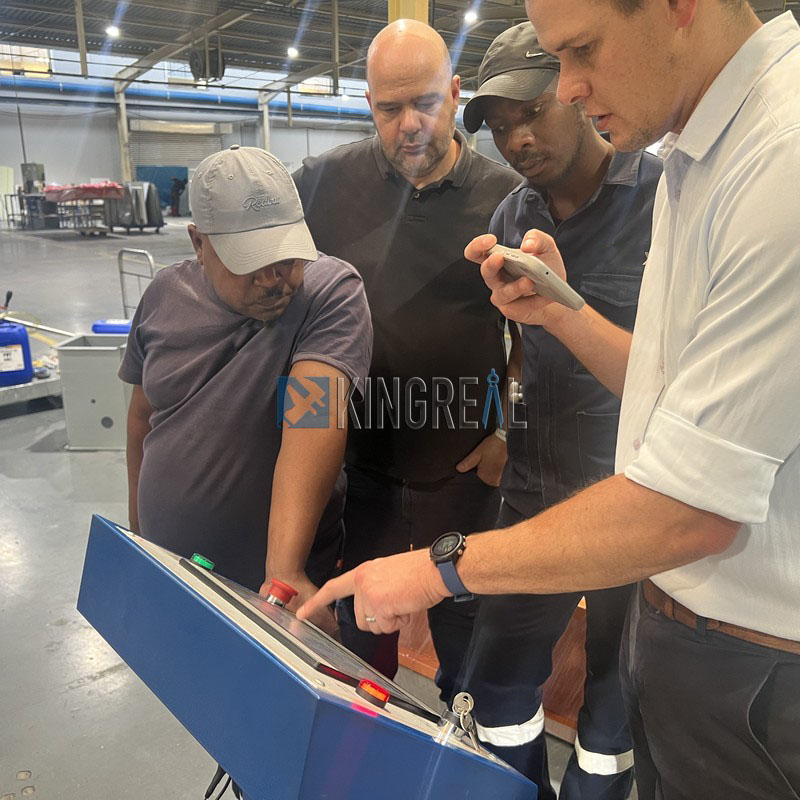
After powering up the system, KINGREAL engineers entered the specific parameters required by the South African client—such as sheet thickness, yield strength, and target cut length—into the HMI.
Subsequently, they conducted comprehensive tests on the PLC logic programs, verifying the manual/automatic mode switching, emergency stop button responsiveness, and the accuracy of sensor signals.
2. Trial Run and Raw Material Loading
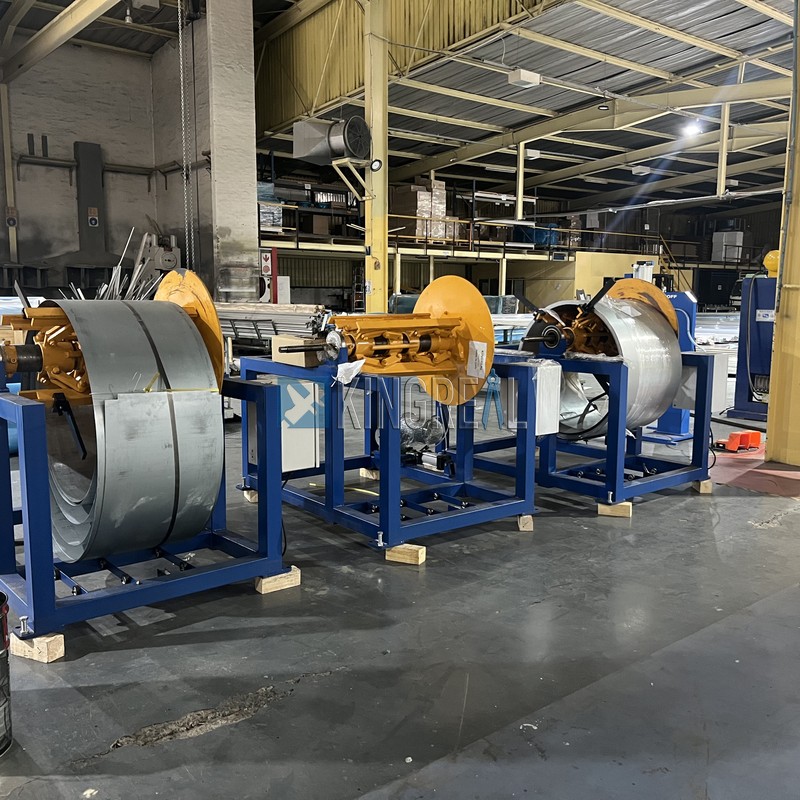
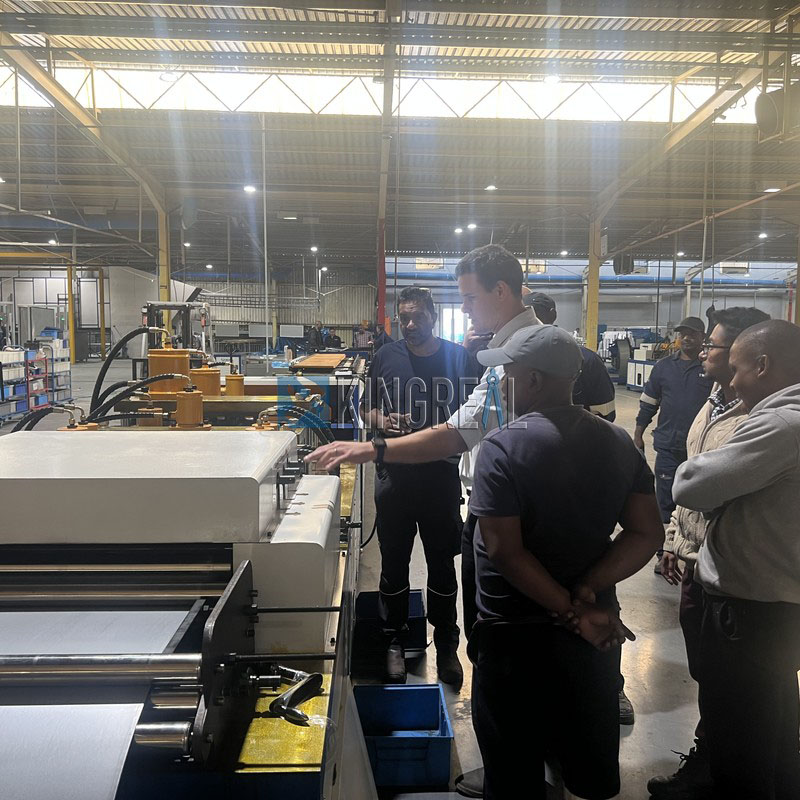
Before commencing formal production, KINGREAL engineers guided the cold-rolled metal coil into the feeding mechanism. During the trial run, engineers closely monitored the compression of the sheet metal by the forming rollers.
By incrementally adjusting the radial clearance of each roller set, they ensured that the material underwent continuous bending deformation without surface indentations, wrinkling, or twisting.
3. Stability Optimization and Technical Exchange
To account for potential voltage fluctuations or ambient temperature variations at the South African plant, engineers fine-tuned the hydraulic system's pressure stability, ensuring consistent operation of the cutting module at high speeds.
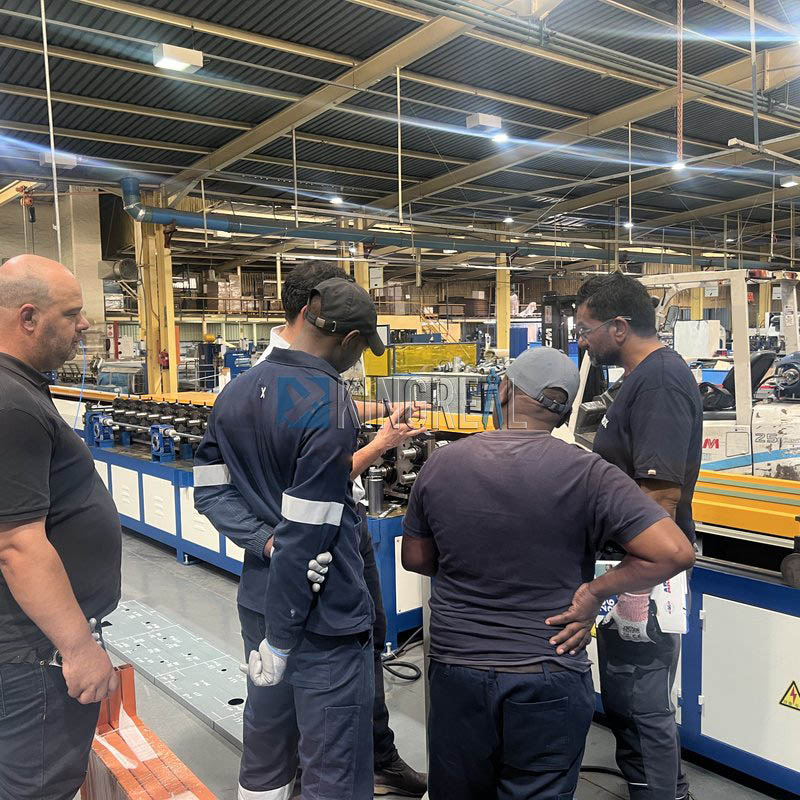
During commissioning, technical managers from the South African client engaged in in-depth discussions with KINGREAL engineers regarding spring-back coefficient adjustments for different materials, further optimizing the robustness of the production process.
Finished Product Inspection and Assembly
1. Geometric Accuracy and Surface Inspection
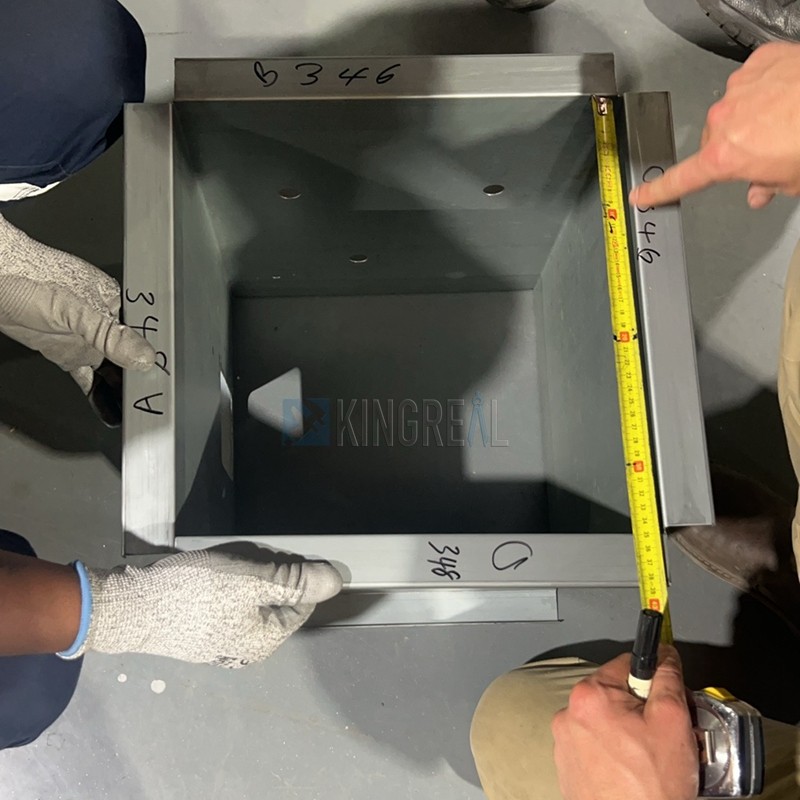
Following automated shearing, KINGREAL engineers randomly selected multiple sample sets for technical inspection:
-Dimensional Accuracy: High-precision calipers and laser distance meters were used to verify that length deviations remained within ±0.5 mm and that diagonal tolerances met the squareness requirements for the damper frame.
-Edge Quality: Particular attention was paid to checking for significant burrs in the punched areas and at the cut ends, as these factors affect the damper's corrosion resistance during operation and the installation of sealing strips.
-Flatness: Ensuring that large-sized outer frames exhibited no noticeable warping after forming, thereby meeting on-site installation standards for ventilation projects.
2. Finished Product Mock-up Test
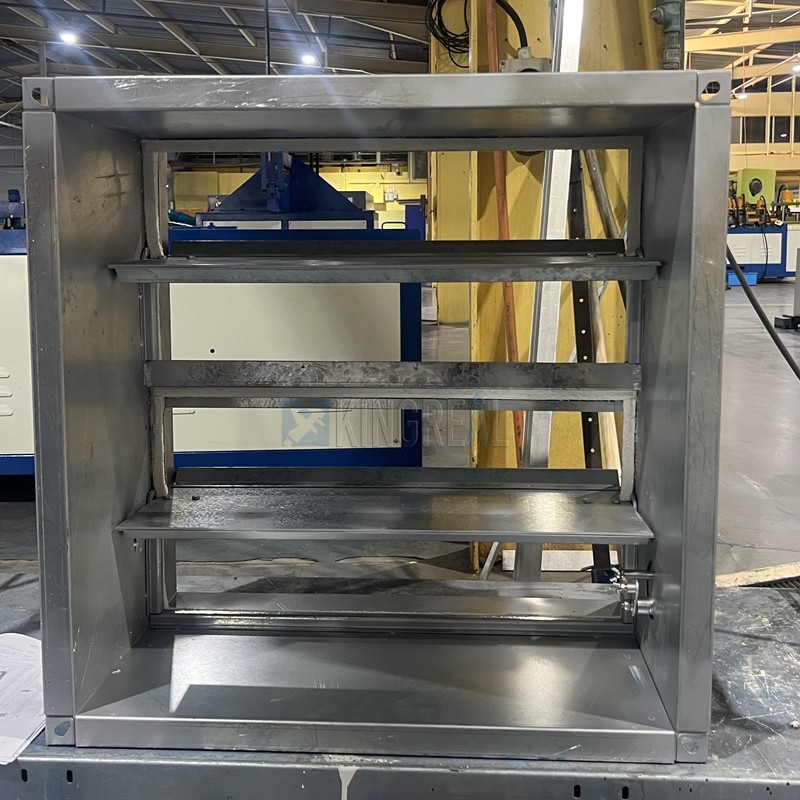
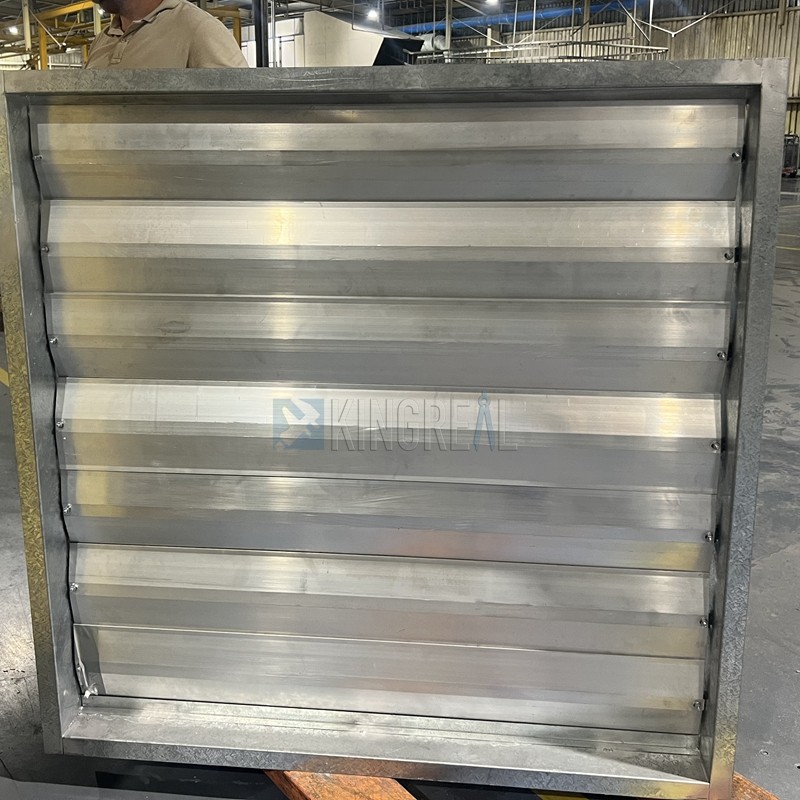
To verify the fit tolerances between the manufactured components, KINGREAL engineers guided local workers in fully assembling the finished products, checking the flexibility of the shaft-hole fit and the overlap amount after closure.
Damper Forming Production Line Operation Training
1. Standard Operating Procedure Training
KINGREAL engineers developed a set of standardized operating guidelines for the South African team, covering:
-System Startup and Warm-up: Key inspection points prior to daily startup, including hydraulic oil levels, roller lubrication, and sensor cleaning.
-Parameter Switching and Management: How to quickly switch production specifications for different orders via the PLC interface and how to save custom recipes.
-Shutdown and Safety Protocols: Handling procedures for abnormal alarms and emergency shutdown sequences.
2. Mold Changing and Maintenance Skills
KINGREAL engineers focused on demonstrating techniques for the rapid adjustment of forming molds and methods for compensating for hydraulic cutter wear.
Through on-site instruction, the South African workers mastered the essentials of preventive maintenance—a crucial factor in extending the damper forming production line's service life.
3. Hands-on Practice and Assessment
Following the demonstrations, KINGREAL engineers required each South African operator to independently carry out the entire workflow—from startup, parameter input, and continuous production to finished product inspection—under supervision.
The engineers officially declared the installation project a complete success only after every worker demonstrated the ability to operate the damper forming production line proficiently and in accordance with standard procedures.
This trip to South Africa was more than just a machinery installation; it served as an opportunity for KINGREAL to build deep strategic trust with an overseas client.
The South African client expressed sincere admiration for the engineers' technical rigor and strong sense of responsibility.
They recognized that KINGREAL provides not merely advanced automated damper forming production line, but a comprehensive, mature production system backed by reliable after-sales support.
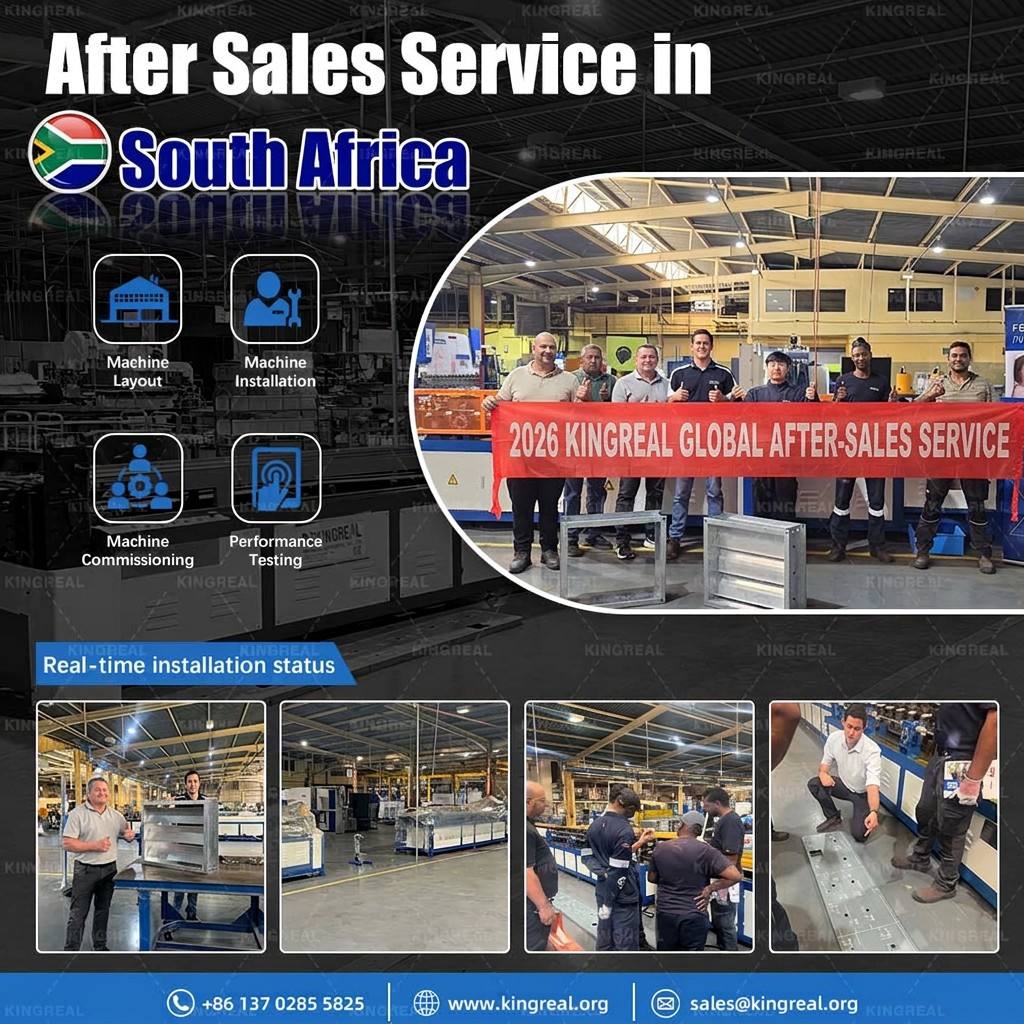
The completion of the installation marks only the beginning of the service journey. Moving forward, KINGREAL global after-sales system will continuously monitor the production line's operational data.
Through online remote assistance and a regular follow-up mechanism, KINGREAL ensures that the South African client receives timely technical support for every order.