
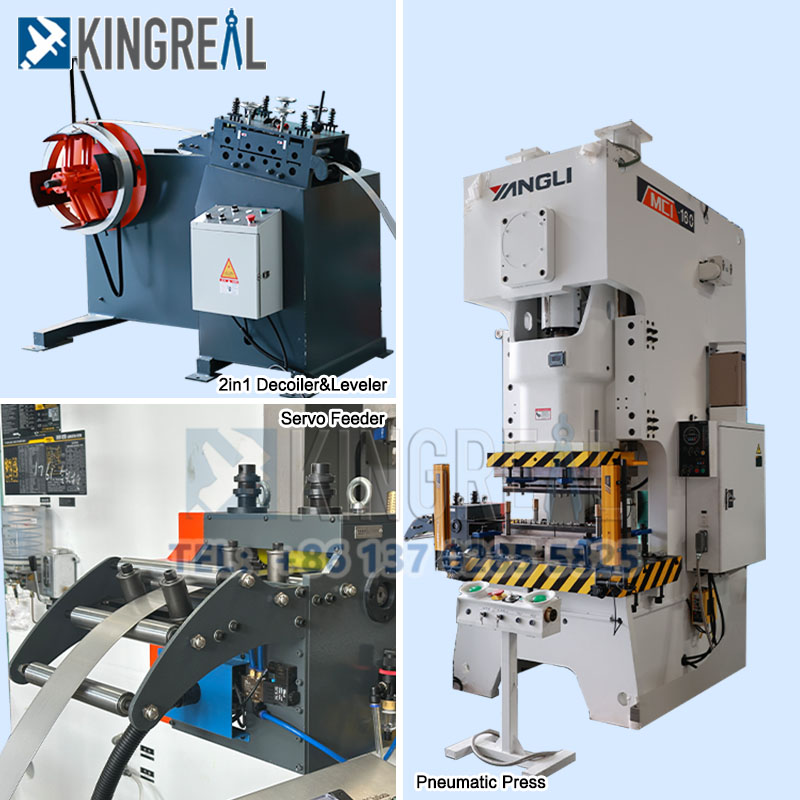
A coil fed stamping line is primarily used to process metal coils directly into high-precision finished parts. The core logic of the coil fed stamping machine involves integrating uncoiling, straightening, feeding, and stamping processes into a single continuous production line, transforming raw coil stock into finished parts.
Precision Functional Modules of Coil Fed Stamping Line
-Decoiler: Supports the metal coil and unwinds it smoothly.
-Leveler: Eliminates "coil set" (residual curvature stress) formed during storage, ensuring the material enters subsequent processes in a flat, straight condition.
-NC Servo Feeder: Uses a servo motor to precisely control the feed pitch (step distance) for each cycle, advancing the material into the die area.
-Stamping Press: Provides the necessary tonnage and pressure, working in conjunction with the die to perform physical deformation and cutting operations.
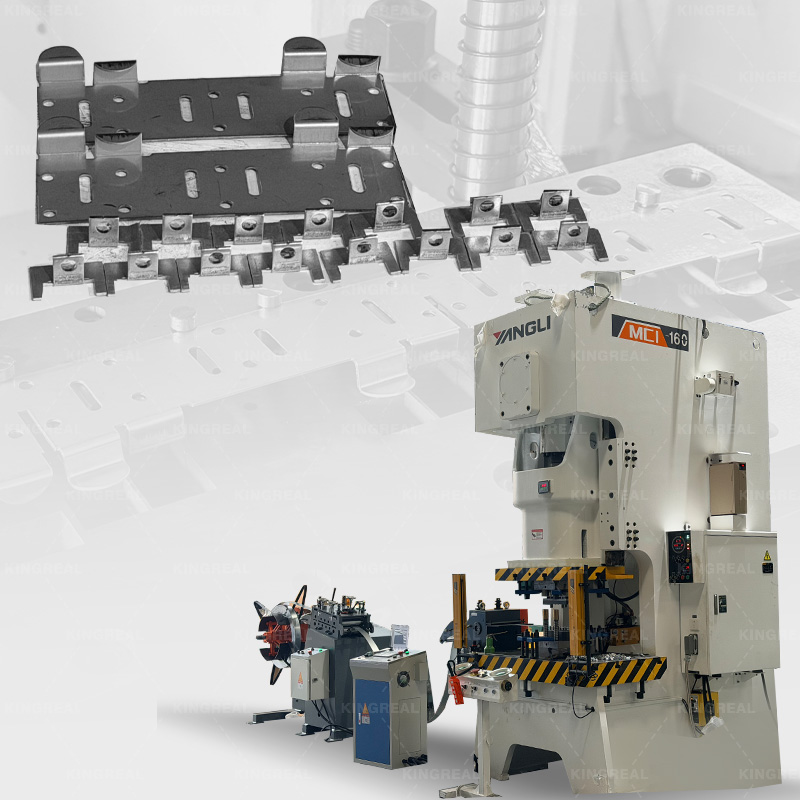
Design Logic of Coil Fed Stamping Line
The primary function of a coil fed stamping machine is to transform metal strip stock into a predefined part geometry through the interaction of the press's vertical reciprocating motion and a precision die.
1. Application of Progressive Dies
Coil fed stamping lines are typically equipped with progressive dies. The design of a progressive die allows for multiple work stations to be arranged within a single die set. As the metal strip passes through the die, each station performs a specific operation:

-Punching: Removing excess material to create holes.
-Bending: Altering the material angle to create three-dimensional structures.
-Embossing: Creating raised or recessed markings or textures on the material surface.
-Forming: Altering the local shape without reducing material thickness.
-Drawing: Stretching flat material into cup-shaped or deep-cavity structures.
-Blanking: Completely shearing the finished part from the strip at the final station.
Throughout the process, the part remains attached to the strip until the final station, ensuring the continuity of automated feeding.
2. Factors to Consider in Coil Fed Stamping Machine Design
Designing an efficient coil-fed stamping line requires a multi-dimensional technical assessment:
- Finished Part Specifications: The part's geometry, dimensional tolerances, and critical quality control points must be clearly defined. Tolerance requirements dictate the precision class of the feeder and the die.
- Strip Layout: This is the heart of die design. It defines the feed direction, strip width, station pitch, carrier type, pilot hole locations, and scrap layout. An optimized layout can significantly improve material utilization.
- Material Specifications:
Thickness and Width: Determine the physical capacity requirements for the feeder and straightener.
Material Grade and Mechanical Properties: Properties such as yield strength and tensile strength influence the selection of the stamping press tonnage.
Condition and Coating: Determine die hardness requirements and lubrication system configuration.
Lubrication Requirements: High-speed stamping generates significant heat; an integrated automatic lubrication system is necessary to extend die life and improve the surface quality of the finished product.
Benefits of Coil Fed Stamping Lines for Modern Manufacturing
As the manufacturing industry increasingly demands higher efficiency and precision, coil fed stamping lines have become the preferred solution for sectors such as automotive, home appliances, electronics, and hardware manufacturing.
1. Exceptionally High Production Efficiency
Coil fed stamping machines enable continuous operation. Servo feeding technology supports high stroke rates without the need for manual intervention. This coil to finished part process drastically reduces the accumulation of work-in-progress inventory and material handling time.
2. Guaranteed Precision and Consistency
Because the entire coil fed stamping machine operates under the control of a unified PLC system, errors in feed pitch and stamping depth are kept to a minimum. The combination of NC feeders and in-die pilot pins ensures that complex parts maintain strict geometric tolerances even after passing through a dozen or more processing stations.
3. Reduced Unit Costs
Although the initial investment in equipment is substantial, the per-unit processing cost offers a strong competitive advantage in long-term production runs, thanks to improved material utilization, reduced reliance on manual labor, and lower defect rates.
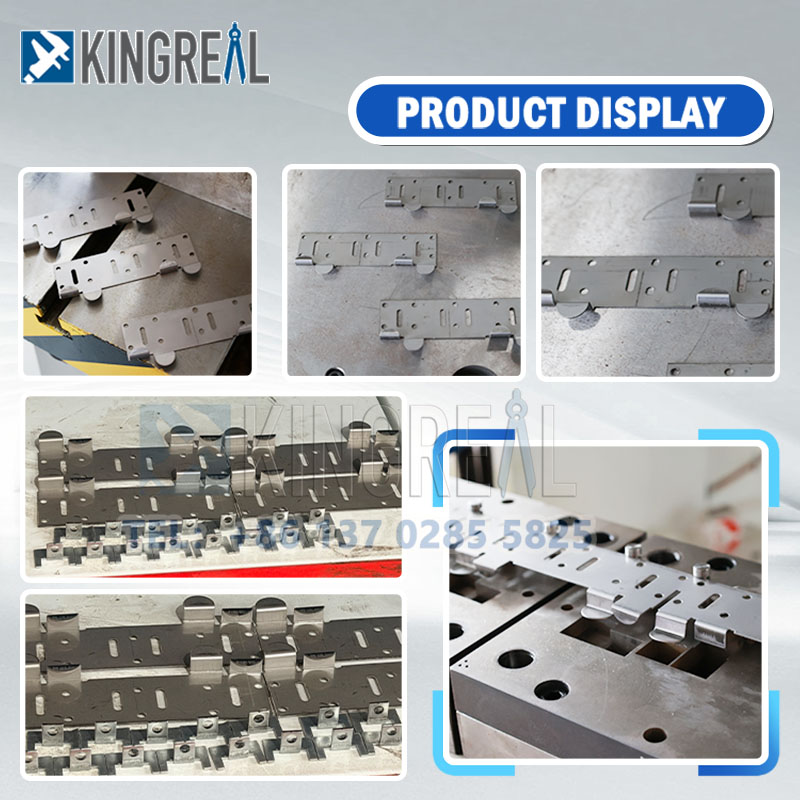
The successful implementation of a coil fed stamping line relies on the deep integration of mechanical design, materials science, and die technology.
Each coil fed stamping machine is custom-engineered to meet the client's specific product requirements, ensuring an optimal return on investment.
KINGREAL possesses extensive technical expertise in the field of coil fed stamping lines and has successfully completed projects for clients in countries such as Saudi Arabia, Turkmenistan, and Russia.
For detailed technical specifications or customized solutions, please contact KINGREAL team of professional engineers directly.