
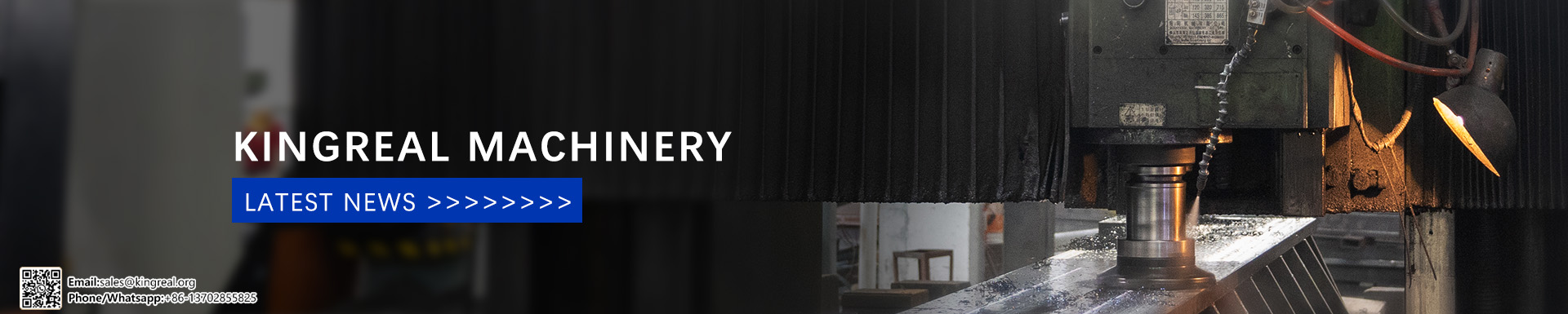
In the construction of HVAC systems for modern commercial and industrial buildings, steel and aluminum C purlins and Z purlins—produced by CZ purlin roll forming machines—have become critical components for installation.
These standardized, high-precision purlins offer high strength, versatility, and stability. They serve as functional mounting platforms for building roofs and walls, specifically designed to support insulation layers and the suspension of HVAC infrastructure such as ventilation ducts, air conditioning lines, and fan units, thereby significantly enhancing the standardization and safety of HVAC system installations.
Metal purlin roll forming machines can produce customized C purlins and Z purlins in various specifications to meet specific construction needs. With precise dimensions and uniform structural integrity, these profiles fit perfectly with diverse roof structures, providing a stable load-bearing foundation for laying insulation, suspending air ducts, and securing equipment.
Application of CZ Purlin Roll Forming Machines in HVAC Systems
By producing standardized C purlins and Z purlins, CZ purlin roll forming machines provide dedicated suspension and support systems for HVAC air ducts and auxiliary equipment. In practical engineering applications, these machine-formed purlins serve as the primary structural elements for duct suspension; construction personnel can use specialized connecting plates and bolts to secure duct hangers to the purlin webs, enabling stable, suspended duct installation.
It is important to note that the load-bearing capacity for suspended HVAC ducts is not a fixed value; structural calculations must be performed based on the specific parameters of the purlins produced by the metal purlin roll forming machine. Precise load-bearing thresholds are determined by four key factors: purlin material (e.g., carbon steel, aluminum alloy, galvanized steel), cross-sectional specifications, span, and spacing. These calculations ensure that the combined load—comprising the duct's dead weight, dynamic loads from internal airflow, and additional equipment loads—remains within the purlin's capacity, thereby preventing safety hazards such as deformation or detachment.
In terms of overall structural logic, the steel purlins produced by the CZ purlin roll forming machine serve a dual purpose: they act as the primary structural support for the building's roof and walls, and they function as the core load-bearing framework for HVAC systems. The stable operation of HVAC air ducts relies entirely on the integrity of the CZ purlin structure; a robust purlin framework ensures orderly duct layout and unobstructed airflow paths, preventing duct deformation or misalignment that could compromise air circulation efficiency.
Furthermore, the routing and spacing of HVAC ducts must align with the layout of the CZ purlins. Installing ducts along the direction of the purlins not only simplifies the installation process and reduces construction complexity but also facilitates future inspection, maintenance, and modification of the HVAC system. The combined load of the ducts and equipment is evenly transferred to the building's primary steel structure via the purlins formed by the metal purlin roll forming machine, ensuring stable load distribution and the long-term safe operation of the HVAC system.
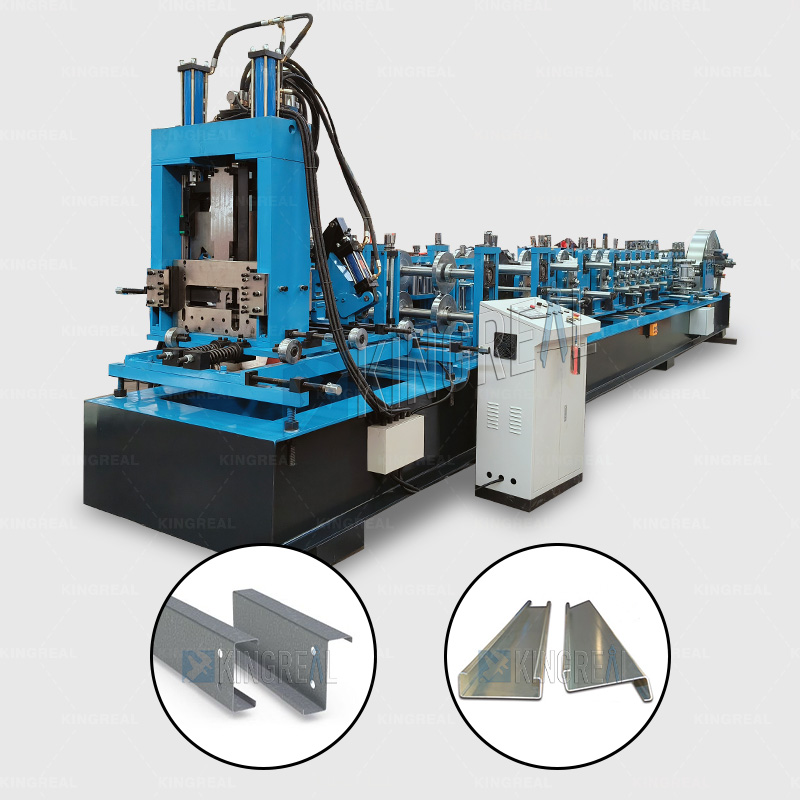
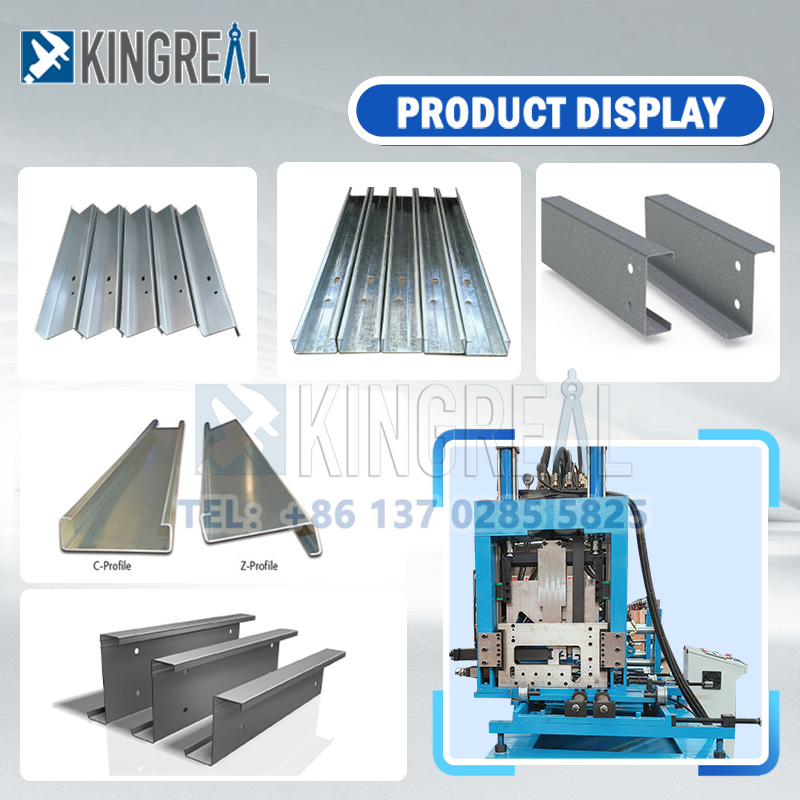
Display About CZ Purlins:
Key Considerations for Selecting Purlins in HVAC Systems
During the design and construction of HVAC projects, the specific profiles produced by the CZ purlin roll forming machine must be selected scientifically, taking into account factors such as roof conditions, load requirements, and available installation space.
1. Selecting Purlin Height
Purlin height is a critical dimensional parameter determining HVAC support performance and a key metric for configuring the metal purlin roll forming machine. Generally, a greater cross-sectional height in purlins produced by the CZ purlin roll forming machine results in superior flexural rigidity and resistance to deformation, enabling them to support heavier duct loads and span greater distances.
For HVAC applications involving large-span roofs or long duct runs, the metal purlin roll forming machine should be configured to produce purlins with greater cross-sectional heights; this effectively controls deflection and resists wind and static equipment loads, ensuring the ducts remain stable and free from deformation or vibration.
2. Selection of Purlin Thickness
CZ purlin roll forming machines can process steel and aluminum purlins of varying thicknesses. Greater profile thickness enhances resistance to local deformation and improves the strength of bolted connections, allowing the purlins to support heavier HVAC ductwork and building envelope components; this makes them suitable for HVAC installations involving high wind loads, long spans, and heavy equipment.
In engineering applications, if an HVAC system incorporates large air ducts, thick insulation layers, or roof-mounted fan units, the metal purlin roll forming machine should be used to produce thicker purlins. This prevents issues such as structural deformation or bolt loosening caused by long-term loading. Consequently, the production thickness parameters of the machine must be precisely set based on the HVAC system's load rating, roofing environment, and durability requirements.
3. Selection of Flange and Lip Dimensions
Because cold-formed purlins produced by CZ purlin roll forming machines have relatively thin walls, they possess lower resistance to local deformation compared to traditional hot-rolled steel beams. If the flanges are too narrow or the lip dimensions are poorly designed, the purlins are susceptible to twisting, local buckling, or installation damage under the sustained load of HVAC ductwork. However, purlins produced by a precisely calibrated metal purlin roll forming machine feature optimized flange-to-lip ratios; this effectively increases the component's overall rigidity, expands the contact area for bolted connections, and enhances the stability of duct suspension points.
Therefore, purlin flange and lip dimensions must be determined through structural engineering calculations—rather than visual estimation—to ensure the safety of the HVAC support system.
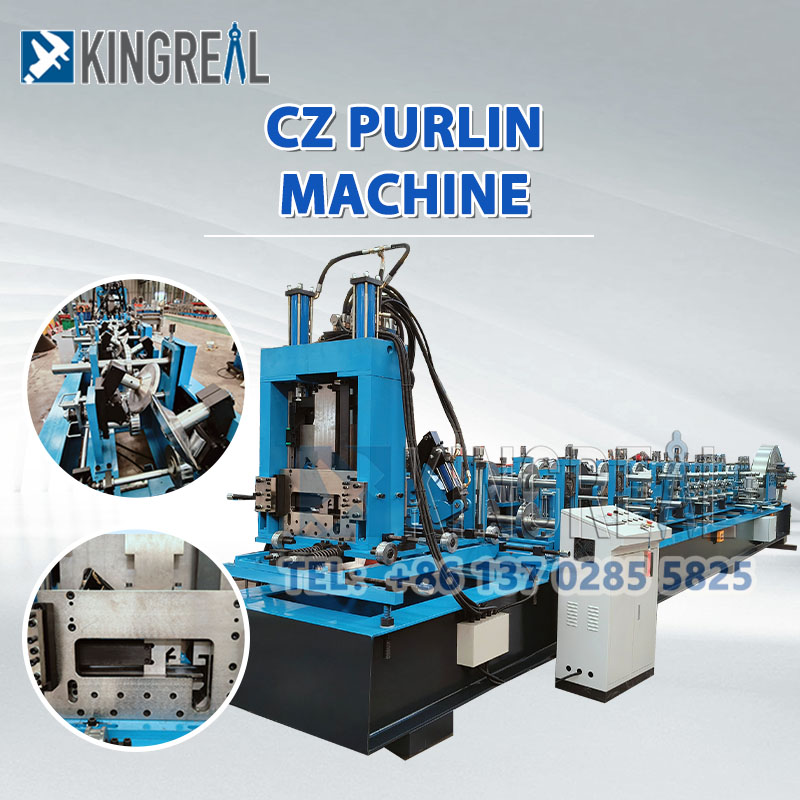
For more information on custom production solutions for CZ purlin roll forming machines and application techniques for HVAC systems, please contact KINGREAL directly to receive professional technical support and comprehensive solutions.