
Roll forming machines utilize multiple sets of forming rollers to continuously bend and shape various metal materials—such as aluminum, stainless steel, and carbon steel—into profiles with specific cross-sections. These roll forming machines are widely used across industries including construction, photovoltaics, and building materials.
The core technology and operational logic of these roll forming machines are highly standardized; each unit typically comes equipped with a decoiler, a leveling machine, the main forming unit, and a cutting station. This configuration enables an integrated, automated production process that spans from flattening raw metal sheets and continuous forming to cutting the profiles to precise lengths.
Roll forming machines are categorized into various types based on application scenarios, processing materials, and product specifications, with differences in machining precision, material thickness compatibility, and functional capabilities. This article details five common types of roll forming machines found on the market, comprehensively explaining their equipment characteristics and practical applications.
Five Common Types of Roll Forming Machines and Their Applications
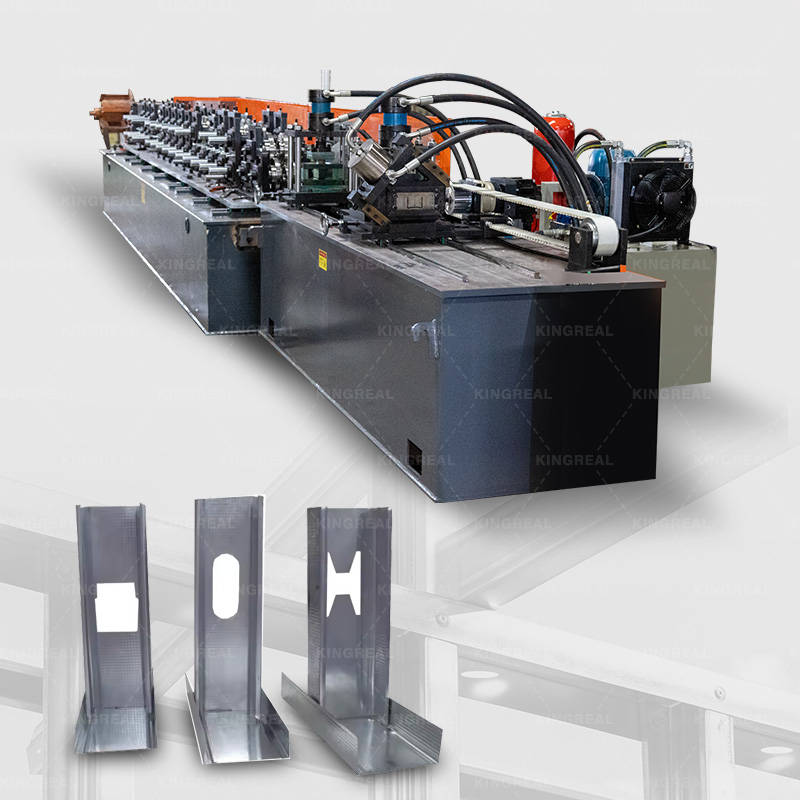
These stud and track machines produce studs and tracks used for constructing interior partition walls. To meet diverse construction requirements, they are available in light-duty and heavy-duty specifications, each designed for specific material thickness ranges.
Light-duty stud and track machines process metal sheets with thicknesses of 0.35–0.9 mm, making them suitable for standard interior partition wall construction. Heavy-duty stud and track machines process sheets with thicknesses of 0.8–1.2 mm, meeting the requirements for load-bearing partition walls.
KINGREAL stud and track machines offer enhanced functionality; they can be integrated with auxiliary equipment—such as packaging machines and inkjet devices—to combine profile forming, marking, and automatic bundling into a single, streamlined process.
To address specific overseas construction requirements—such as those in the US, where profile thickness standards are higher—KINGREAL stud and track machines can be customized and upgraded. They can handle metal materials up to 2.0 mm thick and comply with construction standards across multiple countries, offering exceptional versatility.
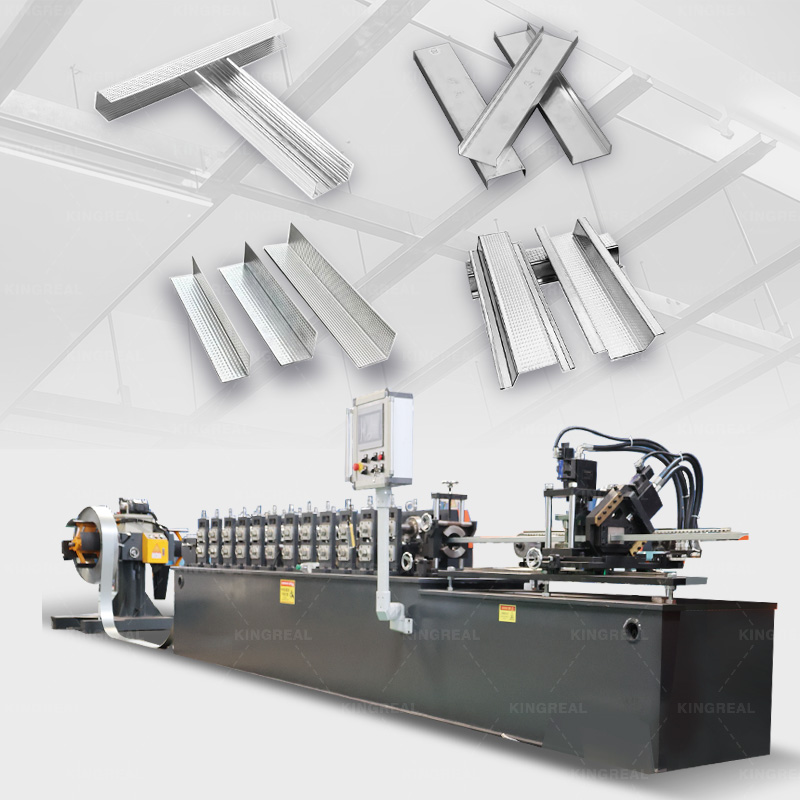
Metal ceiling channel machines includes hat channel machine, main roll forming machine and wall angle roll forming machine. Each type produces specific profiles used as the essential structural framework for suspended ceiling installations.
To address customers' needs for multi-category production, KINGREAL has repeatedly optimized and upgraded this metal ceiling channel machine, launching dual-station and 3-in-1 models. These multifunctional metal ceiling channel machines offer outstanding performance; a single unit can simultaneously produce two or even three different types of false ceiling channels, significantly saving on equipment procurement costs and factory floor space.
Furthermore, KINGREAL metal ceiling channel machines not only produce standard CD and UD profile, but can also be customized and calibrated to meet regional construction standards across different countries. This allows for the production of specialized, niche profiles unique to specific markets, ensuring the machinery adapts to the diverse requirements of false ceiling channel projects worldwide.
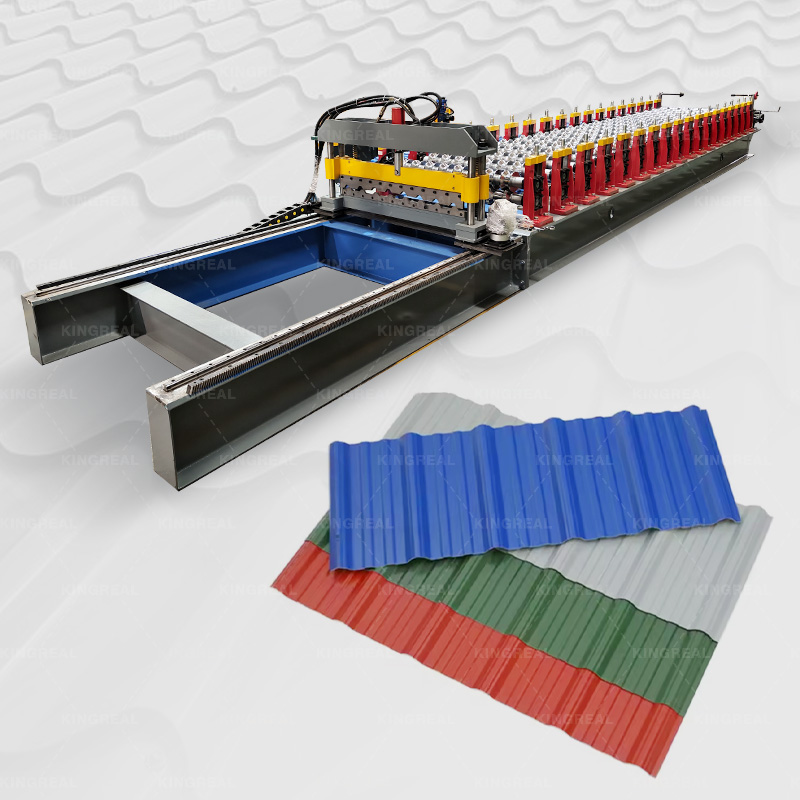
The metal roofing machine is the core forming unit for metal roofing systems. It can process a wide range of profiles—including IBR roof panels, glazed tiles, corrugated roof sheets, ridge caps, gutters, downpipes, floor decks, and standing seams—for use in industrial and civil metal roofing projects.
KINGREAL offers personalized customization for these metal roofing machines; technicians can tailor the machine structure, roller parameters, and control systems to specific project conditions and product specifications. Multiple units can also be integrated to form a complete roofing profile production line.
While standard metal roofing machines on the market typically operate at 12 m/min, KINGREAL high-speed models reach speeds of up to 40 m/min. This capability meets the demands of large-scale, high-volume orders while balancing production precision with efficiency.
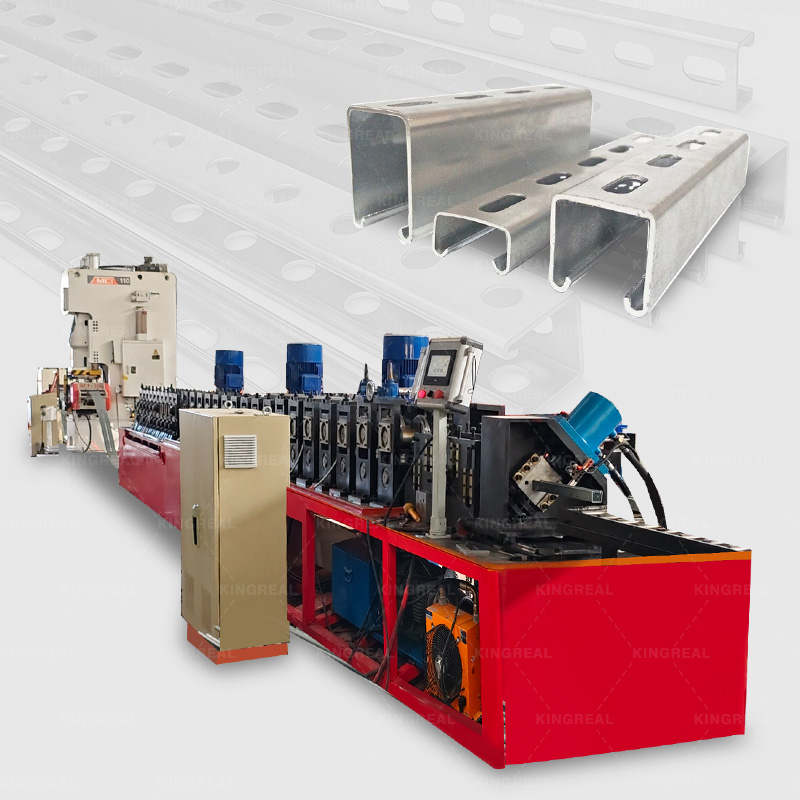
Designed for the new energy sector, these solar channel machines primarily produce standard unistrut channels—such as 41×21, 41×41, 41×62, and 41×82 mm sizes—serving as core equipment for constructing PV power plants.
To meet mounting installation requirements, the solar channel machines can be equipped with hydraulic or pneumatic punching units, enabling precise punching of holes to standard specifications during the metal profile forming process.
By adjusting machine parameters, the solar channel machine can produce unistrut channels with features like serrations or reinforcing ribs, thereby enhancing the structural stability of the mounting system.
The solar channel machine is available in single-specification and multi-specification models, allowing customers to select the right machine based on their specific production needs.
Additionally, the solar channel machine can be paired with an automatic packaging unit to integrate profile forming, interlocking, and automatic stacking into a single, fully automated workflow.
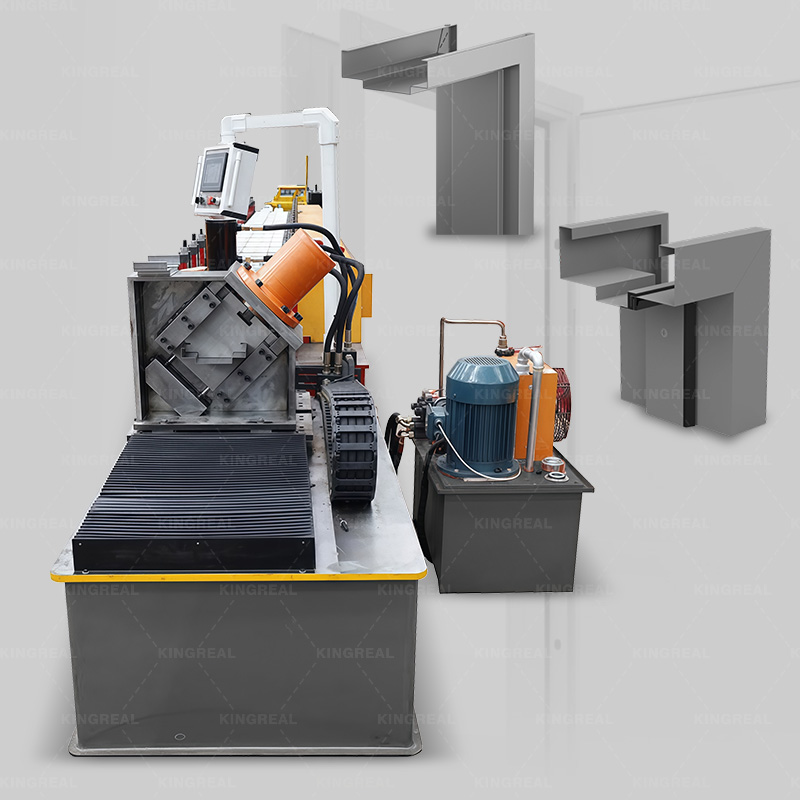
The door frame making machine is capable of processing various metal materials, including galvanized steel, carbon steel, stainless steel, and copper. Designed to meet international door and window industry standards, it produces metal door frame profiles ranging from 120mm to 250mm in width, accommodating diverse door opening sizes and wall structures.
This door frame making machine supports customized production with flexible parameter adjustments. The resulting steel door frames fit precisely against various architectural wall types, providing robust structural support.
The formed metal frames offer high structural strength and stability, effectively enhancing the door's overall load-bearing capacity and durability. Highly versatile, the product meets the door frame requirements of various building types, including shops, apartments, office buildings, and high-end residences.
Benefits of Using Roll Forming Machines
Thanks to their automated and standardized production modes, these roll forming machines have become the primary equipment for modern metal profile processing.
1
Increased Production Efficiency
Utilizing a continuous roll-forming process, the roll forming machine operates stably and uninterruptedly for extended periods without the need for frequent stops or adjustments.
It enables rapid batch production of metal profiles, significantly accelerating the production pace, increasing output within the same time-frame, and effectively shortening production cycles.
2
Consistent Product Quality Improvement
Processing is driven by precision roller sets and CNC control systems, ensuring extremely high forming accuracy.
The roll forming machine strictly controls the dimensions, curvature, and specifications of every profile, guaranteeing uniform standards and minimal tolerances across all finished products. This eliminates issues such as dimensional deviations and deformation often associated with manual processing, thereby ensuring consistent product quality.
3
Greater Production Flexibility
Machine parameters are highly adjustable. Without the need to purchase new equipment or modify existing machine, operators can simply adjust roller spacing, forming parameters, and cutting lengths to produce profiles of various shapes and specifications.
A single machine can thus meet the production needs for a wide range of products.
In addition to the five types of roll forming machines mentioned above, KINGREAL offers specialized roll forming machines tailored to a wider range of industries, capable of meeting processing requirements for metal profiles of various specifications across different sectors.
Please feel free to contact KINGREAL for further information on equipment specifications and customized solutions.