
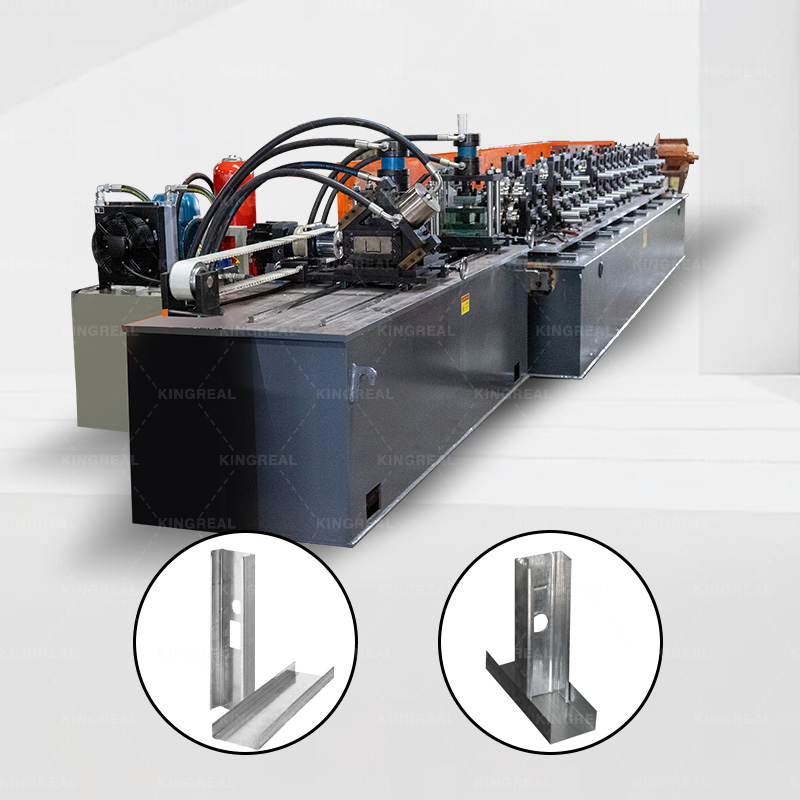
In the modern construction industry, drywall profile machines are primarily used to manufacture steel studs and tracks.
These fully automated drywall profile making machines typically integrate multiple functional modules, such as uncoiling, forming, punching, and cutting.
Establishing a standardized maintenance protocol is crucial to ensuring long-term, stable operational efficiency and minimizing production losses caused by downtime for maintenance.
Below is a detailed technical guide for the maintenance of drywall profile machines.
I. Cleaning and Management of the Production Environment and Machine Surfaces
Pre-start Inspection: Before starting the drywall profile making machine each day, operators must check for foreign objects (such as bolts, offcuts, or metal debris) between the rollers and in the drive chain area. If foreign objects enter the rollers along with the steel strip, they can cause scratches or indentations on the roller surfaces, resulting in recurring surface defects on the finished studs and tracks.
Post-shutdown Cleanup: Waste material around the drywall profile machine must be cleared before the end of each shift. In particular, metal debris generated at the punching and cutting stations can—if allowed to accumulate—block mold discharge ports and cause punch breakage.
Oil and Grime Removal: Oil residue accumulated during prolonged operation attracts airborne dust, forming an abrasive paste that accelerates wear on bearings and sliding components. Industrial cleaning agents should be used regularly to wipe down the drywall profile machine body and guide rails, keeping the metal surfaces clean.
II. Lubrication System: Scheduled Maintenance and Selection
The lubrication system is critical for reducing mechanical wear, lowering energy consumption, and preventing metal corrosion. Lubrication for drywall profile machines generally involves both manual application and automatic systems.
Rollers and Main Shafts: Roller bearings typically withstand significant radial pressure. Molybdenum disulfide grease should be applied every 24–48 operating hours, depending on usage frequency.
Drive System: Check the oil levels in the gear transmission box and the gearbox. Gear oil should be changed after the initial 500 hours of operation and subsequently every 2,000–3,000 hours. For chain drives, ensure a thin film of oil is maintained on the chain surface.
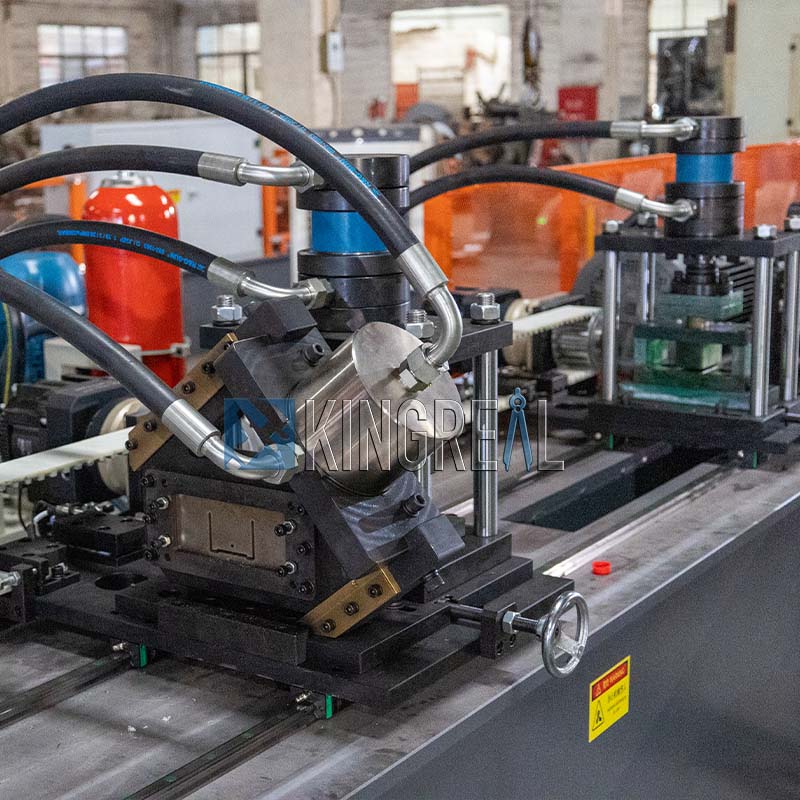
Molds and Guide Pillars: The sliding surfaces of the punching and cutting molds experience the highest frequency of friction. Anti-wear lubricant must be applied during every shift to prevent the guide pillars from seizing or the molds from deforming due to excessive heat buildup.
III. Periodic Verification of Fasteners and Roll Positioning
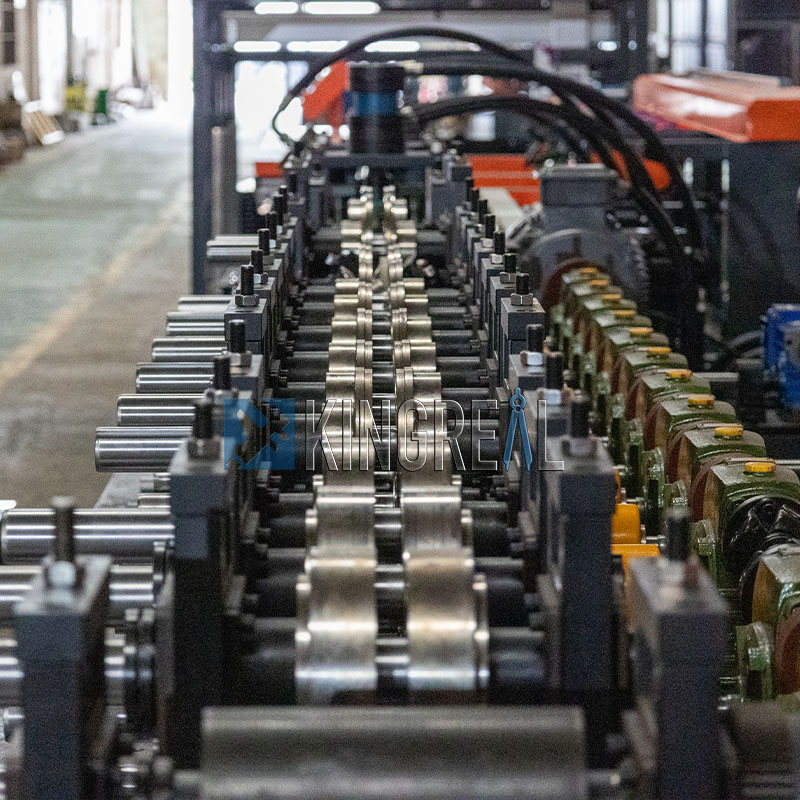
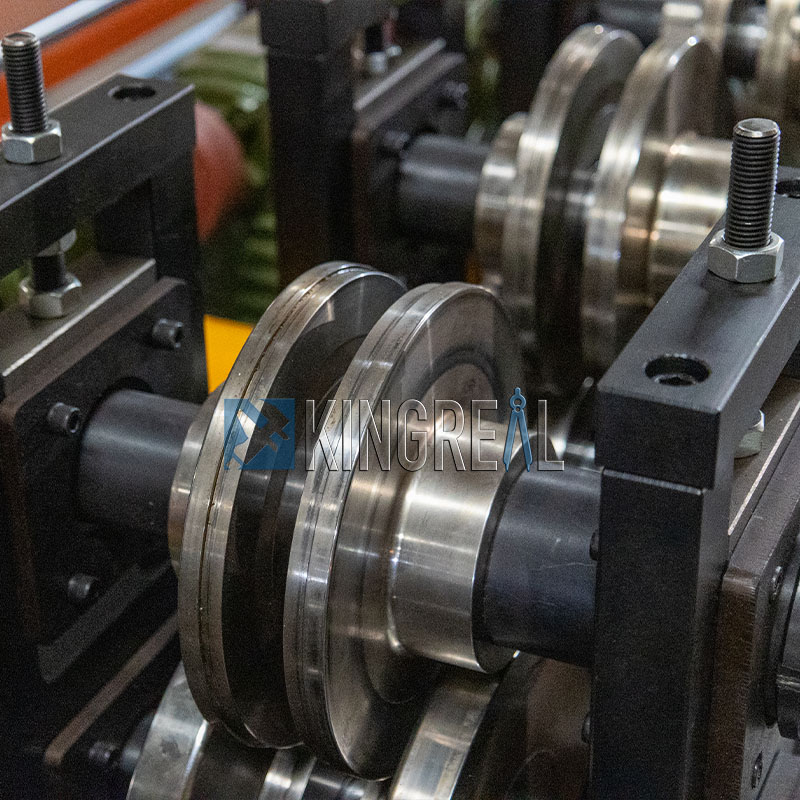
The dimensional accuracy of steel studs and tracks depends largely on the relative positioning of the forming rolls.
Checking for Loose Bolts: As the drywall profile machine operates in a high-vibration environment, base bolts, motor mounting bolts, and roll shaft-end fasteners are prone to slight displacement. Screws at critical locations must be checked and tightened weekly.
Axial Roll Positioning: If the positioning bolts for the rolls loosen, the rolls may shift axially. A shift exceeding 0.5 mm can cause the formed profiles to twist or develop wavy edges. Readjusting misaligned rolls is time-consuming; therefore, preventive tightening is more efficient than post-failure adjustment.
Foundation Leveling: Periodically check the level of the machine base to prevent misalignment of the drywall profile making machine—which can span over ten meters—caused by settlement of the workshop floor.
IV. Hydraulic System Performance Monitoring and Maintenance
Most fully automatic drywall profile machines utilize hydraulic drives for punching and cutting; the stability of the hydraulic system directly determines length accuracy and cut quality.
Hydraulic Oil Replacement: The physical and chemical properties of hydraulic oil degrade over time. The oil should be replaced annually.
Filter Elements and Heat Dissipation: Inspect the suction and return filter elements of the hydraulic pump station to prevent metal particles from clogging the hydraulic valve manifold. Additionally, keep the heat exchanger clean to ensure the oil temperature remains between 30°C and 60°C. Excessive oil temperature can cause seals to age and leak.
Pressure Settings: Strictly avoid arbitrarily increasing the relief valve pressure. While higher pressure might increase cutting speed, it accelerates wear on hydraulic cylinder seals and increases the load on the motor.
V. Repair and Sharpening of Punching and Cutting Dies
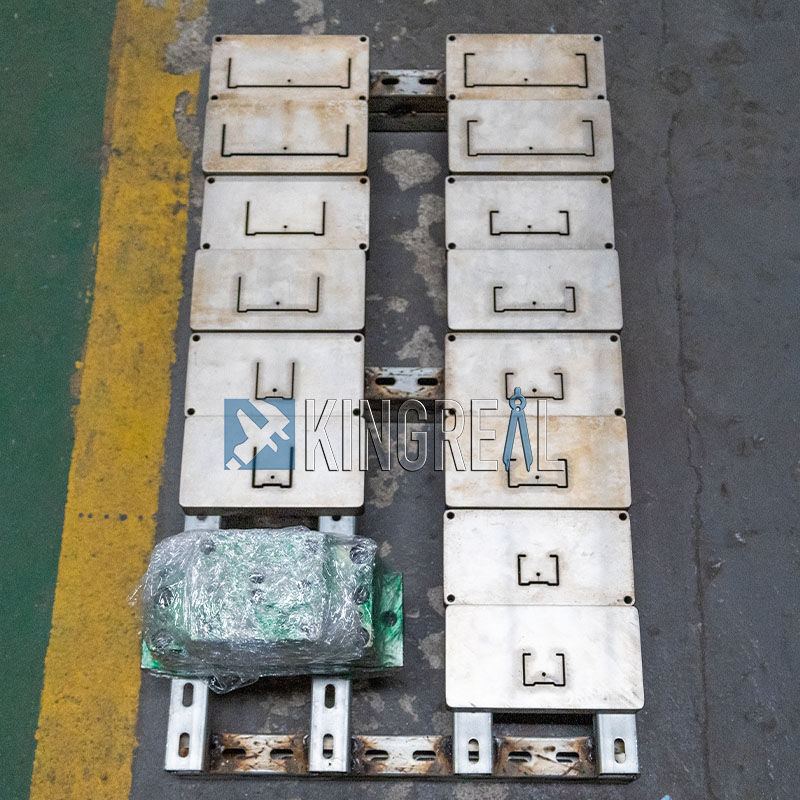
The dies are high-value, consumable components of the drywall profile making machine; their condition directly affects the installation compatibility of the finished profiles.
Assessing Wear: If noticeable burrs appear on the punched edges or the cut surfaces show severe deformation, the die's cutting edges have become dull.
Repair Processes:
-Surface Grinding: Perform surface grinding on the cutting blades and punches to remove the worn layer and restore sharpness.
-Wire-Cut EDM: If the die cavity suffers from chipping or significant geometric deviation, correction via Wire-Cut Electrical Discharge Machining may be required.
Clearance Adjustment: Pay close attention to the punching clearance after sharpening. Excessive clearance leads to burrs, while insufficient clearance can damage the die.
VI. Professional Operator Training and SOP Establishment
Even the most precise equipment requires professional management.
Skills Training: Operators must be proficient in using the PLC control system interface and able to fine-tune roll gaps based on variations in steel strip thickness.
Daily Logging: Maintain an equipment operation log to record daily lubrication status and any abnormal noise or vibration. This helps identify potential issues before a breakdown occurs.
Safety Awareness: Training must cover emergency shutdown procedures; reaching into the roll area for cleaning while the drywall profile machine is running is strictly prohibited.
VII. Manufacturer Collaboration and In-Depth Technical Support
Attempting independent repairs for complex technical issues or control system algorithm malfunctions can exacerbate damage.
Fault Identification: Operators should immediately shut down the drywall profile making machine if serious faults occur, such as servo drive error codes, PLC logic errors, or severe spindle eccentricity.
Manufacturer Support: Promptly contact KINGREAL technical department. Through remote diagnostics or on-site guidance from engineers, production can be restored quickly, and optimization recommendations specific to the machine model can be obtained.
Maintenance of the drywall profile machine is integral to every stage of daily production. Systematic cleaning, lubrication, fastening, hydraulic system management, and die maintenance not only extend the equipment's service life but also ensure that every profile meets the construction industry's rigorous standards.
KINGREAL provides customized maintenance guidelines to customers for every drywall profile making machine sold.
If you encounter any technical questions while operating the equipment or require detailed maintenance tips, please feel free to contact the KINGREAL team; we are ready to provide you with professional support and service.