
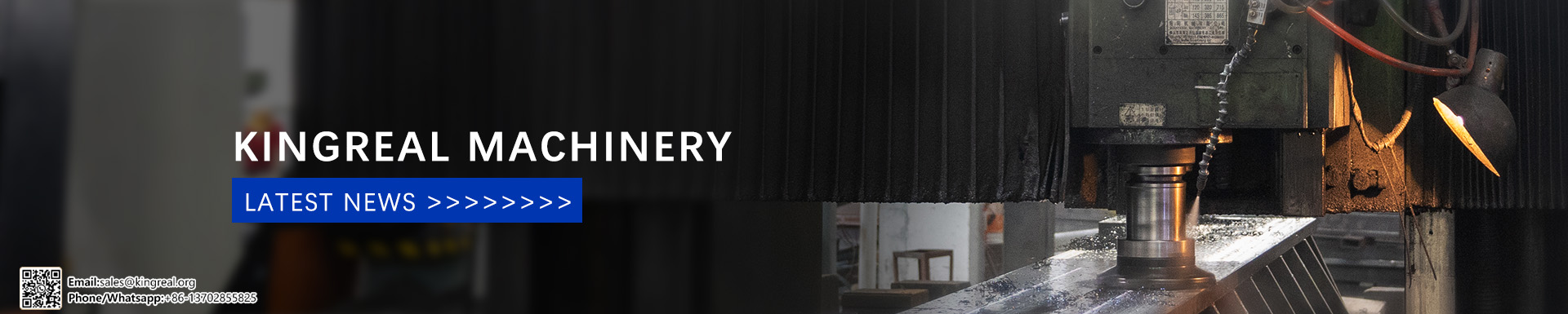
In the metal processing industry, the operating speed of a steel slitting line directly determines a factory's daily throughput and return on investment (ROI).
Currently, industry-leading steel slitting machines can achieve top speeds of 230 m/min while maintaining high slitting quality.
This article provides an in-depth analysis of the technical foundations behind steel slitting lines, focusing on industrial design and automation logic.
I. Mechanical Structure Design and Optimization
1. High-Rigidity Frame and Finite Element Analysis
The steel slitting machine frame utilizes high-strength alloy steel or a monolithic cast base.
During the design phase, KINGREAL engineers employ Finite Element Analysis to simulate the stress states experienced by the equipment during high-speed operation. They optimize the layout of reinforcing ribs to ensure the frame's natural frequency remains well above the excitation frequencies generated during operation, thereby eliminating harmful resonance at the source.
2. Precision Guidance and Roller Bearing Systems
KINGREAL utilizes a precision roller bearing guidance system combined with a preload adjustment mechanism to minimize resistance. Guide surfaces undergo hardening treatment (typically achieving a hardness exceeding HRC 60) and precision grinding, ensuring long-term wear resistance and path linearity at speeds exceeding 200 m/min.
3. G2.5 Grade Dynamic Balancing Technology
For rotating components (such as cutter arbors and guide rollers), dynamic balancing is a critical prerequisite for high-speed operation.
KINGREAL mandates that all key rotating parts meet the G2.5 dynamic balance standard. Computer-aided balancing correction is used to eliminate unbalanced forces during rotation, preventing bearing overheating or premature fatigue failure during high-speed operation.
II. Drive and Control Technology
1. Full Servo Drive Solution
Modern steel slitting lines comprehensively adopt low-inertia, high-torque-density servo motors.
Low-inertia design: Enables the motor to accelerate and decelerate within extremely short timeframes, meeting requirements for emergency stops and smooth entry into the slitting process.
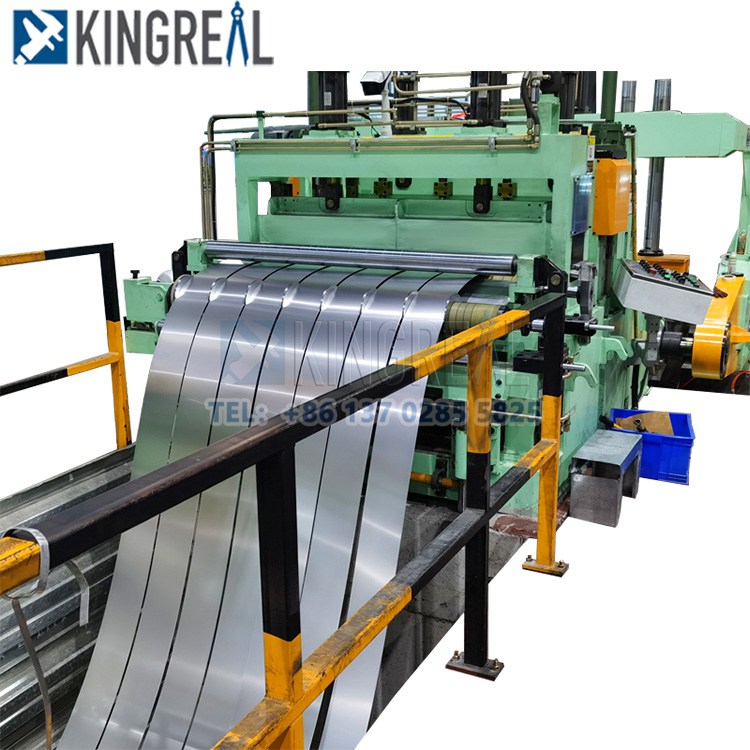
Multi-axis synchronous control: Utilizing high-speed fieldbuses such as EtherCAT or Profinet, the system achieves microsecond-level synchronization across the entire line—from the uncoiler and slitter to the recoiler—ensuring that the material neither bunches up nor stretches during transport.
2. Feed-forward control and adaptive algorithms
To minimize high-speed tracking errors, the system incorporates feed-forward control to preemptively compensate for dynamic lag caused by inertia. Simultaneously, for steel coils of varying thicknesses (0.3mm – 6.0mm), adaptive algorithms adjust PID parameters in real-time, keeping tension fluctuations within ±1%.
III. Key technologies for the tooling system
1. Ultra-hard and specialty coated materials
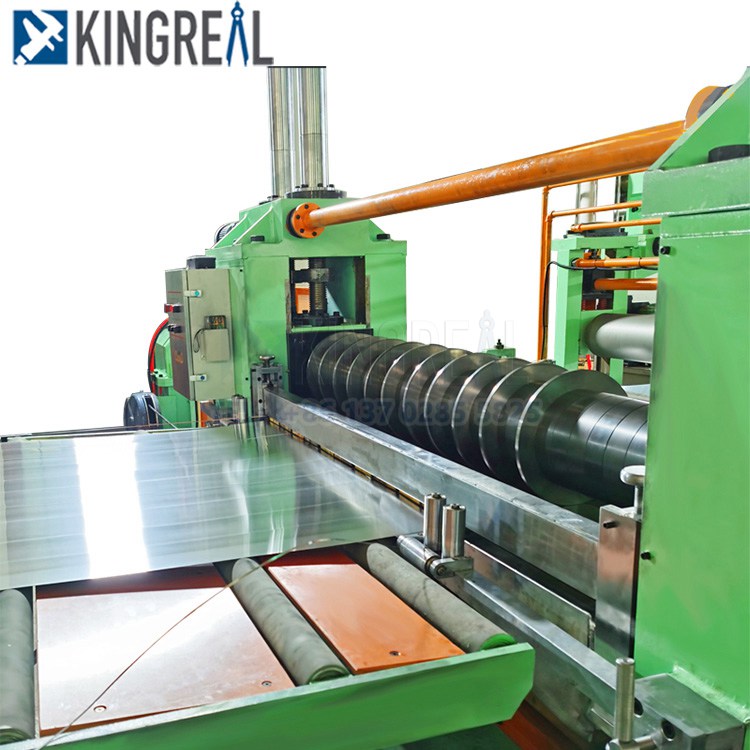
At operating speeds of 230m/min, the temperature at the blade edge rises sharply. KINGREAL recommends using high-carbon, high-chromium alloy steels (such as D2/SKD11) or cemented carbide, paired with TiAlN (Titanium Aluminum Nitride) nano-coatings. This coating not only enhances hardness but also creates a thermal barrier, preventing thermal softening of the blades during high-speed shearing.
2. Precision tooling assembly and run-out control
Radial run-out of the tooling directly affects the quality of the cut edge. By employing hydraulic expansion tool sleeves, we can limit tooling run-out to within 0.005mm. During high-speed operation, this high-precision assembly effectively prevents the blades from impacting the material, thereby extending tool life.
3. Online monitoring and Automatic Tool Change
To minimize downtime, the slitter is typically equipped with an automatic tool management system. By monitoring changes in shearing torque via sensors, the system automatically detects tool wear and prompts or executes tool changes during production intervals, ensuring that every meter of output meets industry standards.
IV. Material handling technology
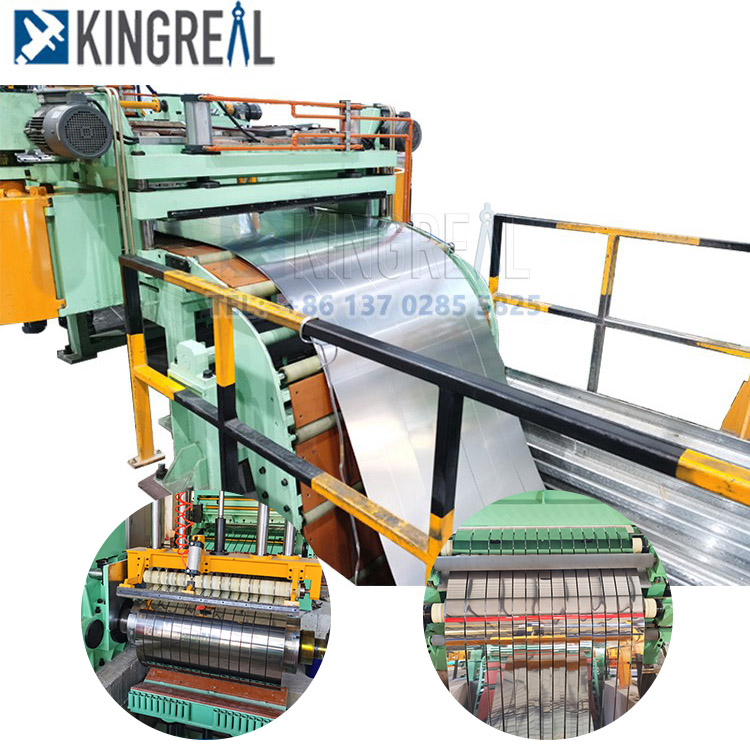
1. Closed-loop tension control system
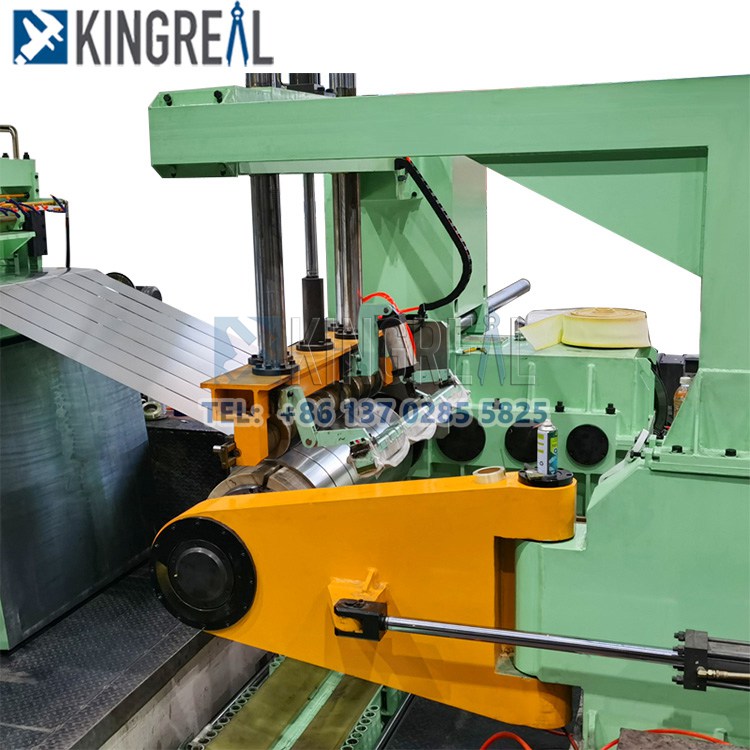
KINGREAL steel slitting machines utilize a closed-loop feedback logic that combines tension sensors with floating rollers. The system enables millisecond-level fine adjustments, ensuring consistent material flatness before it enters the slitting head, even at speeds of 200 m/min.
2. High-Frequency Edge
High-precision CCD sensors or laser centering devices are used to scan material edge positions in real-time. Actuators (hydraulic or electric) feature a response time of less than 10ms, maintaining centering accuracy within ±0.1mm as the material enters the line, even with unevenly wound coils.
3. Anti-Slip and Friction-Reducing Surface Technology
High-speed guide roll surfaces typically feature specialized ceramic coatings or PTFE treatments; these enhance traction to prevent slippage while protecting the surfaces of sensitive materials (such as stainless steel or silicon steel) from scratches.
V. Intelligence and Automation
1. Predictive Maintenance
Integrated vibration sensors and current waveform analysis allow the system to predict the remaining service life of bearings and motors. Early warnings are sent to maintenance personnel via an IIoT platform before failures occur, reducing unplanned downtime by over 80%.
2. Intelligent Parameter Recommendations
Leveraging a cloud-based processing database, the steel slitting line automatically recommends optimal operating speeds and tension settings based on material grade, hardness, and thickness, thereby reducing reliance on highly skilled operators.
VI. Safety and Thermal Management
1. Forced Cooling System
Heat generated by high-speed operation must be dissipated promptly. KINGREAL steel slitting machines are equipped with spindle oil cooling systems and air-conditioned electrical cabinets, ensuring core components operate within an ideal temperature range of 20–25°C.
2. Multiple Safety Light Curtains and Redundant Design
KINGREAL employs multi-level safety light curtains and laser scanners combined with an emergency stop system (response time <50ms) to create a comprehensive safety protection network.
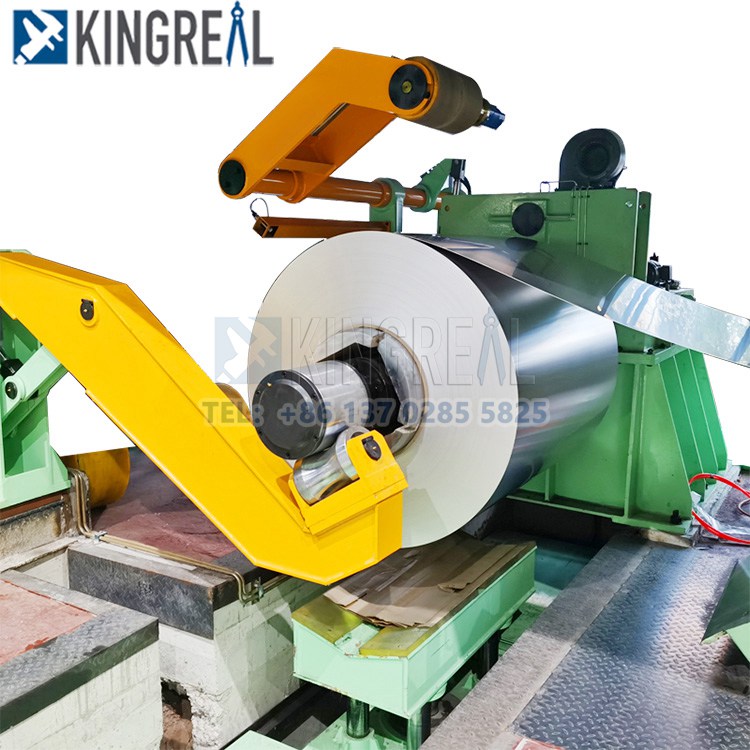
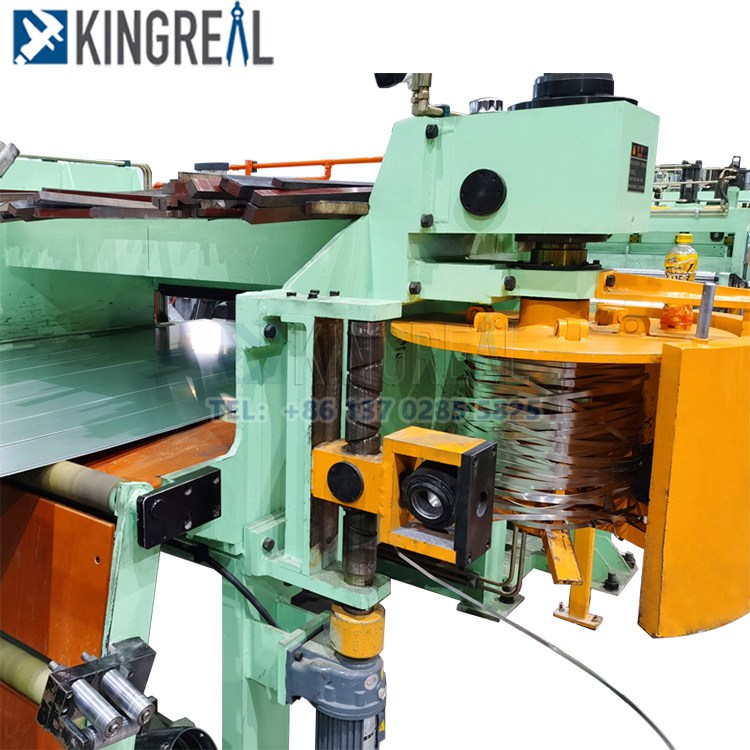
KINGREAL is dedicated to developing high-speed, energy-efficient steel slitting lines, helping global customers gain a competitive edge in a fierce market.
Ready to boost your factory's output and receive a professional quote? Contact the KINGREAL engineering team today to customize a high-speed processing solution tailored to your needs!