
Currently, many suspended ceiling manufacturers—having failed to thoroughly vet key technical specifications when purchasing metal ceiling carrier machines—frequently encounter serious issues during production.
These include poor forming precision, highly unstable operating speeds, limited profile compatibility, and inconsistent after-sales support, all of which lead to significant raw material waste and project delays.
The four most widely used types of metal suspension ceiling carrier machines on the market are:
●Baffle ceiling carrier roll forming machine,
●Linear strip carrier roll forming machine,
●A-Type carrier roll forming machine,
●Triangular light keel machine.
This article outlines the essential factors you must verify before making a purchase—covering machine selection, manufacturing quality, core technical details, and material compatibility—to help you avoid the financial losses that stem from poor metal ceiling carrier machine choices.
(Note: If you already have specific product designs, please provide your profile drawings and production capacity requirements; we can then offer a customized manufacturing solution for your metal suspension ceiling carrier machine.)
1. Determining the Required Type of Metal Ceiling Carrier Machine
Before beginning the procurement process, it is crucial to clarify your production objectives and the intended application environment for the suspended ceiling system. Different suspended ceiling structures impose distinct requirements regarding the physical shape and load-bearing capacity of the carrier components.
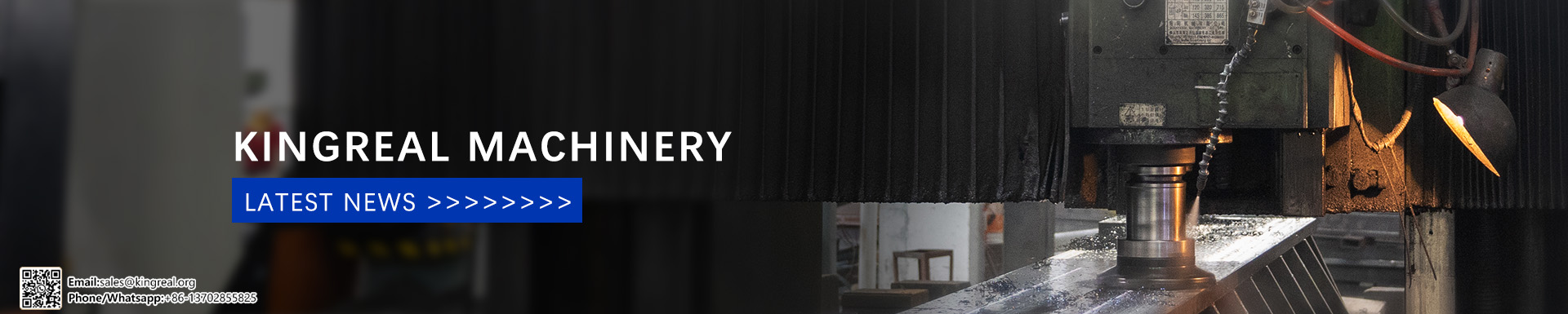
Baffle ceiling carrier roll forming machine: This equipment produces carriers designed for baffle ceiling systems. Such machines are commonly deployed for large-scale ceiling projects in settings like major commercial centers and high-speed railway stations.
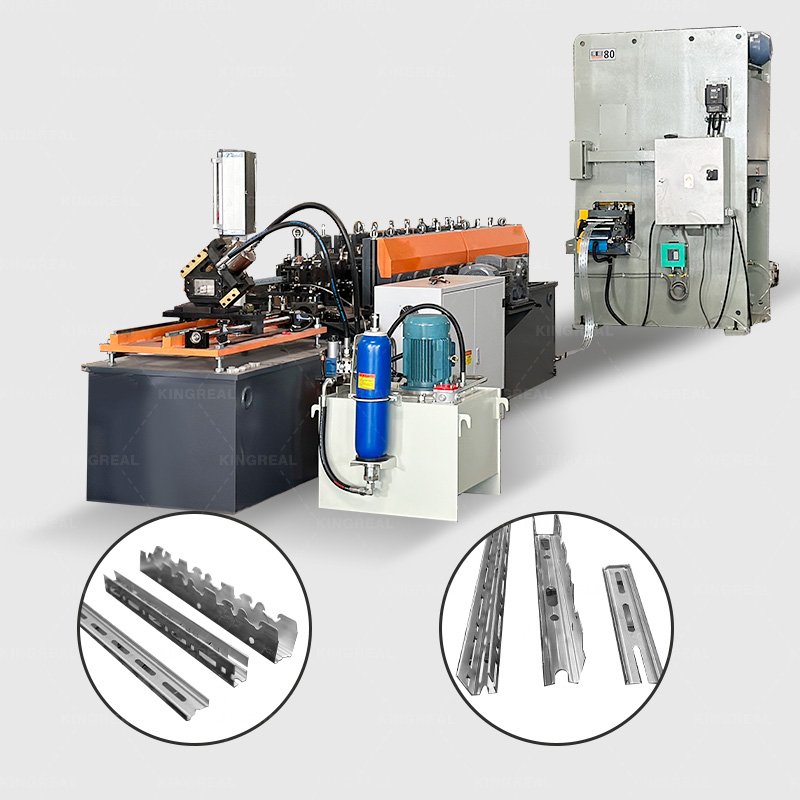
Linear strip carrier roll forming machine: Specifically designed for linear strip ceiling panels, these linear strip carrier roll forming machines feature precision-engineered attachment teeth. They are frequently used in environments that demand high standards of cleanliness and dust control, such as office spaces and airport terminals.
A-Type carrier roll forming machine: Primarily used for clip-in ceiling systems, these carriers feature an A-shaped cross-section. Because clip-in metal ceiling systems require a high degree of installation tightness, the forming dies for this type of machine must possess exceptional symmetry.
Triangular light keel machine: Also applicable for clip-in ceiling systems. This is the most widely circulated model on the market, frequently used for residential bathrooms and small-scale commercial suspended ceiling installations.
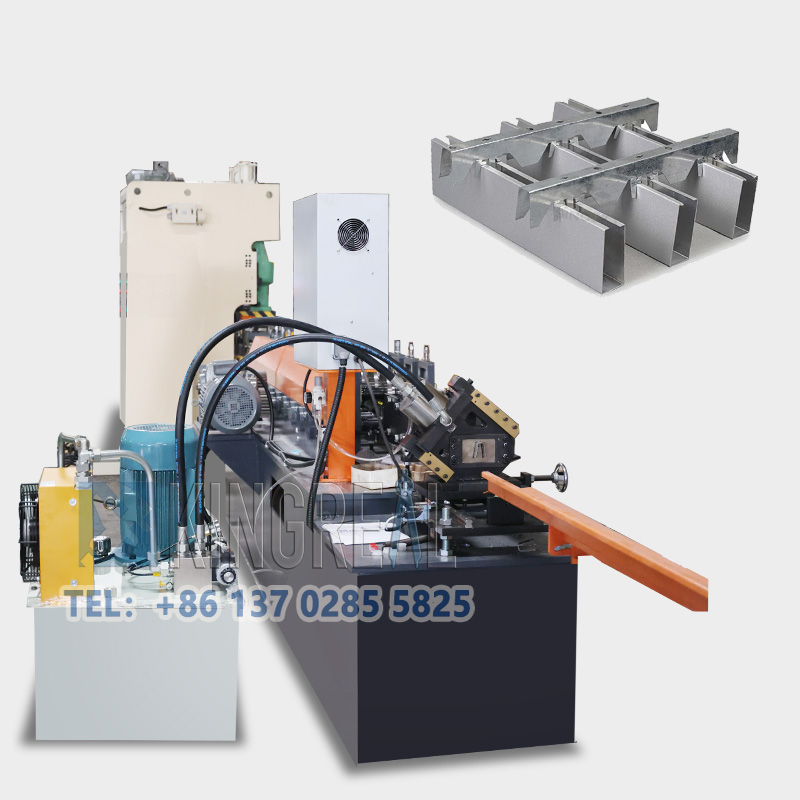
Baffle ceiling carrier roll forming machine
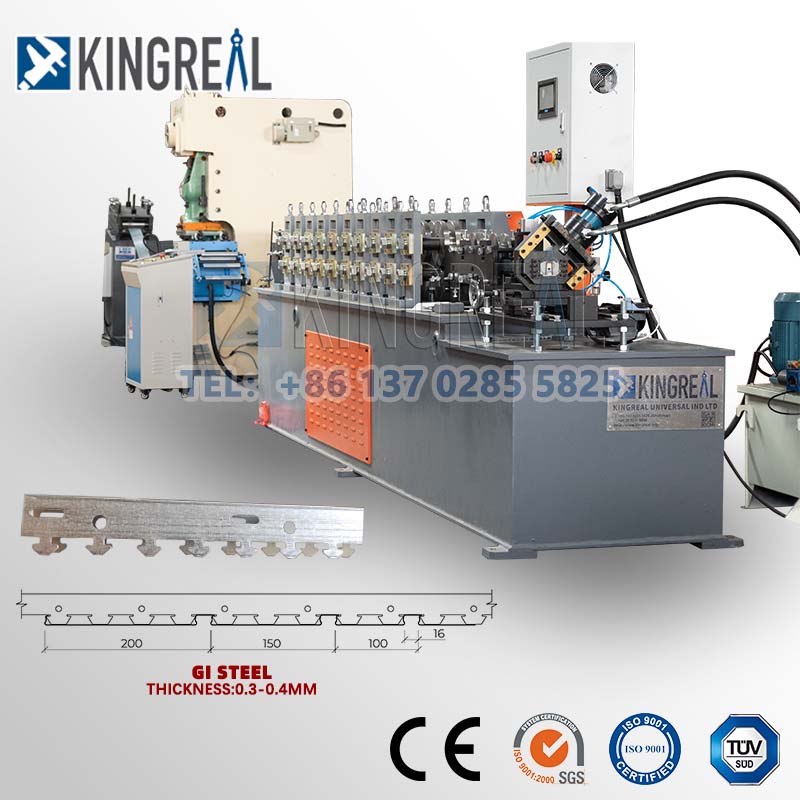
Linear strip carrier roll forming machine
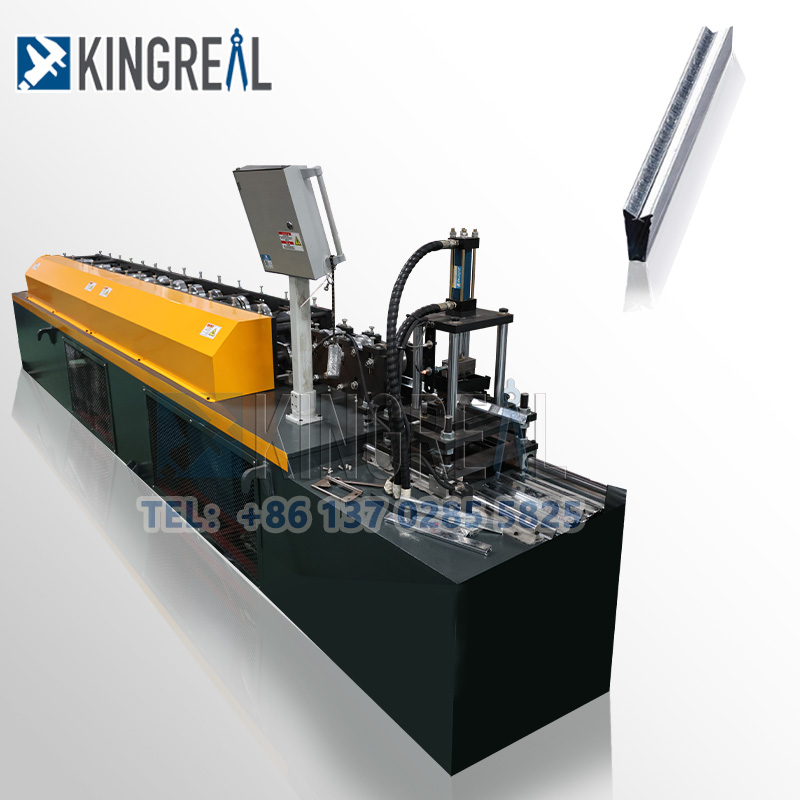
A-Type carrier roll forming machine
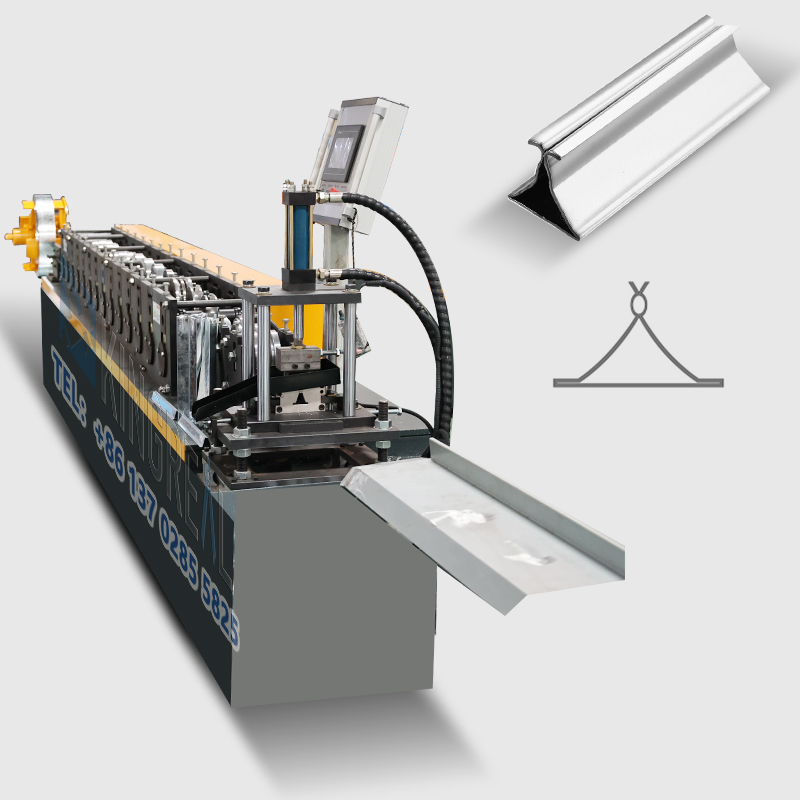
Triangular light keel machine
When defining your requirements, consider these three core questions:

Do you plan to produce a single specification of metal ceiling carrier, or will you need to manufacture multiple profiles on one metal suspension ceiling carrier machine by swapping out the forming rollers?
What is your target production capacity?
Do you need to integrate fully automated punching functions to accommodate complex hook-alignment requirements?
(Please be sure to provide drawings of your profile cross-sections; KINGREAL engineers will use these to evaluate whether the roller-station configuration of the metal ceiling carrier machine meets your design specifications.)
2. Evaluating Manufacturing Quality and Core Mechanical Components
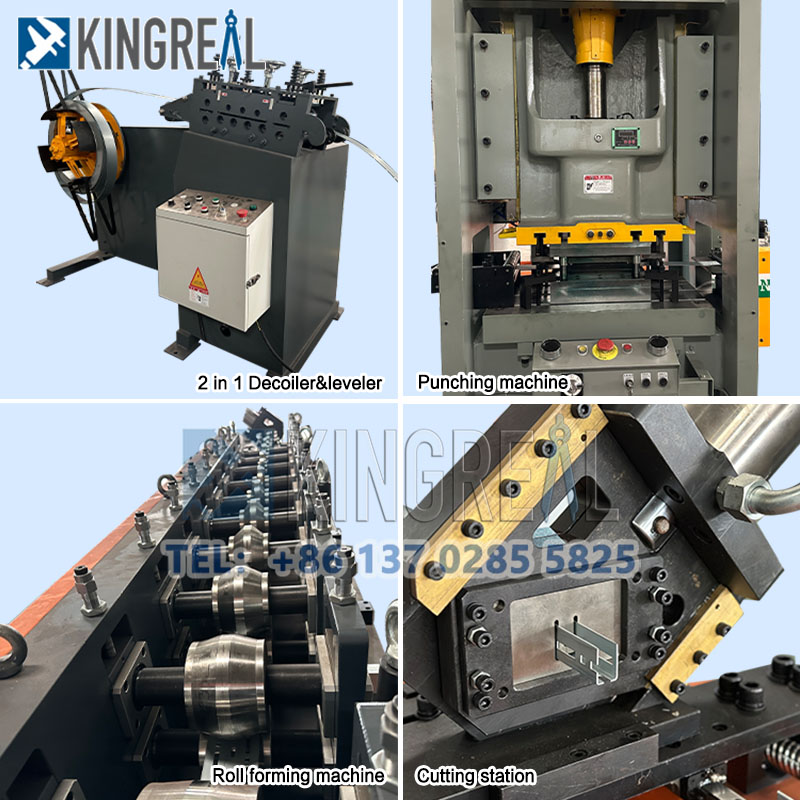
Frame Construction: High-quality metal suspension ceiling carrier machine should feature a frame welded from thickened steel plates. Crucially, the frame must undergo stress-relief treatment—specifically an annealing process—after welding. Skipping this step makes the metal ceiling carrier machine highly susceptible to micro-deformation caused by mechanical fatigue after 1–2 years of operation, which will ultimately result in twisted or warped ceiling carriers.
| Forming Rollers | Verify that the rollers are made from GCr15 high-chromium bearing steel or Cr12 tool steel. Beyond the material itself, the hardness achieved through heat treatment, as well as the quality of surface polishing and electroplating, are vital. These factors not only determine the equipment's service life but also directly influence whether the coatings on aluminum or pre-painted steel strips will be scratched during the forming process. |
| Forming Stations | For high-precision clip-in carriers, a higher number of forming stations allows for more gradual stress release during the shaping process. If a metal suspension ceiling carrier machine attempts to execute sharp-angle bends using too few forming stations, the finished carriers will inevitably suffer from defects such as wavy edges or inconsistent spring-back. |
| Cutting System | A modern, high-efficiency metal ceiling carrier machine should be equipped with a flying shear or a synchronized cutting system, allowing for precise cutting without interrupting the roll-forming process. |
| Control System | It is essential to verify the brand of the PLC. Industry-standard options—such as Siemens or Delta—paired with a high-precision servo-feeding system, ensure that length tolerances are kept within a very tight range. |
| Punching Precision | Metal suspension ceiling carrier machines typically feature integrated punching dies. High-quality dies should offer customization capabilities, and the punching process must be guided by precision rails to ensure absolute consistency in the spacing between holes. |
3. Analysis of Key Technical Details for Metal Ceiling Carrier Machines
1
Punching Precision and Cumulative Error
The most critical technical specification for a ceiling carrier is spacing consistency. If there is a 0.2mm error in the spacing between holes, the cumulative error over a 6-meter-long carrier would be significant, making it impossible to properly install the ceiling panels.
Verification Detail: Ask the supplier how their metal ceiling carrier machine’s PLC handles closed-loop feedback. The error must be controlled within a range of ±0.1mm.
2
Mold Material and Vacuum Quenching
Punching heads and cutting blades operate at high frequencies in a high-speed environment, leading to rapid wear.
Verification Detail: Confirm whether high-quality tool steels—such as Cr12MoV or DC53—are used and whether they have undergone vacuum quenching. Cutting blades that have not been subjected to thorough heat treatment will develop burrs after producing only a few hundred thousand meters of material, which increases long-term maintenance costs and the frequency of production downtime.
3
Response Speed of Following Cutting Technology
The daily production capacity of a metal ceiling carrier machine is primarily limited by the cutting stage.
Verification Detail: Verify the synchronization algorithm used for the flying shear carriage. When the metal suspension ceiling carrier machine is running at full speed, can the flying shear maintain high-frequency operation while simultaneously calibrating its position in real-time via a photoelectric encoder?
4. Production Environment and Material Compatibility
Metal ceiling systems utilize a wide variety of materials, ranging from galvanized steel strips to various aluminum alloy coils. These materials differ significantly in terms of yield strength and springback angle.
-Flexibility in Material Thickness: Verify whether a metal ceiling carrier machine can accommodate different coil thicknesses (e.g., from 0.5mm to 1.2mm) by adjusting the roll gaps—whether manually or automatically—without requiring a change of the forming rollers.
-Springback Control Logic: Aluminum typically exhibits greater springback than steel. A well-designed machine incorporates straightening mechanisms and reverse pre-stressing in the final forming stages to prevent the ceiling carriers from experiencing longitudinal bowing or lateral expansion after exiting the production line.
-Surface Coating Protection: When processing pre-painted sheets or mirror-finish aluminum, the metal suspension ceiling carrier machine’s feeding system must be equipped with nylon guides or protective pads. Furthermore, the forming rollers must be highly polished to ensure that no mechanical scratches compromise the appearance of the finished product.
Selecting a high-quality metal ceiling carrier machine is the first step for manufacturers to establish a competitive advantage.
KINGREAL not only provides high-precision metal suspension ceiling carrier machines but is also dedicated to delivering comprehensive suspended ceiling system solutions.
If your project demands exceptional precision for ceiling carriers, or if you are seeking a high-speed production line to rapidly boost your manufacturing efficiency, please feel free to contact the expert team at KINGREAL.