
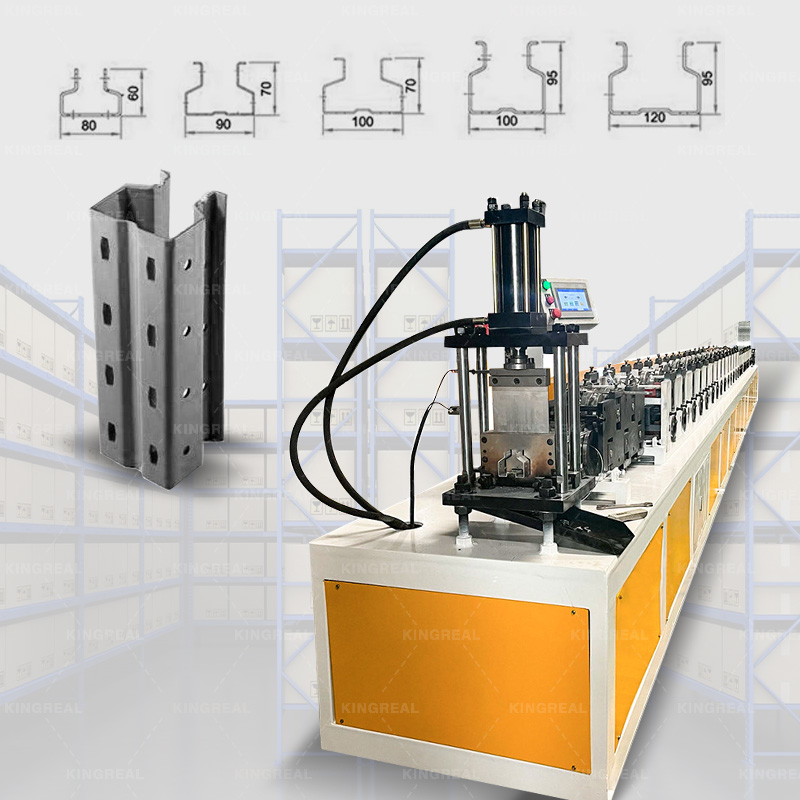
As modern warehousing systems evolve toward greater automation and higher storage density, rack uprights—as critical load-bearing components—must be manufactured to high quality standards to ensure the safety and stability of the entire system.
For manufacturers, the choice of a warehouse rack making machine is a pivotal decision; its performance parameters directly dictate production efficiency and long-term profitability.
However, many manufacturers focus solely on the initial purchase cost, overlooking factors such as forming precision, changeover efficiency, and the warehouse rack forming machine's stability under sustained, high-load operation. Such short-sighted decision-making often leads to high scrap rates, excessive maintenance costs, and a loss of competitiveness in the high-end market due to products failing to meet precision standards.
Before selecting a warehouse rack making machine, it is essential to conduct a comprehensive technical evaluation covering production flexibility, precision and consistency, material adaptability, automation levels, and after-sales reliability. This article provides a detailed breakdown of these core elements.
1. Production Flexibility
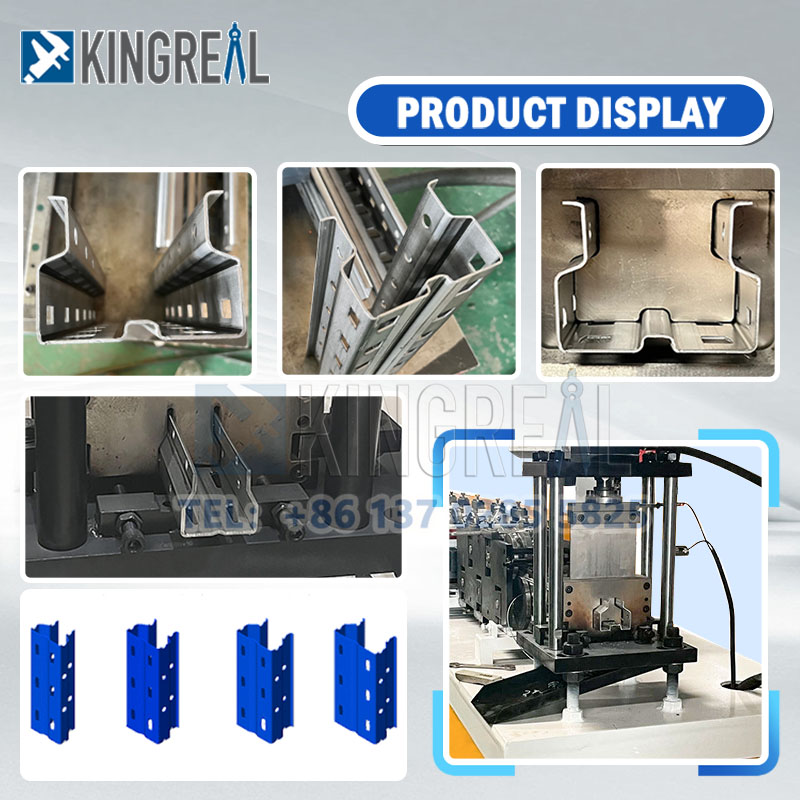
A high-quality warehouse rack forming machine must support customizable, multi-set punching systems.
In practice, the holes on an upright are used not only for attaching beams but also for mounting various support components. Common hole patterns include teardrop, diamond, and hexagonal shapes. A supplier’s ability to provide quick-change tooling solutions determines how rapidly a production line can respond to diverse orders.
Advanced warehouse rack making machines are typically equipped with in-line hydraulic punching units; controlled by pre-programmed PLC settings, these systems can execute precise punching—across varying hole pitches and patterns—without requiring the production line to stop, thereby significantly enhancing manufacturing flexibility.
2. Precision and Consistency
If a warehouse rack forming machine fails to produce profiles with sufficient precision, it will lead to difficulties in aligning bolts during subsequent on-site assembly—potentially even creating structural safety hazards.
Achieving high precision relies on two critical warehouse rack making machine components: a servo-driven feeding system and high-precision forming rollers. A modern warehouse rack forming machine must be equipped with high-performance servo drives (such as those from Yaskawa or Delta) to ensure that the positioning accuracy of the coil—during the punching and shearing stages—is maintained within ±0.5 mm.
Furthermore, the design of the forming rollers must undergo professional software simulation analysis to prevent issues such as twisting, wavy edges, or springback during the multi-pass cold-roll forming process.
From a financial perspective, warehouse rack making machine precision directly impacts the scrap rate. In metal processing, raw material costs account for over 60% of total production costs.
A high-performance warehouse rack forming machine minimizes waste through precise end-shearing and reduced setup losses. This gain in precision directly boosts the return on investment; the premium paid for superior warehouse rack making machine is typically recouped quickly during the initial stages of production through savings on raw materials and a reduction in rework.
3. Material Versatility and Thickness Range
To accommodate varying load-bearing requirements, warehouse rack uprights are manufactured using materials with a wide range of thicknesses and strength specifications.
A competitive warehouse rack forming machine should be capable of processing coils with thicknesses ranging from 1.5 mm to 3.0 mm. This necessitates a forming unit with exceptional structural rigidity to prevent frame deformation under high-load forming pressures.
Additionally, the ability to process a diverse range of materials is a key consideration. Beyond standard carbon structural steel, manufacturers may also need to handle GI coils, PPGI coils, or even high-strength steel.
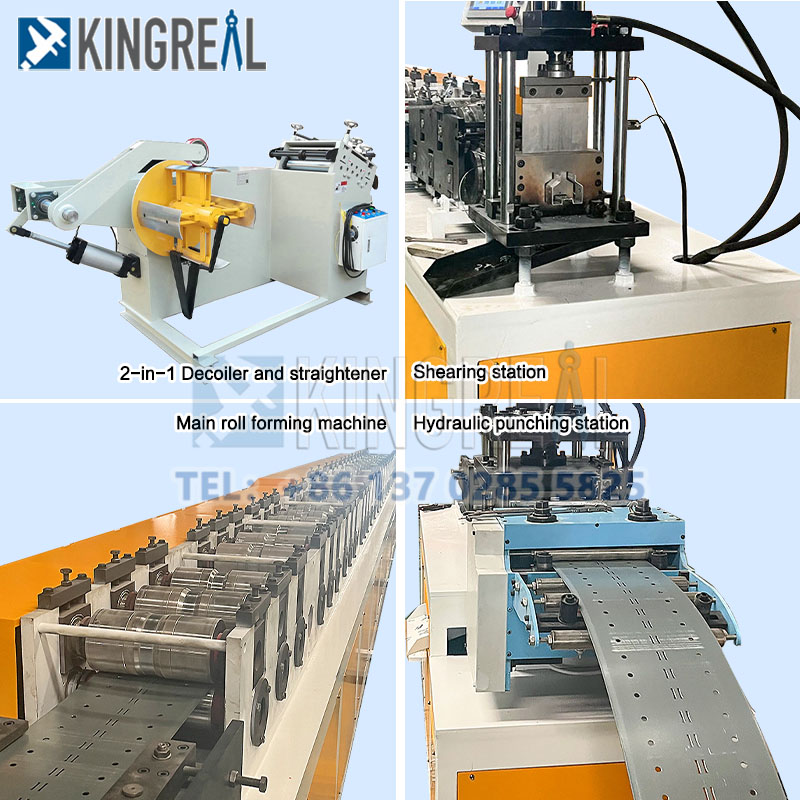
In the configuration of a warehouse rack making machine, the hydraulic decoiler and the precision leveler play critical roles. The hydraulic decoiler must feature a variable-frequency braking system to ensure the smooth, controlled feeding of heavy-tonnage steel coils.
Meanwhile, the leveler must be capable of eliminating internal stresses within the coil, ensuring that the sheet enters the forming unit perfectly flat and free of deflection—a prerequisite for maintaining stability when processing high-strength steel.
4. Machine Control Systems and Automation Levels
Modern warehouse rack making machine must be equipped with top-tier PLC control systems to enable highly integrated Industry 4.0 operations.
On a fully automated warehouse rack forming machine, operators simply input the upright length, number of punched holes, and production batch size via a Human-Machine Interface. The warehouse rack making machine then automatically executes the entire process: uncoiling, leveling, punching, roll forming, and cutting. The advantages of this automated production line in terms of labor savings include:
Reduced Labor & Increased Efficiency: A complete warehouse rack forming machine requires only one technician for daily monitoring—replacing the 3–5 workers previously needed to manage multiple, separate process stages.
Elimination of Errors: Automated control prevents the cumulative errors inherent in manual measurement, ensuring consistency across every single upright.
Data Traceability: The PLC system records production data, fault logs, and energy consumption metrics, providing real-time support for the factory’s ERP system.
5. Equipment Durability and Comprehensive After-Sales Support
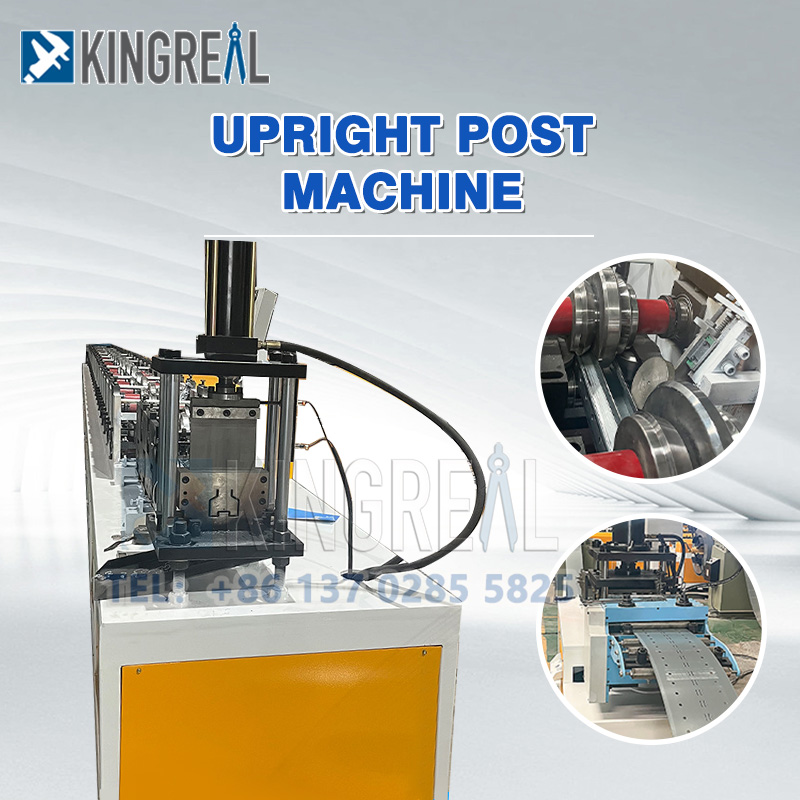
Warehouse rack making machines are typically expected to have a service life of over 10 years. The key factor determining this lifespan is the material and processing technology used for the forming rollers. In its manufacturing process, KINGREAL utilizes high-performance die steels—such as GCr15 or Cr12—for these rollers.
Crucially, the rollers undergo a heat-treatment process to achieve a hardness of HRC 58–62 and are precision-ground using CNC grinding machines. This ensures that, even when forming 3.0mm-thick steel plates over long periods, the rollers remain free from wear and do not cause surface damage or scoring to the material.
Beyond the hardware quality of the warehouse rack forming machine itself, the reliability of after-sales service is often the deciding factor in a project's success. KINGREAL employs a professional service framework:
FAT (Factory Acceptance Test): Before shipment, the warehouse rack making machine undergoes a trial run—either with the client present or via remote video—to ensure that all performance indicators fully comply with the technical specifications.
On-Site Installation Guidance: Experienced engineers are dispatched to provide installation and training, ensuring that the client’s technical staff can independently operate and maintain the warehouse rack forming machine.
24/7 Technical Support: We provide online remote diagnostic services, leveraging IoT technology to rapidly troubleshoot software issues and minimize production line downtime.
Choosing a warehouse rack making machine is a strategic investment in productivity, technical capability, and long-term operational reliability. Achieving the right balance of flexibility, precision, material adaptability, automation, and durability is essential to staying ahead in the increasingly competitive warehousing and logistics market.
Ready to upgrade your warehouse rack forming machine? Contact the senior engineers at KINGREAL to receive a customized technical solution and a detailed quotation for your warehouse rack making machine!