
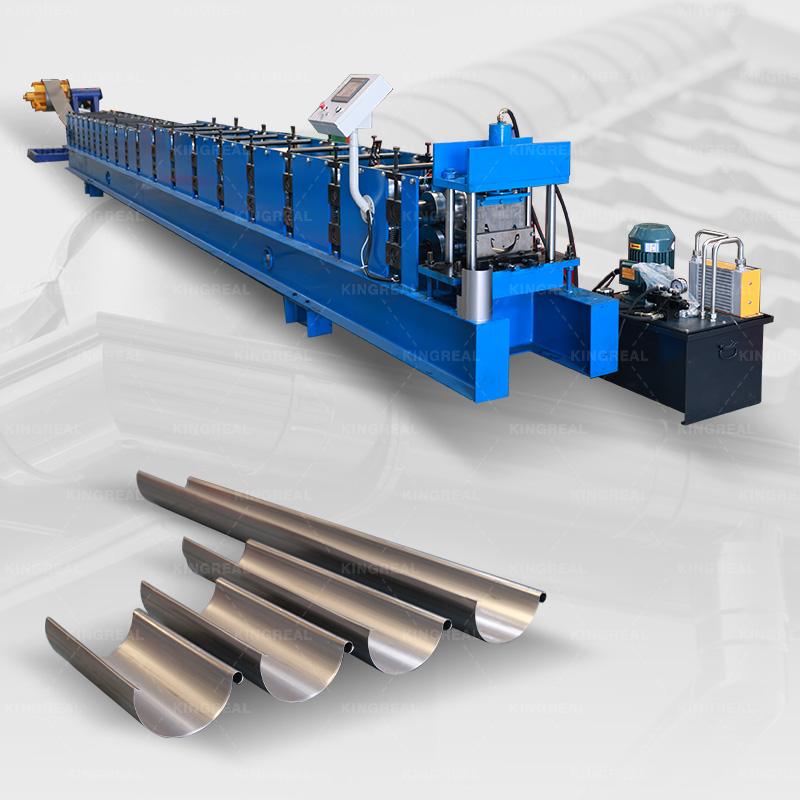
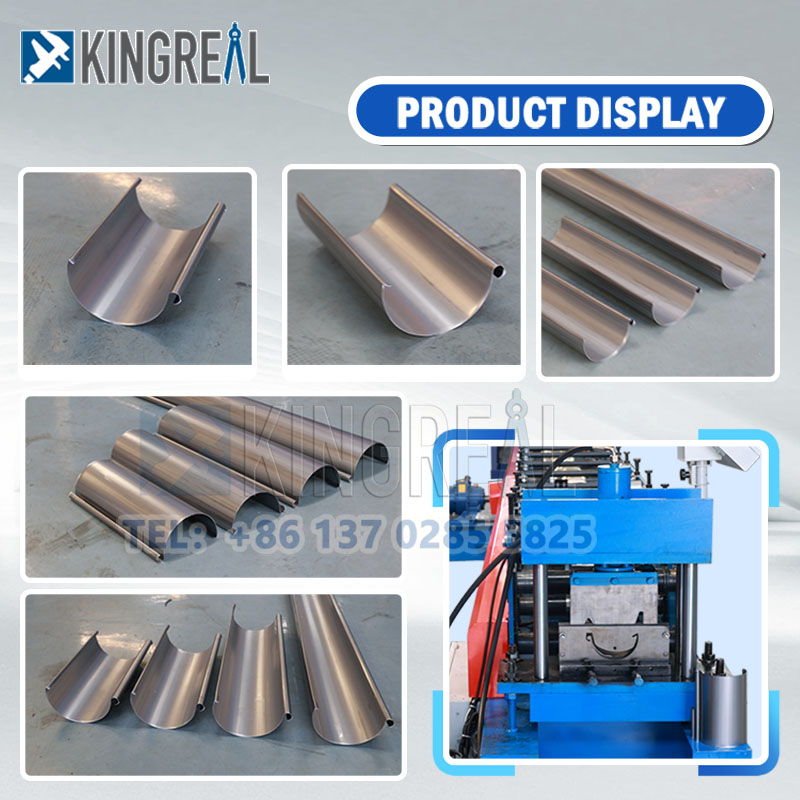
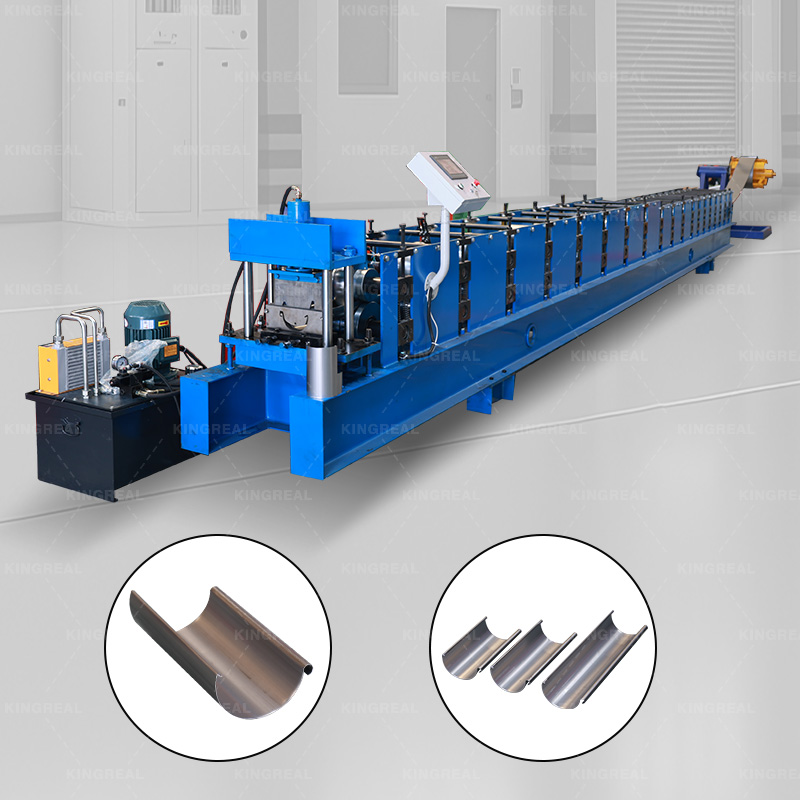
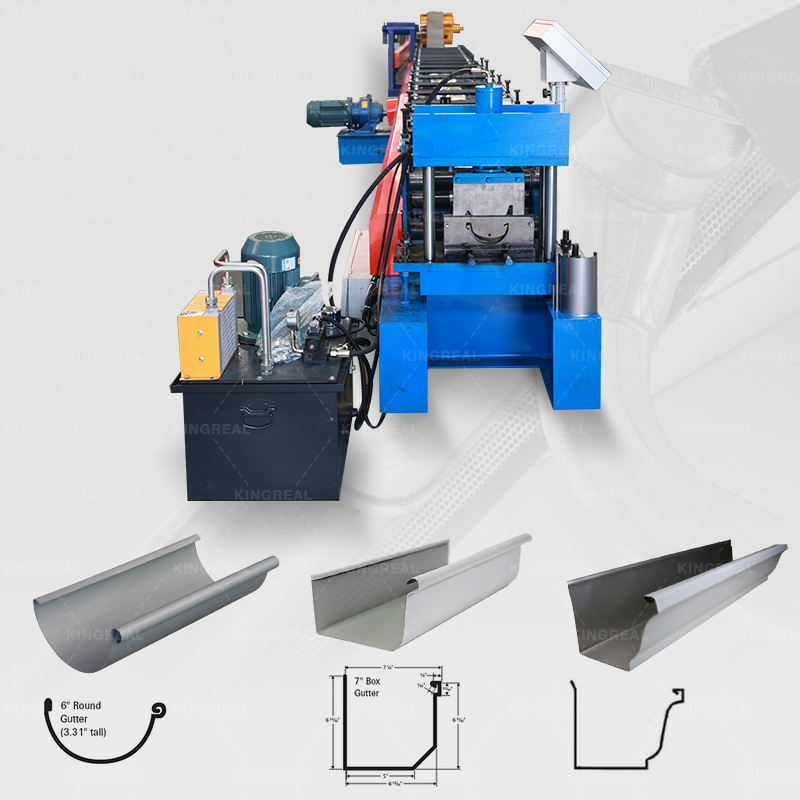
In the global construction logistics and roofing systems manufacturing sector, rain gutter roll forming machines play a pivotal role. Currently, the market offers two primary types of gutter roll forming machine: portable units—often mounted on trucks for on-site production—and the focus of this article: heavy-duty, fixed-plant production lines.
These industrial-grade rain gutter roll forming machines are engineered for clients who handle high-volume orders, demand exceptional forming precision, and require continuous, long-term operation. For such users, the primary criteria for gutter roll forming machine procurement extend well beyond basic forming capability; they prioritize long-term stability when processing high-strength raw materials, absolute cross-sectional accuracy, and low maintenance costs.
However, during the procurement process, critical technical details are frequently overshadowed by price considerations, often leading to persistently high scrap rates during subsequent production.
Below are four key procurement risks to watch out for when selecting a rain gutter roll forming machine.
Risk 1: Insufficient Dynamic Rigidity
The frame serves as the skeleton of the entire gutter roll forming machine. In heavy-duty production environments, the equipment must frequently process raw materials—such as Al-Zn alloy coated steel or high-strength color-coated steel—with thicknesses ranging from 0.6mm to 1.0mm or even greater. Under these conditions, the forming process exerts significant counter-forces on the machine structure.
If the machine base lacks sufficient weld strength, if critical support components—such as the side plates—fall below industry standards, or if the design relies on non-integrated welded side plates rather than cast iron or thickened, precision-ground steel plates, the gutter roll forming machine will develop subtle, high-frequency vibrations during high-speed operation.
These vibrations are often imperceptible to the naked eye, yet their impact becomes apparent after producing thousands of meters of guttering: the cross-sectional profile begins to undergo a gradual, micron-level deviation. Because rain gutter roll forming machines rely on precise interlocking and sealing, even a 0.5mm deformation can result in gaps that are nearly impossible to close during on-site installation, significantly increasing the risk of leaks.
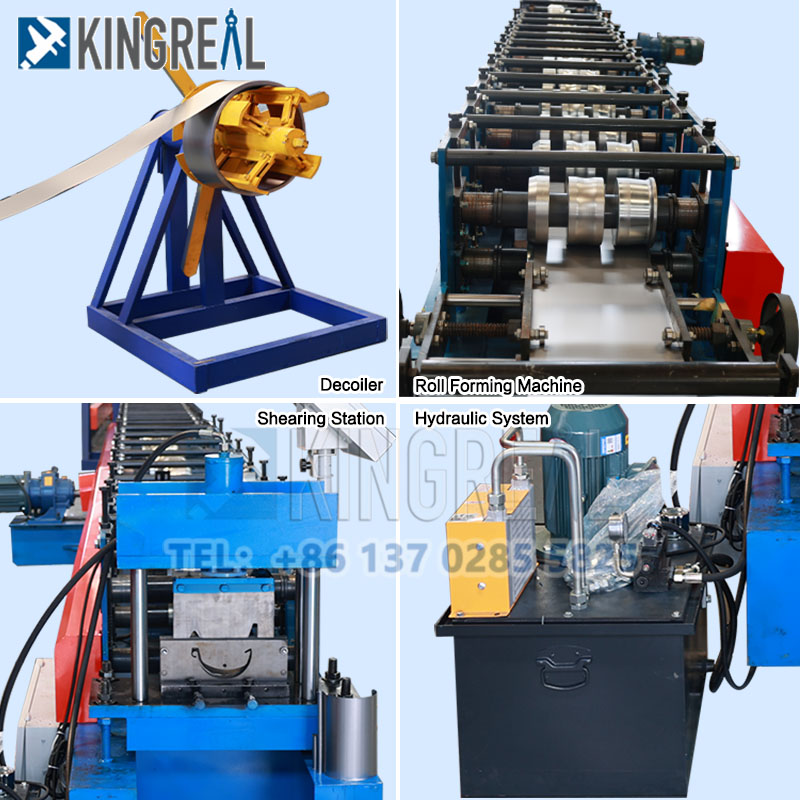
KINGREAL gutter roll forming machines place a premium on the physical integrity of the base. We utilize a welded base constructed from high-specification H-beam steel, which undergoes rigorous stress-relief annealing. Combined with robust side-plate structures, this design leverages the gutter roll forming machine’s own mass and structural redundancy to absorb high-frequency vibrations, ensuring that the forming centerline remains perfectly aligned at all times.
Risk 2: Roller Surface Fatigue & Coating Protection
For factories with annual production volumes reaching hundreds of thousands of meters, the rollers are the components most prone to wear. They not only dictate the geometric precision of the gutters but also come into direct contact with the surfaces of expensive raw materials.
A high-quality rain gutter roll forming machine requires significant investment in roller materials and manufacturing processes. KINGREAL offers configurations featuring core rollers made from GCr15 bearing steel or Cr12MoV die steel. These undergo precision CNC machining followed by vacuum heat treatment, achieving a hardness of HRC58–62. This exceptional surface hardness and wear resistance ensure that the rollers remain mirror-smooth even after years of high-frequency operation, providing maximum protection for the coatings on the raw materials.
Risk 3: Hydraulic Heat Fade & Cutting Precision
High-capacity rain gutter roll forming machines demand extremely high response frequencies from their hydraulic shearing systems. In many standard machines, significant issues arise once the hydraulic station has been running continuously for more than four hours.
As the temperature of the hydraulic fluid rises, its viscosity decreases, causing hydraulic valves to respond more slowly or leading to delays in cylinder actuation. On a high-speed production line, a delay of even 0.1 seconds can translate into a cutting-length deviation of several millimeters—or even centimeters—in the finished product. Length deviations resulting from thermal expansion—a phenomenon known as thermal drift—can lead directly to the scrapping of finished products or dimensional mismatches during installation.
To address this, KINGREAL gutter roll forming machines come standard with high-capacity hydraulic tanks, efficient air or water-cooling systems, and servo-controlled flying shear technology. This configuration keeps hydraulic oil temperatures within an optimal range, ensuring that cutting precision remains consistently within a ±1mm tolerance, regardless of how long the rain gutter roll forming machine has been in operation.
Risk 4: Control System Isolation
The PLC system of a rain gutter roll forming machine determines its level of intelligence and ease of maintenance. A particularly insidious risk during procurement is the use of a proprietary, non-standard, "closed" control system developed by the manufacturer itself.
Such systems typically do not provide access to the source code. If a complex logic fault occurs, on-site electricians are often unable to resolve it. Furthermore, the lack of open interfaces prevents remote support engineers from accessing the underlying code for diagnostics—a situation that can cause a factory to grind to a halt for days over something as minor as a faulty sensor signal.
Additionally, proprietary systems often create significant supply chain bottlenecks when it comes to future upgrades or component replacements.
KINGREAL utilizes control cores from globally recognized brands (such as Siemens, Mitsubishi, or Delta) that feature open-logic architectures and support remote monitoring interfaces.
With this globally standardized electrical framework, the gutter roll forming machine can be maintained in real-time via the internet, regardless of where it is located, ensuring that downtime for the rain gutter roll forming machine is kept to an absolute minimum.
While the initial investment for a high-quality rain gutter roll forming machine—covering purchase costs, logistics, and installation—may be higher, the resulting operational stability is the key to securing a strong return on investment.
By mitigating the 4 hidden risks mentioned above, you ensure that your gutter roll forming machine maintains a low scrap rate, high precision, and minimal maintenance requirements, even under heavy, long-term workloads.
This allows you to recover your costs quickly and achieve profitability in the highly competitive metal processing market.
KINGREAL is dedicated to building more durable and precise rain gutter roll forming machines for customers worldwide.
If you are planning a new production line, please feel free to contact KINGREAL directly for professional technical support and customized solutions!