
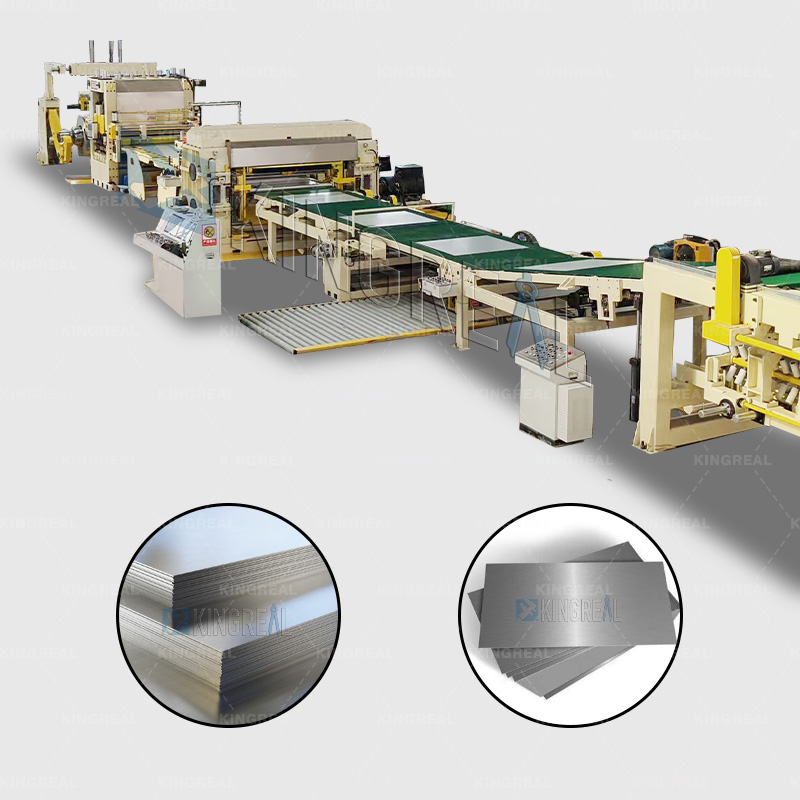
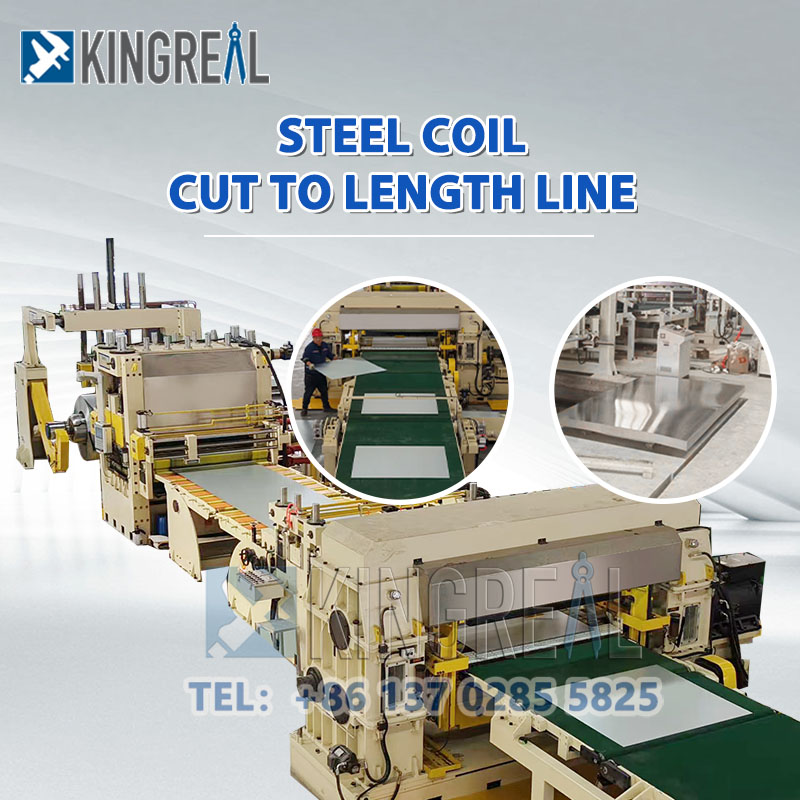
In modern industrial manufacturing, cut to length lines are indispensable coil processing systems. Virtually any process involving metal coils relies on this equipment. From precision home appliance casings to heavy-duty structural steel for construction, cut to length machines supply essential raw materials by precisely leveling massive metal coils and shearing them into sheets of specific lengths.
The core value of a cut to length line lies in its ability to perform high-precision leveling and shearing. Different applications impose distinct requirements regarding sheet flatness, length tolerances, and surface quality. Consequently, a high-quality cut to length machine must be deeply customized based on the physical properties of the material being processed.
This article explores how cut to length lines are utilized across various industries and examines how KINGREAL achieves precise equipment design tailored to specific material characteristics.
Cut to Length Line in Various Industries
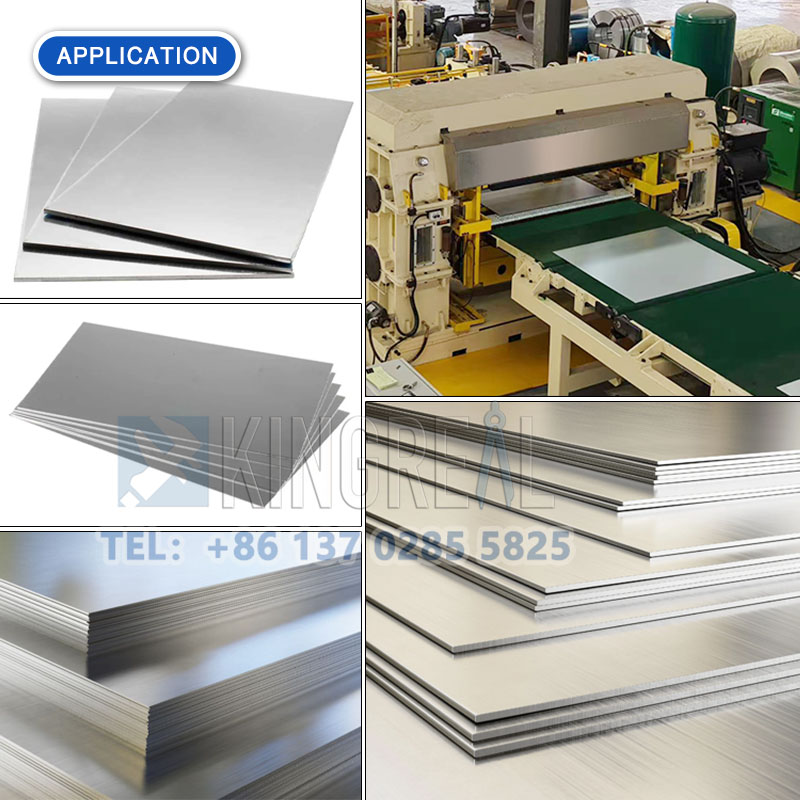
The following outlines the specific application logic of cut to length machines in key industries, along with design solutions tailored to material characteristics:
A. Cold-rolled Steel
Core Applications: Home appliance manufacturing, automotive stamping plants.
Industry Characteristics: Extremely high requirements for dimensional accuracy and flatness; visual flatness is often a critical criterion.
Design Requirements:
●High-precision servo feeding: Ensures length tolerance is controlled within ±0.2mm.
●Multi-roll leveler: Eliminates internal stresses generated during the cold-rolling process, preventing spring-back after stamping.
B. Hot-rolled Steel
Core Applications: Construction steel structures, steel service centers, heavy machinery.
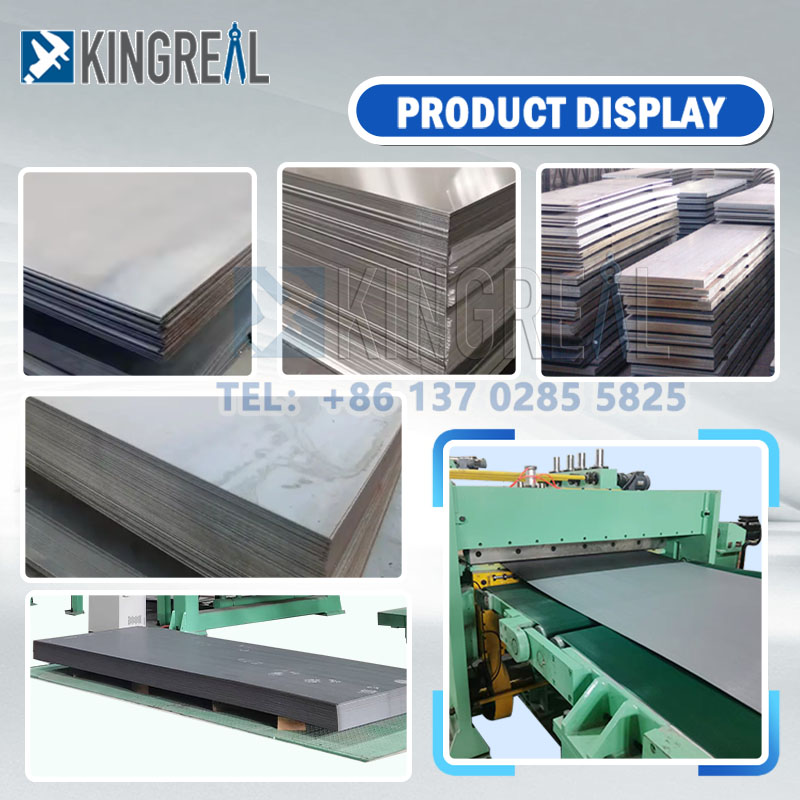
Industry Characteristics: High material thickness (typically 6mm–20mm or greater) and high hardness.
Design Requirements:
●Reinforced machine frame: Strengthened to withstand high-tonnage shearing loads and prevent structural deformation.
●High-torque drive system: Equipped with high-power motors and gear reducers to ensure the smooth movement of heavy coils.
●Heavy-duty shear blades: Made from high-chromium alloy tool steel for superior wear resistance, reducing the frequency of blade changes.
C. Stainless Steel & Aluminum
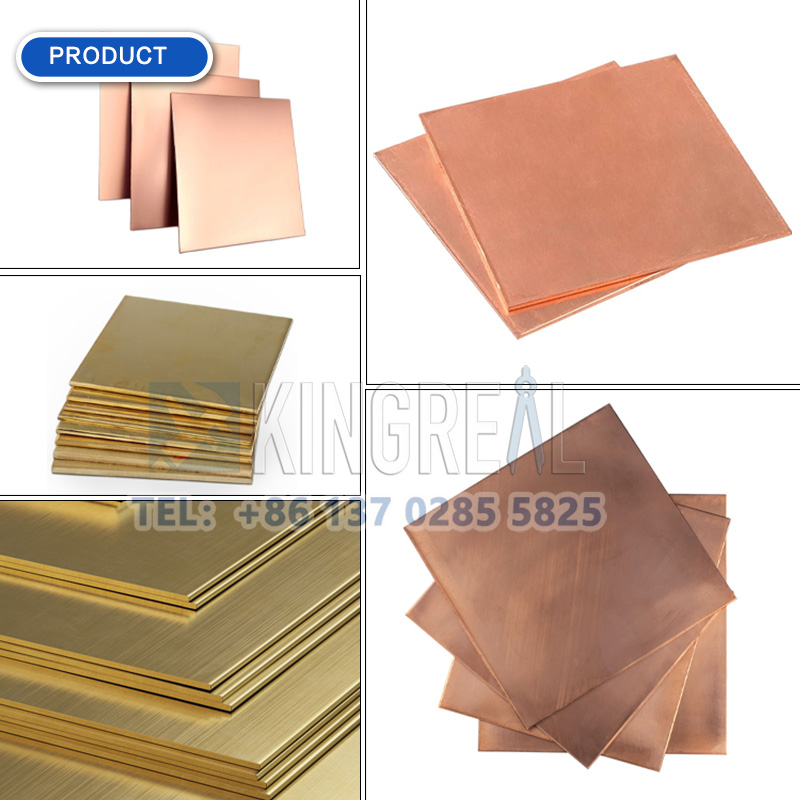
Core Applications: Kitchen appliances, medical equipment, decorative panels, aerospace, and lightweight automotive parts.
Industry Characteristics: Surfaces are highly sensitive and must be kept free of scratches; stainless steel is hard, whereas aluminum is relatively soft.
Design Requirements:
●Scratch-free protection: Leveling rolls undergo chrome plating and polishing, and the system is equipped with an automatic laminating device.
●PU-coated roller conveyance: Conveyor rollers are coated with polyurethane to prevent friction marks caused by direct metal-to-metal contact.
●Vacuum suction stacking: Vacuum-based stackers are used for thin aluminum sheets to prevent them from dropping or sustaining impact damage.
D. Silicon Steel
Core Applications: Electric motor and transformer manufacturing.
Industry Characteristics: Thin material (0.2–0.5 mm) with magnetic properties; prone to burr formation during shearing, which affects magnetic permeability.
Design Requirements:
●High-precision micro-leveling: Levelers featuring small-diameter rolls designed for extremely thin materials.
●Swing shear/flying shear systems: Capable of performing the angled or irregular cuts required for transformer cores.
●Carbide blades: Extremely tight shearing clearances to ensure burr-free edges.
E. Galvanized & Pre-painted Steel
Core Applications: Building envelopes, ventilation ducts, automotive plants, and construction material facilities.
Industry Characteristics: Features surface coatings or zinc layers; requires protection against coating delamination or damage from roll pressure.
Design Requirements:
●Precision pressure adjustment: Levelers must precisely control roll pressure to avoid damaging the coating.
●Dust removal and cleaning devices: Prevents zinc dust accumulation on roll surfaces, which could cause indentations on the sheets.
F. High-strength Steel
Core Applications: Automotive body structural components and crane booms.
Industry Characteristics: Extremely high yield strength; standard levelers cannot effectively eliminate internal stresses.
Design Requirements:
●6-High Leveler Structure: Utilizes backup roll adjustment to powerfully level ultra-high-strength sheets, ensuring flatness is maintained after subsequent laser cutting.
Why Choose KINGREAL Cut to Length Line Solutions?
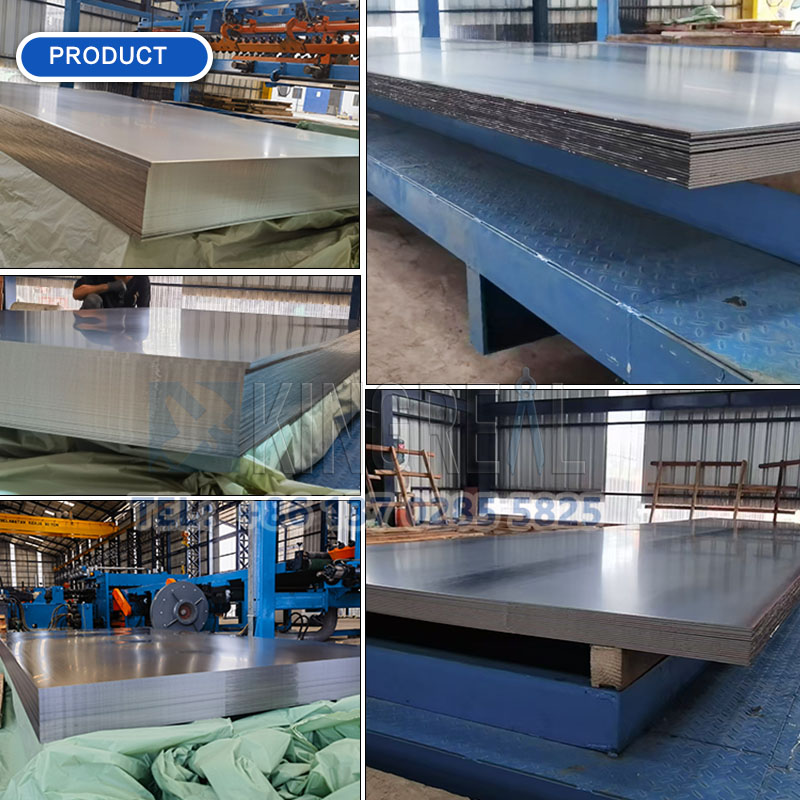
Customized Machine Solutions: Whether handling ultra-thin 0.3mm tinplate or heavy-duty 20mm hot-rolled steel, KINGREAL provides fully customized cut to length line solutions covering everything from uncoiling, leveling, and shearing to automated stacking.
Superior Surface Protection: Catering to high-end decorative, medical, and automotive industries, KINGREAL scratch-free processing technologies—including PU-coated rollers, air-cushion conveying, and in-line film lamination—lead the industry.
Intelligent Integration: Features a full-line PLC synchronous control system that supports one-touch production specification switching, significantly reducing downtime for material changes and boosting ROI.
A cut to length machine is more than just a piece of metal processing equipment; it is a cornerstone for enhancing productivity across the entire industrial chain.
If you are seeking a solution capable of handling specific materials and meeting high-precision industrial standards, KINGREAL is ready to provide professional technical support.
Please contact KINGREAL directly to receive a customized technical proposal and quote for your project!