
In the equipment procurement process, the Factory Acceptance Test (FAT) is a critical step for ensuring that equipment meets technical specifications and for mitigating risks associated with cross-border trade.
At KINGREAL, every manufactured HVAC damper forming machine must undergo a standardized inspection procedure before leaving the factory. This serves not only as a final quality control measure but also as a key step in helping global customers avoid potential operational risks.
This article details the FAT process and operational standards for the HVAC damper making machine, drawing on a real-world example from KINGREAL 2026 export project to South Africa.
Why Is a Rigorous FAT Necessary for HVAC Damper Forming Machine?
Dampers are core components in HVAC systems, used to regulate airflow volume and control airflow direction.
Because damper blades and frames often feature complex cross-sectional geometries and require frequent assembly, even minor dimensional deviations in the HVAC damper making machine can lead to assembly difficulties or failure to meet airtightness standards.
Through the FAT, the South African client was able to verify the HVAC damper forming machine's stability at rated production speeds, the response precision of the hydraulic system, and the logic of the automated control system before the equipment left the factory, thereby ensuring the return on investment met expectations.
Standard FAT Process for HVAC Damper Forming Machine
01/Static Accuracy and Manufacturing Quality Inspection
The process begins with a static compliance check of the HVAC damper making machine's hardware system.
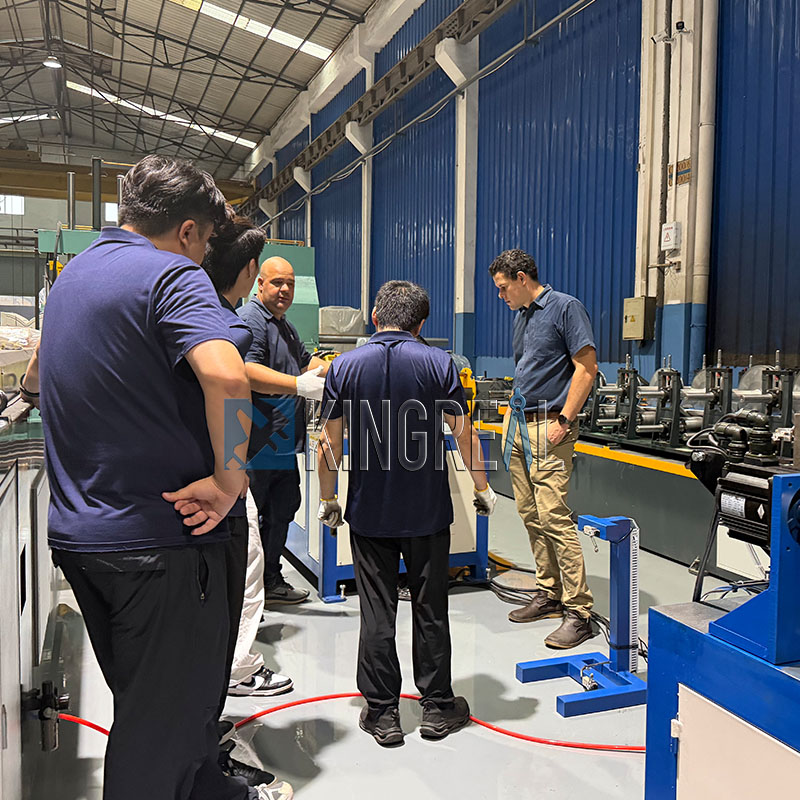
The South African client first verified the physical condition of the HVAC damper forming machine's components to ensure the hardware configuration matched the technical specifications outlined in the contract.
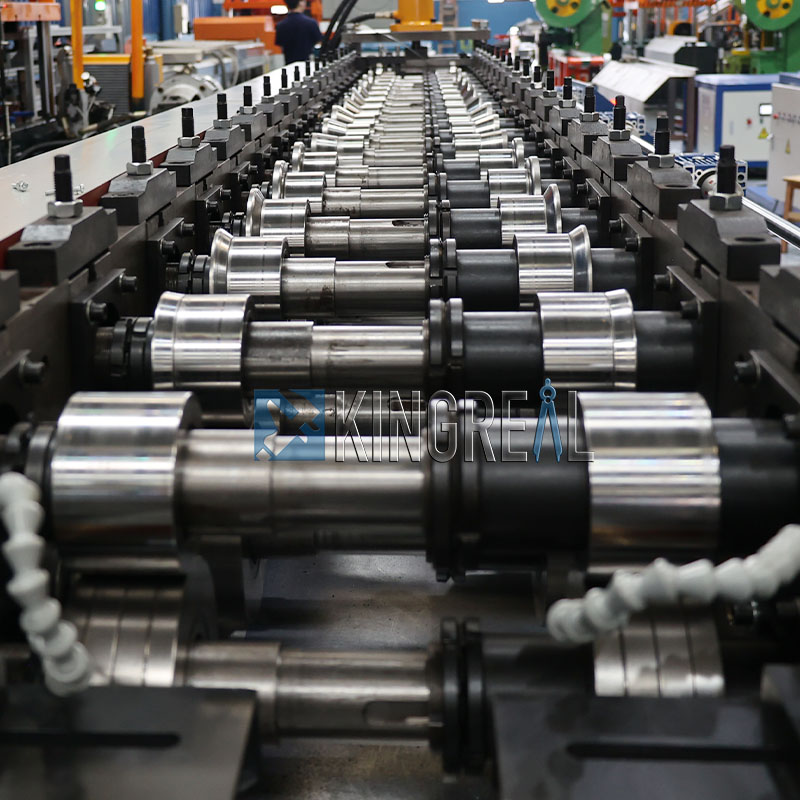
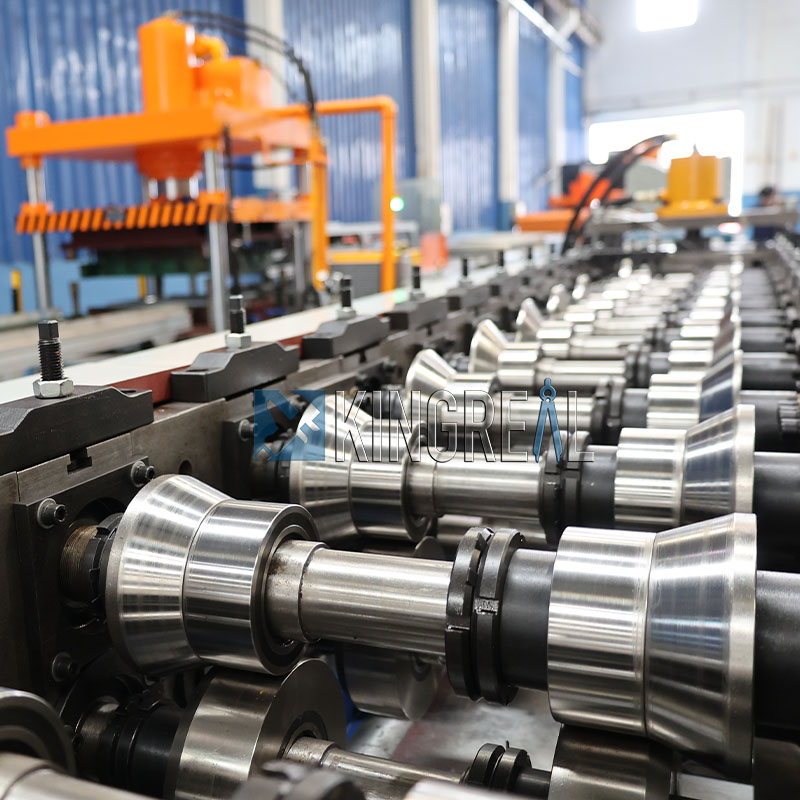
●Forming Roller: Inspection of the forming rollers' material, heat-treatment hardness, and chrome-plated finish. For HVAC damper making machines, roller wear resistance is a key factor determining the surface finish quality of the profiles.
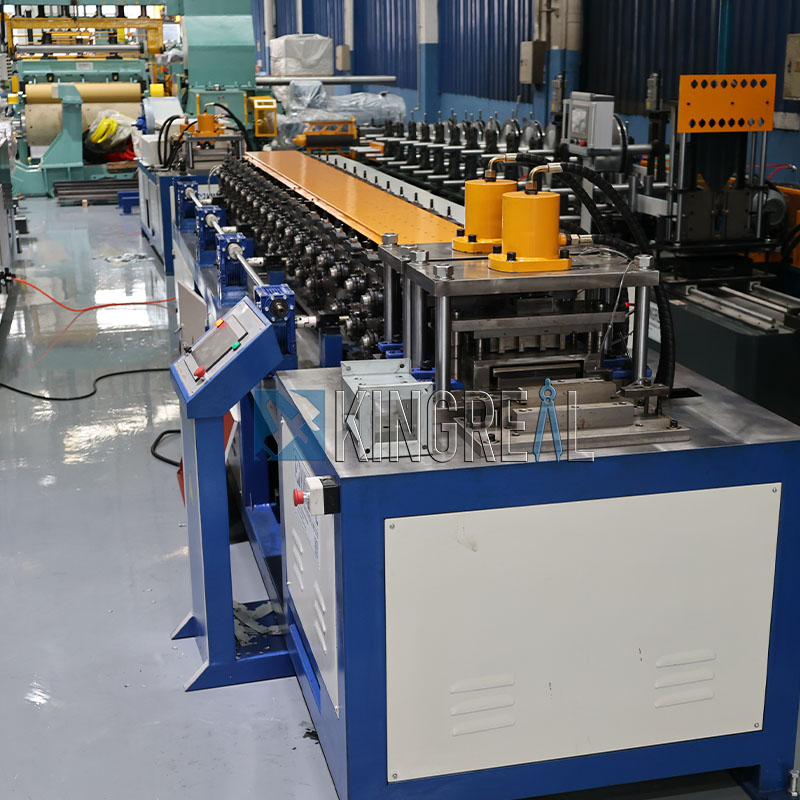
●Drive and Structure: Inspection of main shaft radial runout, the lubrication status of the drive system, and the rigidity of the welded machine frame. Verification that the machine base is level and welds are free of porosity.
●Safety Markings: Confirmation that clear safety warning labels are affixed to the HVAC damper forming machine and verification that the electrical control cabinet's grounding protection complies with electrical standards.
02/Dynamic Operation and Performance Verification
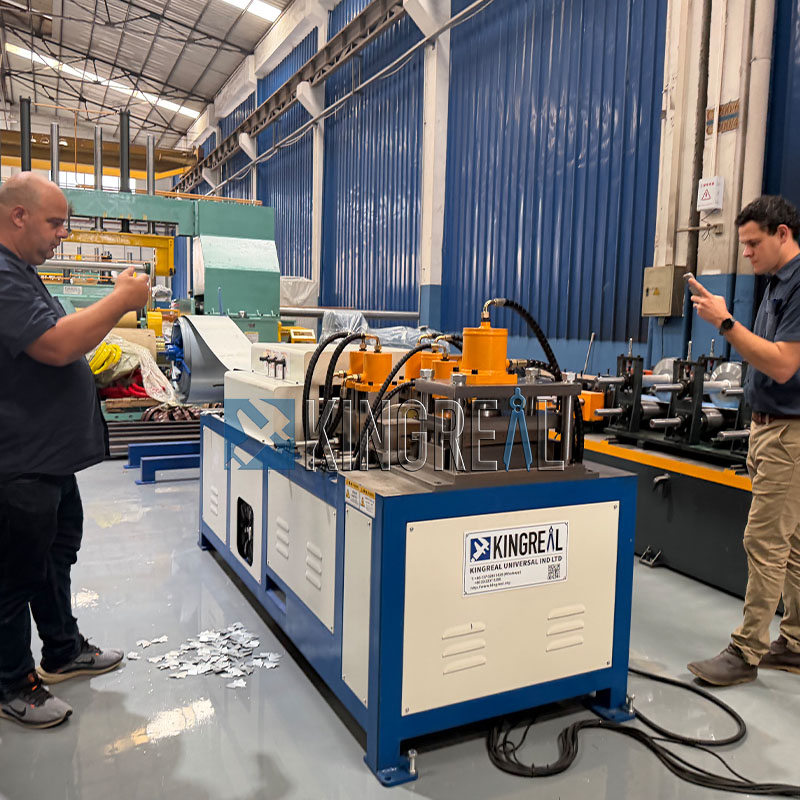
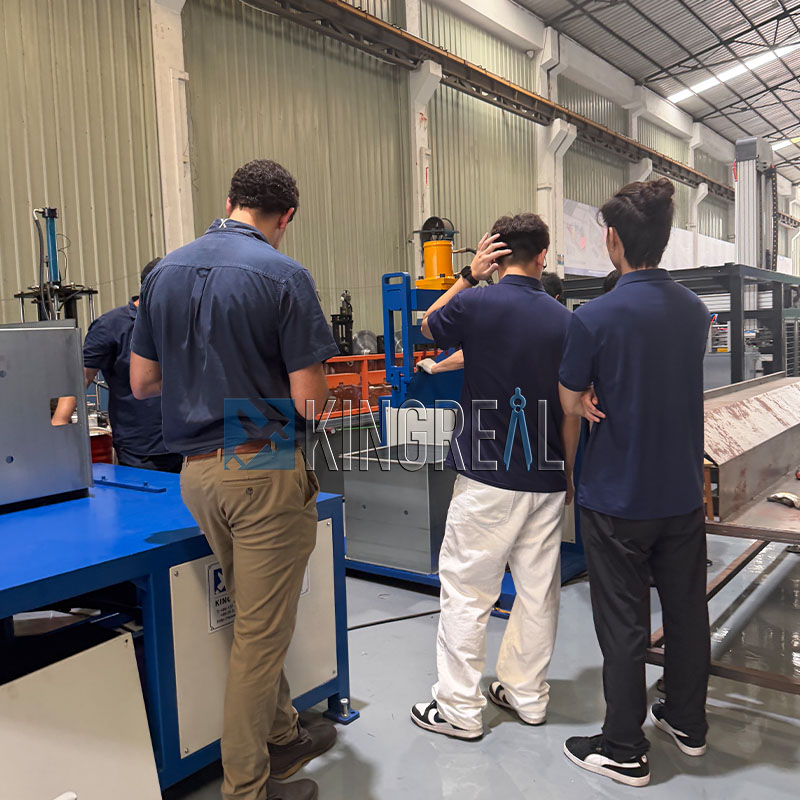
Once the static inspection is successfully completed, the HVAC damper making machine proceeds to the dynamic operation phase. This stage aims to simulate machine performance under high-intensity production conditions.
●Continuous No-Load Operation: The HVAC damper forming machine runs continuously without coil material loaded. The South African client focuses on monitoring temperature rises in the motor and gearbox, as well as checking for abnormal vibrations or mechanical noises.
During high-speed operation of the HVAC damper making machine, the stability of the bearing assemblies serves as a key indicator for evaluating assembly precision.
●Load-Bearing Production Test: KINGREAL conducts actual production runs using standard coil materials specified by the South African client.
●Production Speed Compliance: Verification that the HVAC damper forming machine meets the production speeds promised in the contract. At maximum design speed, the stability of the material feeding process is monitored to ensure that speed fluctuations do not cause profile deformation.
●Hydraulic System Stability: Pressure testing is performed on the HVAC damper making machine's hydraulic punching and cutting units. Checks are conducted for oil leaks at the hydraulic station, pressure consistency during continuous cutting operations, and the cooling system's ability to maintain oil temperature within the normal operating range.
03/In-Depth Forming Accuracy Inspection
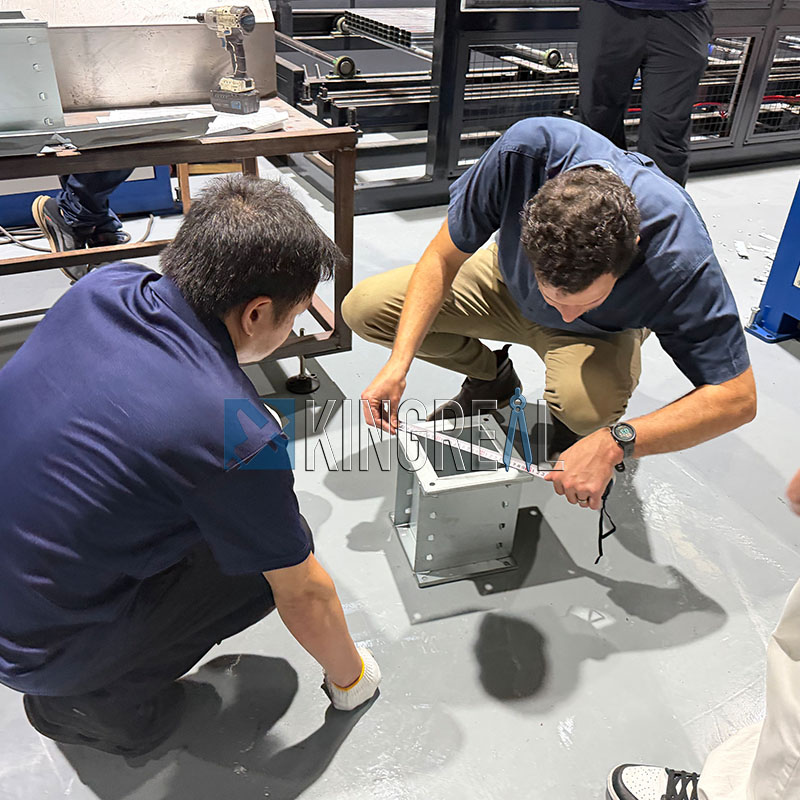
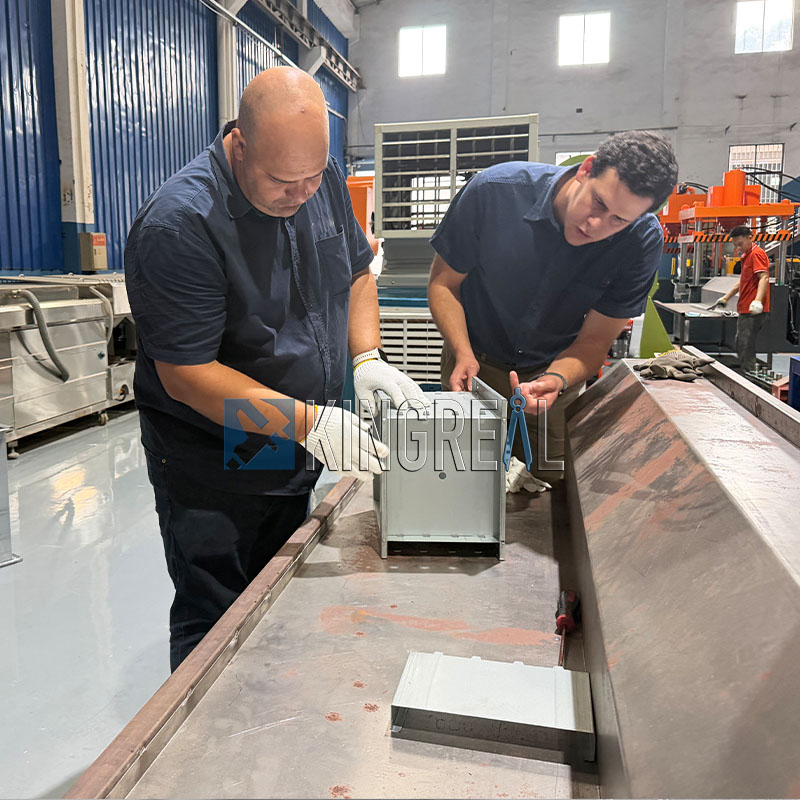
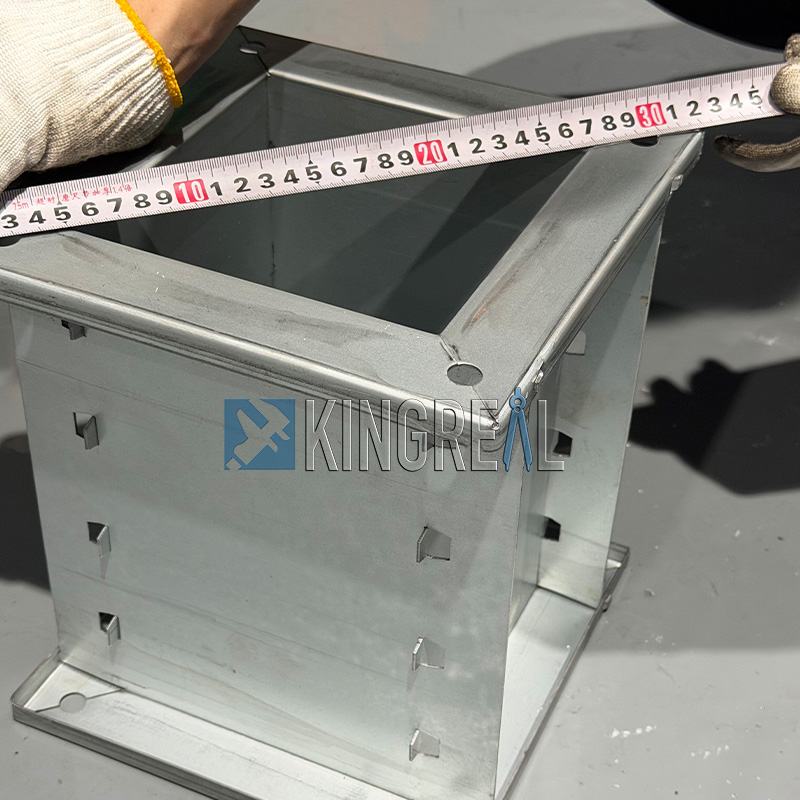
Forming accuracy is a core acceptance criterion for the HVAC damper forming machine, directly impacting the market competitiveness of the damper products. The KINGREAL team uses high-precision calipers and feeler gauges to compare actual measurements of profiles produced in various specifications.
●Cross-Sectional Dimensional Accuracy: Measurement of the damper frame's width and height. Profiles produced by the HVAC damper making machine must remain within extremely tight tolerances to ensure airtightness during damper assembly.
●Length Tolerance: Cutting precision is verified using the servo-driven length-cutting system.
●Straightness & Torsion: Particular attention is paid to detecting "side bow" or wavy edges in the profiles. Long profiles are placed on an inspection platform, and torsion over the span is evaluated by measuring any gaps.
●Surface Quality: Careful inspection of the profile surface after roll forming. The HVAC damper forming machine must not leave noticeable indentations, scratches, or coating damage on the finished product's surface.
04/Automation & Control System Verification
Modern HVAC damper making machines rely on highly integrated PLC control systems to achieve efficient production.
●PLC Logic Check: Verification of the operating interface language and data input response speed. The South African client entered various lengths and production quantities into the HMI to test the system's ability to execute commands accurately.
●Fail-Safe Response: KINGREAL technicians simulated abnormal conditions—such as emergency stop activation, hydraulic overpressure, and coil depletion—to observe whether the HVAC damper forming machine could safely shut down instantly and issue precise fault alarm messages.
●Multi-Specification Changeover Demonstration: This HVAC damper forming machine model is capable of producing multiple specifications. KINGREAL demonstrated on-site how to adjust parameters via the PLC panel and complete specification changeovers within minutes, verifying the HVAC damper making machine's flexible production efficiency.
05/Documentation & Accessories Inventory
The final step of the FAT involved verifying the accompanying bill of materials to ensure the client could proceed with installation and operation immediately upon receipt of the HVAC damper forming machine.
●Spare Parts and Toolkits: Verification of the included common consumables.
●Technical Documentation Check: Confirmation that complete technical documentation was provided, including the HVAC damper forming machine operation manual, electrical schematics, hydraulic schematics, and a wear-parts index list. These documents serve as critical references for the South African client's future preventive maintenance.
●FAT Report Signing: Both parties confirmed all measured data on-site and signed the acceptance report. Minor items requiring improvement identified during testing were recorded, and a deadline for rectification prior to shipment was agreed upon.
For KINGREAL, the successful completion of the FAT for the South African HVAC damper making machine project marks the satisfactory conclusion of the production phase. If any non-conformities be identified during the inspection, KINGREAL commits to conducting re-tests after resolving all technical issues, ensuring the client is completely satisfied.
This rigorous FAT process represents KINGREAL solemn commitment to the safety of the client's assets and their production efficiency.