
The Factory Acceptance Test (FAT) is a critical stage in the delivery process of a metal ceiling tile production line. Its primary objective is to verify that the equipment has been manufactured in strict accordance with technical specifications and customer requirements, and to ensure that the machine maintains consistent performance—matching its factory-tested state—after being disassembled, transported to the customer's facility, and reassembled.
Another key significance of the FAT is the early detection and resolution of potential technical issues. Conducting comprehensive testing prior to shipment allows for the timely identification of component interference, programming logic errors, or precision deviations.
This not only avoids the high costs and time delays associated with replacing parts after the metal ceiling tile making machine arrives on-site but also significantly shortens the on-site installation and commissioning period, ensuring the production schedule remains on track.
Key Stages of the Metal Ceiling Tile Production Line FAT
1. Inspection of the external condition of machine components
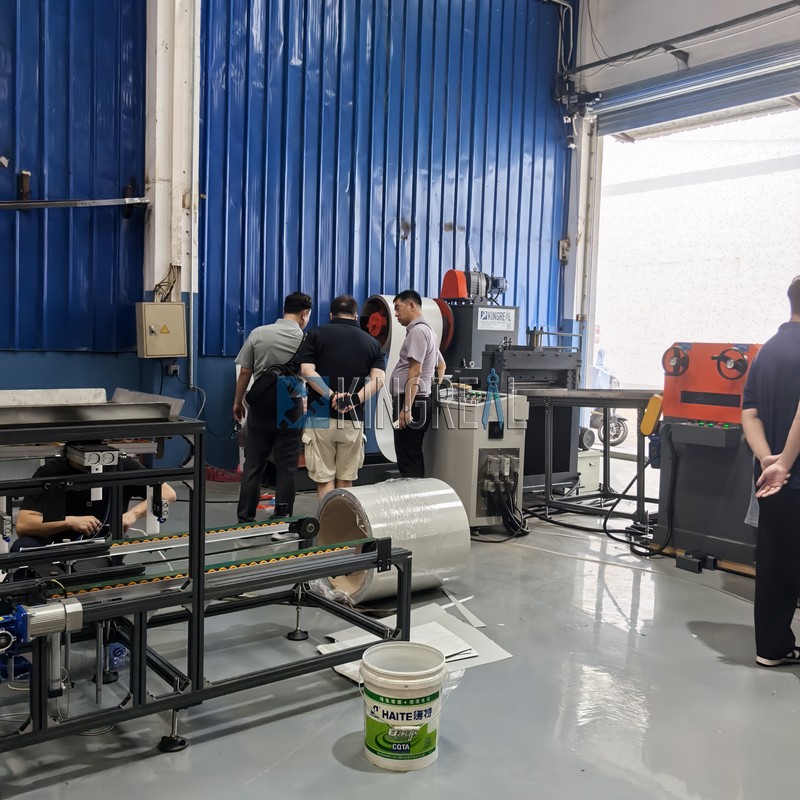
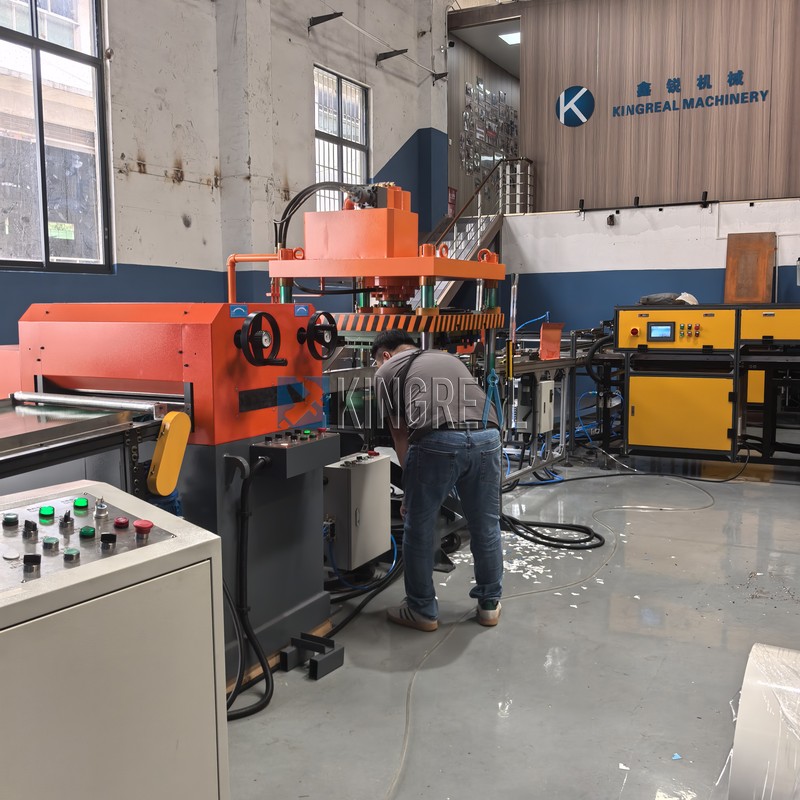
In a static environment, acceptance personnel conduct visual and physical inspections of the metal ceiling tile production line's key modules, referencing the packing list and technical specifications. Metal ceiling tile making machines typically consist of the following core components:
-Hydraulic Decoiler: Check if the expansion/contraction range of the support shaft matches the inner diameter of the aluminum or steel coils, and inspect the hydraulic station for any leakage.
-Precision Straightener: Verify the number of leveling rollers and their surface hardness treatment; check the flexibility of manual or automatic adjustment mechanisms.
-Servo Feeding Machine: Confirm the servo motor brand and power rating, the quality of the rubber coating on the feed rollers, and the adjustment precision of the feed length.
-Notching and Shearing Press: Focus on inspecting the material of the notching dies and their heat-treated hardness, as well as the sharpness and clearance of the shearing blades.
-Tile Flipping Machine: Check the stability of the flipping mechanism to ensure the material surface is not damaged during high-speed operation.
-Automatic Tile Feeding Machine: Verify the positioning accuracy of the robotic arm or conveyor belt.
-Automatic Bending and Forming Press: This is a critical step in the forming process; the structure and synchronization of the four-sided bending dies must be inspected.
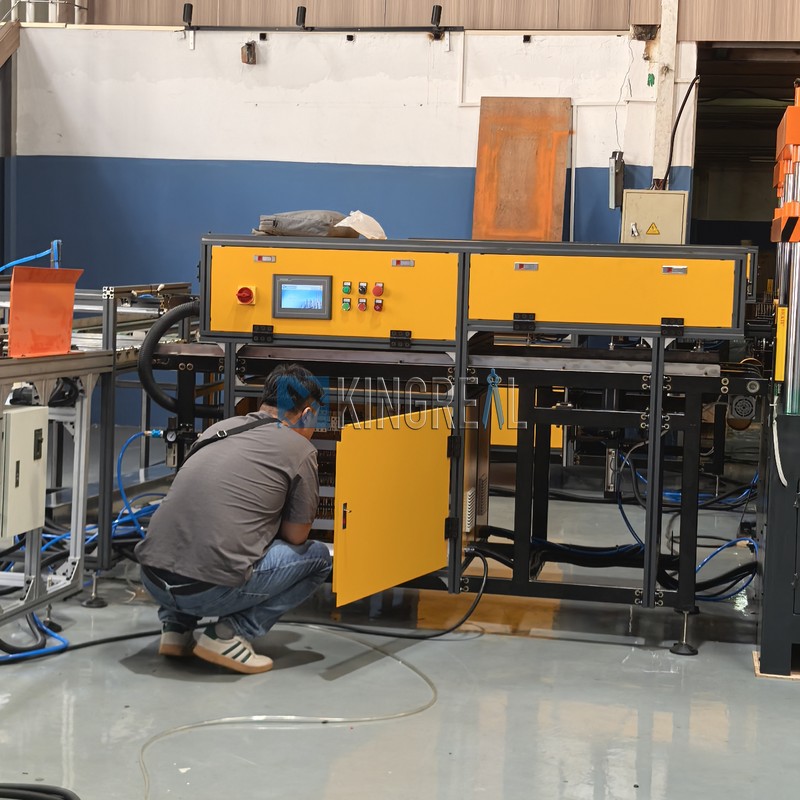
-Electrical System: Open the electrical control cabinet to verify that wiring meets standards, wire labels are clear, and the models of the PLC and variable frequency drives match contract specifications.
-Hydraulic System: Inspect the hydraulic pump station's cooling system, pressure gauge ranges, and the sealing reliability of all hydraulic circuits.
2. No-load Operational Test of Machine Components
With no raw materials loaded, activate the power and air supplies for the entire metal ceiling tile production line to conduct a no-load test. The focus here is on observing the smoothness and logic of the mechanical movements.
-Logic Verification: Verify the sequence of operations controlled by the PLC program. For example, check if the press descends accurately after material feeding is complete, and if the conveyor belt starts promptly after punching and cutting.
-Anomaly Monitoring: Monitor moving parts for abnormal vibrations or sharp friction noises.
-Safety Function Testing: Test the sensitivity of the emergency stop button, safety light curtains, and limit switches to ensure the machine stops immediately in the event of a fault, thereby protecting personnel safety.
-Thermal Run Observation: Run the metal ceiling tile making machine without load for a sustained period to check for abnormal temperature rises in bearings and gear reducers.
3. Actual Production Test with Material Loading
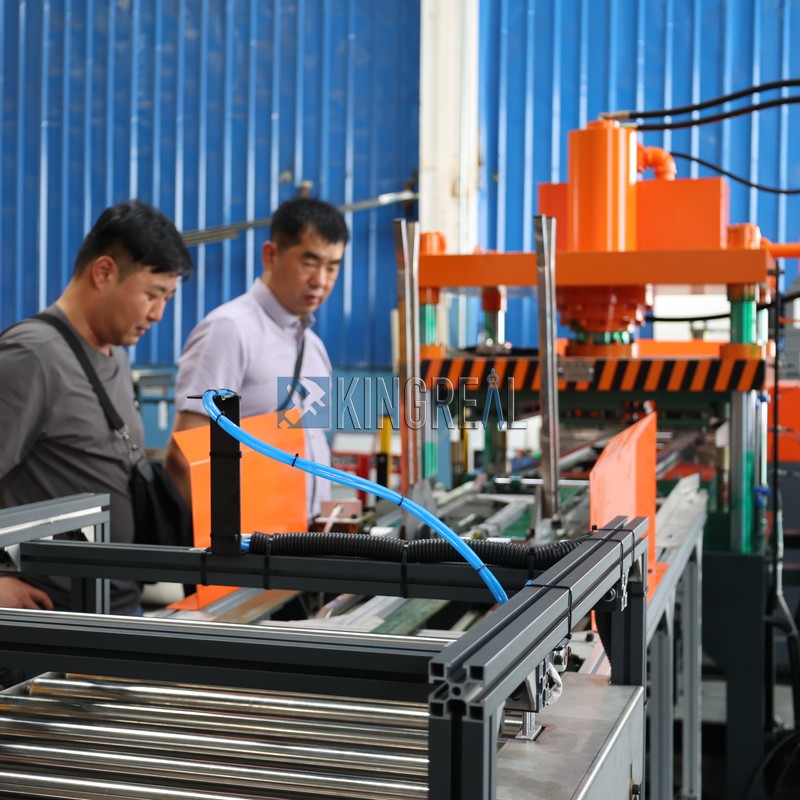
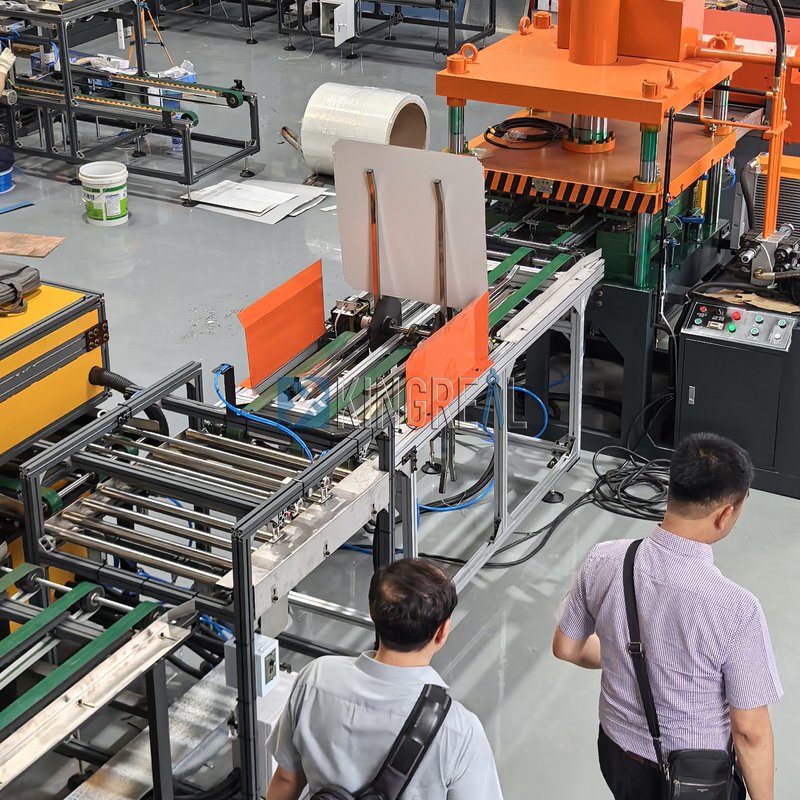
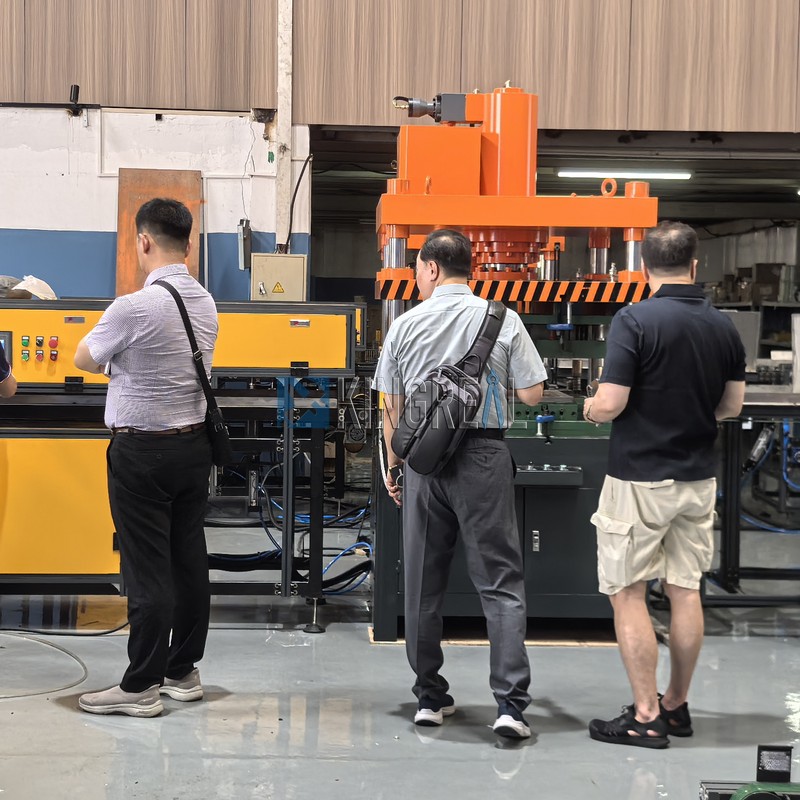
This is the most crucial phase of the FAT. By feeding actual metal coil stock into the system, the performance metrics of the entire metal ceiling tile production line are tested under real-world operating conditions.
-Production Speed Test: In accordance with the initial project agreement, this KINGREAL metal ceiling tile making machine must achieve a target output of 15 standard ceiling panels per minute. The customer will conduct on-site timing to record the output rate during continuous operation.
-Synchronization Adjustment: Observe the synchronization and coordination across all stations—from uncoiling, leveling, and feeding to punching, cutting, and bending. If the actual speed falls short or material accumulates, engineers must make on-the-spot fine-tuning adjustments to servo parameters or hydraulic flow rates.
-Forming Process Observation: Carefully observe the forming and bending process. For the four-side bending process, it is necessary to verify that the mold clamping force is uniform, the bending action is smooth, and there is no excessive spring-back causing angular inaccuracy.
-HMI Feedback: The customer operates the HMI to test the ease of setting parameters (such as length, quantity, and speed) and the system's response time.
4. Finished Product Measurement and Quality Inspection
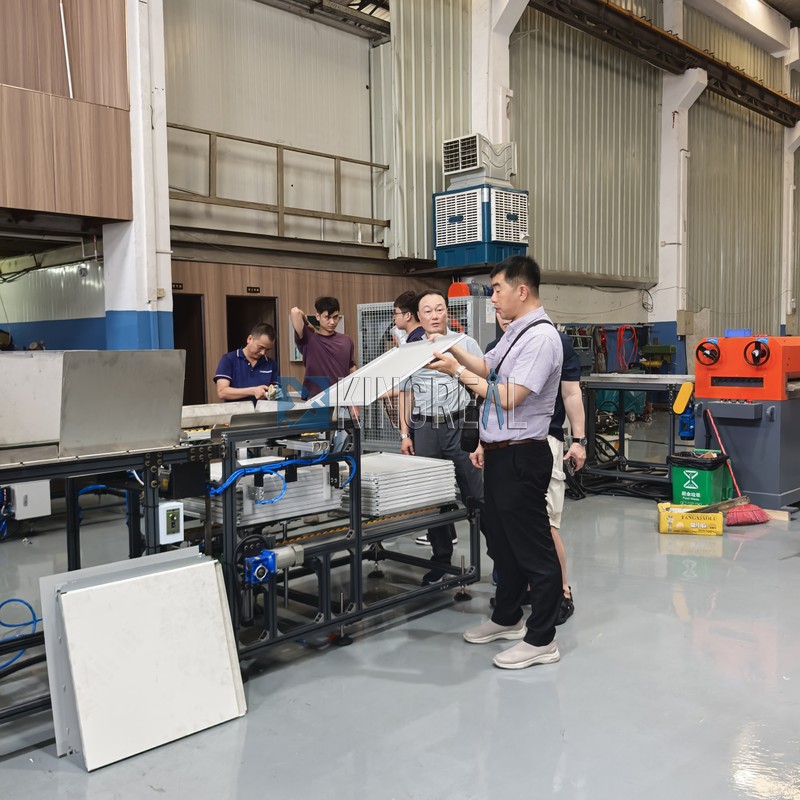
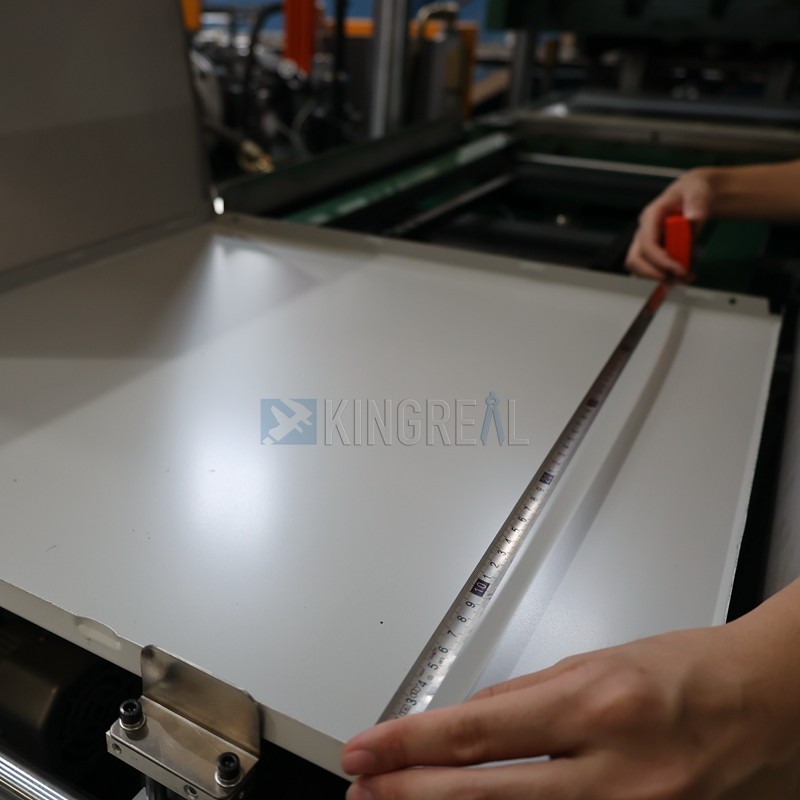
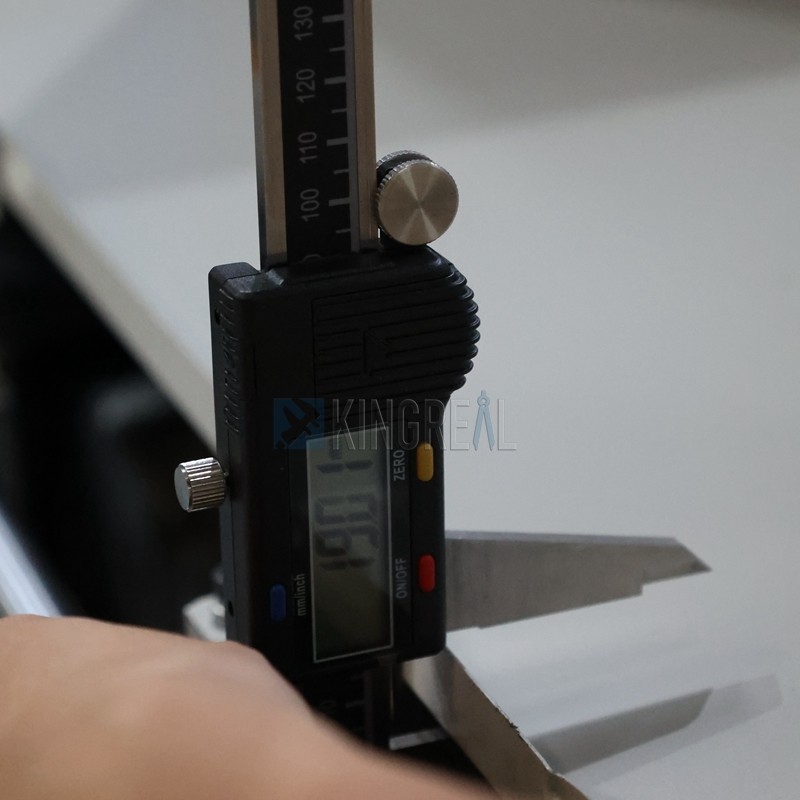
The manufactured products undergo rigorous dimensional and surface quality assessments to ensure metal ceiling tile production line consistency.
-Dimensional Accuracy: High-precision calipers or measuring tools are used to measure the length, width, diagonal difference, and bending height of the ceiling panels. Dimensional consistency is typically required to be within ±0.1mm.
-Surface Quality: The ceiling surface is inspected for scratches or indentations. For pre-coated materials, particular attention is paid to checking for coating cracks at the bend lines.
-Edges and Details: The precision of notch locations is checked, and sheared edges are inspected for burrs. Acceptable finished products must have smooth edges and be free of visible metal debris.
-Flatness: The finished product is placed on a standard inspection platform to check for warping or waviness, thereby verifying the performance of the leveling machine.
The FAT for the metal ceiling tile making machine is not merely a simple performance check; it is a crucial guarantee of the customer's return on investment.
Once a metal ceiling tile production line is manufactured at the KINGREAL factory, we invite the customer to participate in a comprehensive on-site acceptance test. Equipment is cleared for shipment only after passing all-encompassing tests covering external condition, dry-run logic, loaded operating speed, and finished product accuracy.
For more information on metal ceiling production technology or customized FAT procedures, please contact the KINGREAL technical team directly. We are ready to provide professional technical support and on-site service solutions.