
To ensure that a steel coil slitting line meets its design specifications and maintains operational stability before delivery to the customer, a Factory Acceptance Test (FAT) is an essential step.
For a steel coil slitting machine, the FAT is a systematic verification procedure designed to confirm that the equipment’s mechanical structure, electrical systems, and functional configurations fully comply with the technical agreement.
FAT for Steel Coil Slitting Lines
The FAT for a steel coil slitting line is typically conducted after the equipment has been fully assembled at the manufacturing facility.
The core of the acceptance process includes a detailed inspection of the steel coil slitting machine’s external condition, verification of the electrical systems, and simulated "dry-run" (no-load) operation.
It is important to note that the FAT process for a steel coil slitting line differs significantly from that of other types of machine. In actual operation, a complete steel coil slitting line requires a deep pit—known as a looping pit—to manage tension differences in the steel strips after they have been slit.
Because of this specific foundation requirement, it is not possible to perform full-scale, loaded operational tests (such as processing actual steel coils or evaluating the quality of the slit strips) on the flat factory floor.
Given this technical constraint, rigorous dry-run testing and precise dimensional measurements become critical components of the acceptance process.
Key Steps in FAT for a Steel Coil Slitting Line
1) Inspection of the Steel Coil Slitting Line’s External Condition
●Appearance and Protective Coating Check:
The KINGREAL team conducts a thorough inspection of the entire steel coil slitting machine to ensure the paint is applied evenly, checking for any missed spots or blistering. Additionally, all major components—such as the decoiler, the slitting head, and the recoiler—are inspected for visible scratches, impact damage, or signs of rust.
●Geometric Dimension Measurement of Critical Components:
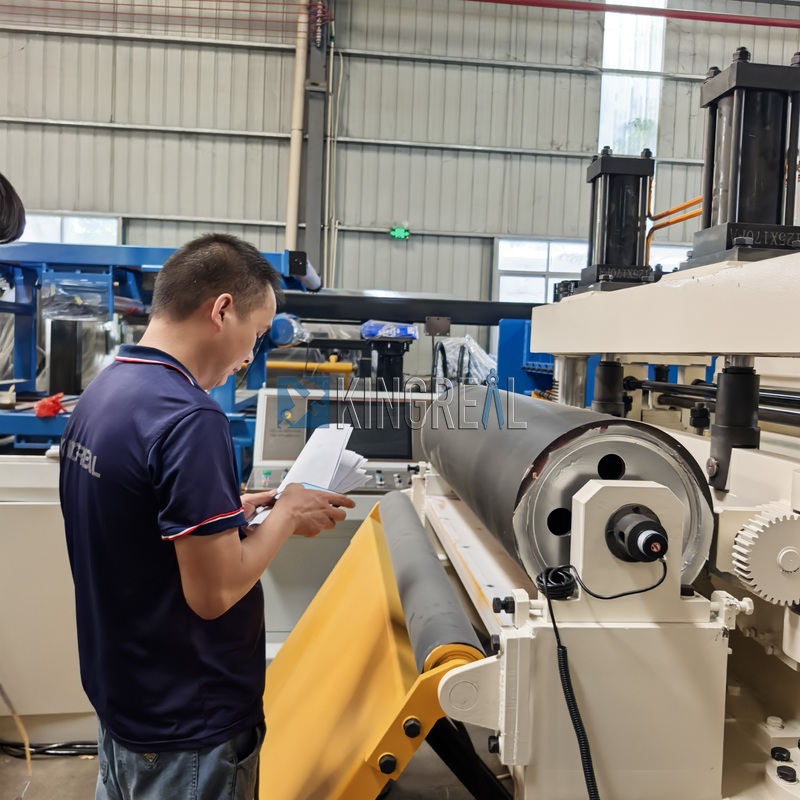
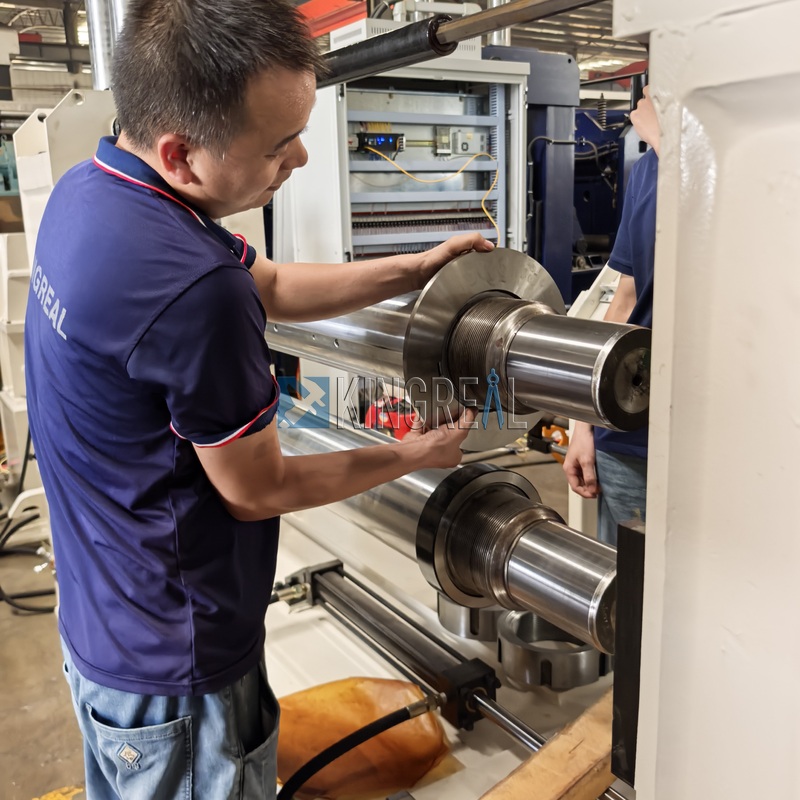
The inspection team focuses on measuring key parameters, including the diameter of the slitter shafts, the effective length of the recoiler mandrel, and the spacing of the strip-guiding/separator components.
For instance, the runout and diameter tolerance of the slitter shafts are direct determinants of the precision of the slitting process.
The KINGREAL team uses high-precision measuring instruments to verify that these dimensions align perfectly with the technical drawings.
●Verification of Electrical Brands and Configuration Parameters:
A steel coil slitting line relies on a complex automated control system.
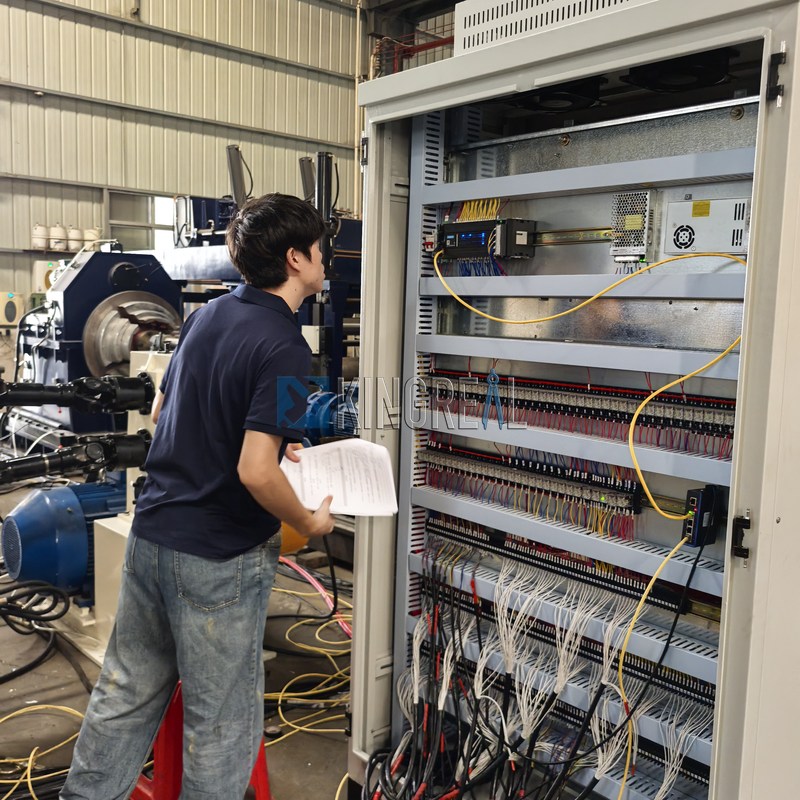
During the acceptance process, the team references the original configuration list to cross-check the brands, models, and quantities of components—such as PLCs (e.g., Siemens or Mitsubishi), variable-frequency drives (VFDs), servo motors, and various sensors.
This ensures that all equipment matches the technical specifications previously agreed upon with the client, preventing any future issues with spare part incompatibility.
2) No-Load Operational Testing
When it is not possible to load material, a no-load run serves as the most effective method for evaluating the operational logic and mechanical coordination of the steel coil slitting machine. This process is divided into two phases: manual mode and automatic mode.
●Individual Component Testing (Manual Mode):
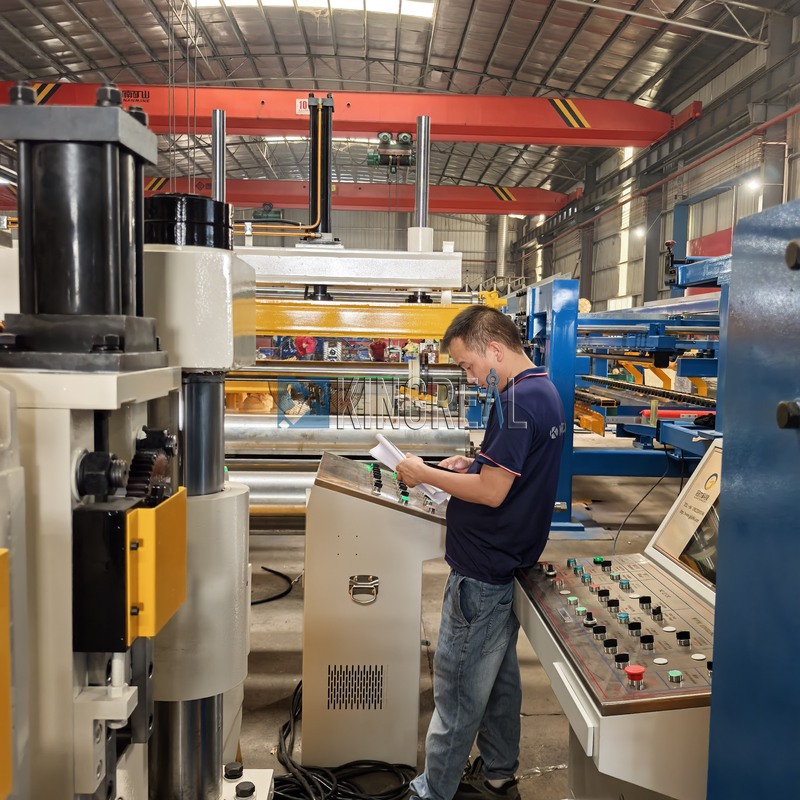
In manual mode, KINGREAL engineers activate each unit of the steel coil slitting line independently. This includes the expansion and rotation of the decoiler, the clamping and lifting of the feed rollers, the rotation of the slitting head, tension adjustment for the waste collection device, and the operation of the discharge pusher plate on the recoiler.
These individual tests confirm that each hydraulic cylinder, pneumatic cylinder, and motor moves in the correct direction and that there are no abnormal noises or signs of overheating.
●Integrated Line Testing (Automatic Mode):
Once the individual component checks are successfully completed, the steel coil slitting machine is switched to automatic mode.
In this state, all components across the entire steel coil slitting line operate in synchronization according to the pre-programmed production logic. This step is primarily designed to assess the operational fluidity of the system.
KINGREAL personnel closely monitor the stability of the entire steel coil slitting machine at various speeds, check for any synchronization delays between units, and verify that safety mechanisms—such as emergency stop buttons and safety light curtains—effectively cut off power when the system is running in automatic mode.
3) Inspection of Accessories and Wear Parts
The high-precision cutting capability of a steel coil slitting line depends entirely on its integrated tooling system. Consequently, the inspection of accessories and wear parts is a critical component of the Factory Acceptance Test.
●Verification of Slitting Blades and Spacers:
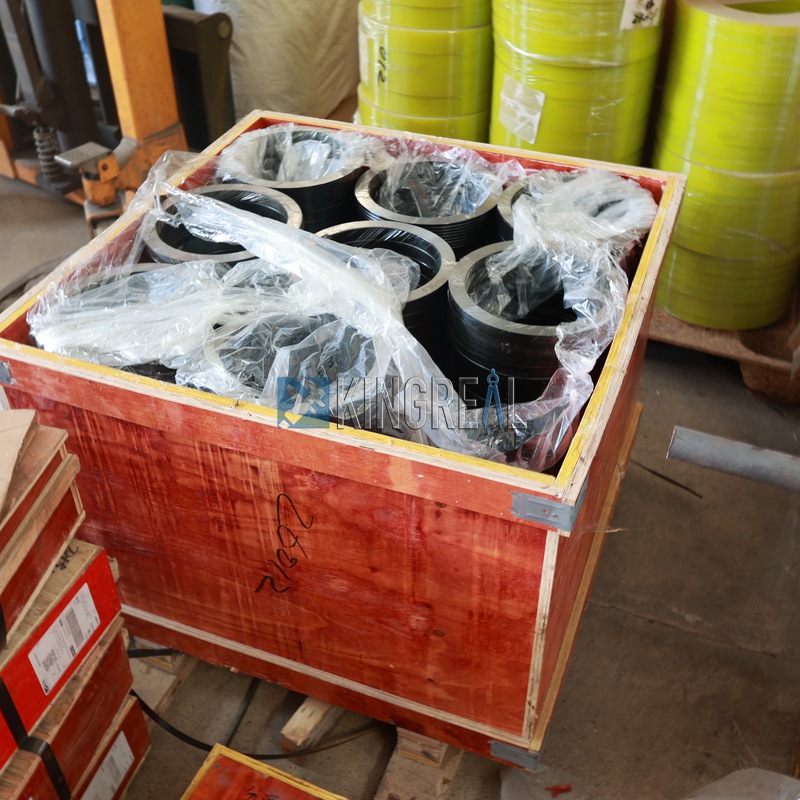
For every steel coil slitting line, KINGREAL provides high-hardness alloy tool steel blades (such as Cr12MoV or SKD-11). During the acceptance process, KINGREAL engineers will select a sample of these blades to verify their thickness tolerances and flatness.
●Simulated Tooling Setup Test:
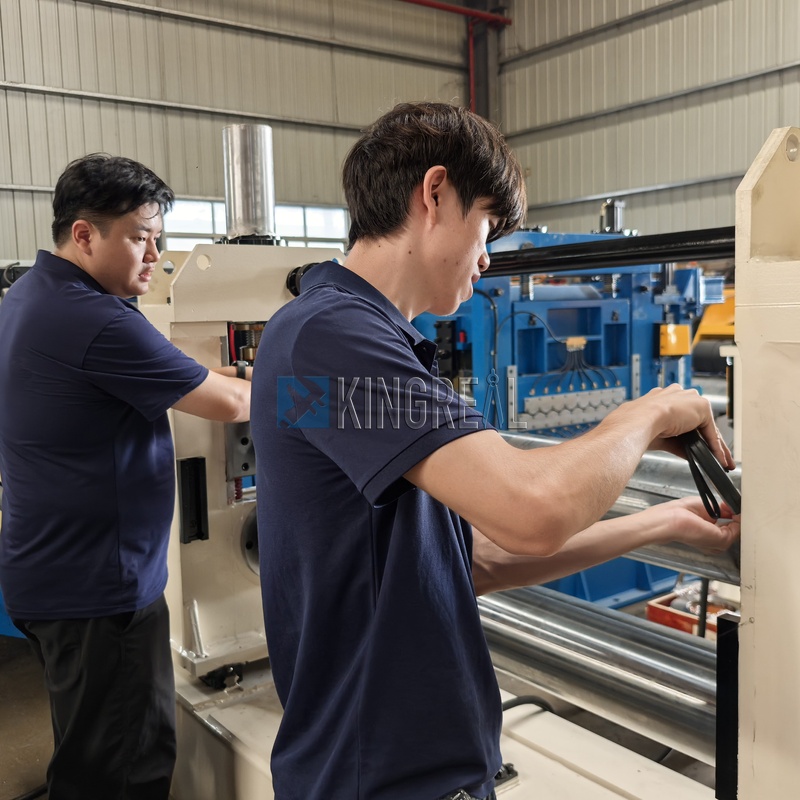
To ensure that the supplied blades and spacers can be installed smoothly onto the steel coil slitting machine’s arbors, KINGREAL engineers will demonstrate the setup process on-site.
By mounting the blades onto the arbors and securing them, they verify that the fit tolerances are appropriate, ensuring that the customer can perform tooling configurations efficiently upon receiving the steel coil slitting machine. Additionally, the team will confirm that all included maintenance tool kits, spare seals, and technical documentation are complete.
A rigorous Factory Acceptance Test (FAT) process is essential to ensuring the quality of a steel coil slitting line. Although site-specific foundation constraints may prevent full-scale material-loading tests at the factory, the combination of precise external measurements, integrated logic testing across the entire steel coil slitting machine, and in-depth component verification minimizes the risk of malfunctions during on-site installation abroad.
KINGREAL applies stringent standards to every acceptance criterion for steel coil slitting lines. Our goal is to ensure that once the steel coil slitting machine arrives at the customer’s facility, it requires only basic positioning, electrical wiring, and the addition of hydraulic oil to be ready for full-scale production—thereby saving the customer significant time and costs associated with on-site commissioning.