


What Types of Solar Channels Are There?
2025-12-06 16:51Solar channels are precision profiles produced by solar channel machines and are a core component of solar power installation systems. Ensuring long-term dependability and meeting the energy demands of several uses—including residential, business, and industrial—they offer a sturdy and long-lasting base for solar systems.
What is a Solar Channel?
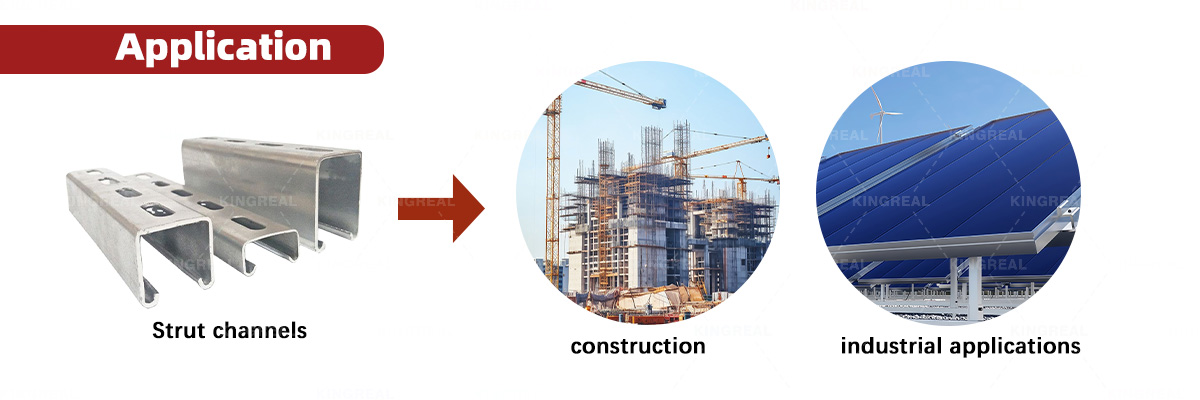
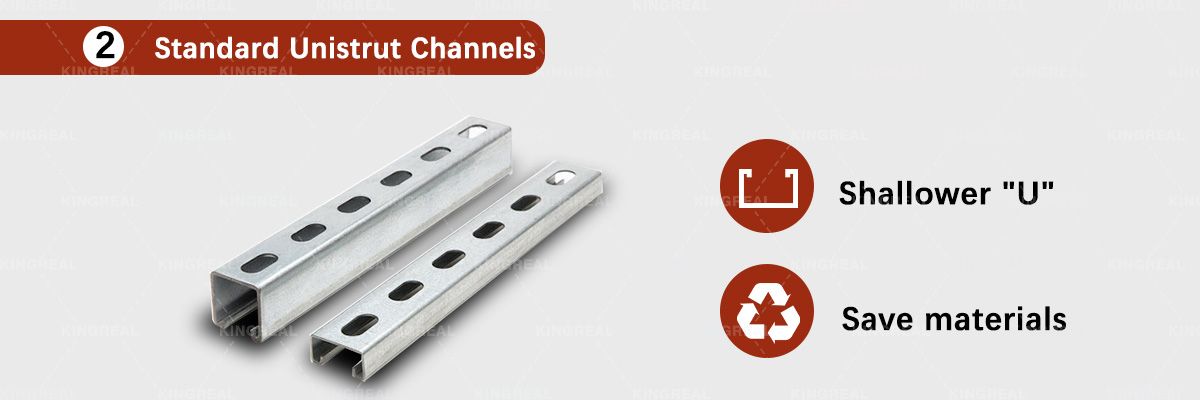
Solar channels are standardized metal frame components, commonly available in sizes including 41 × 21, 41 × 41, 41 × 62, and 41 × 82 mm. They are widely used in photovoltaic systems, cable management, and as hangers for pipes and ducts. During installation, no welding or drilling is required; a complete support structure can be assembled using only standard brackets, bolts, and nuts.
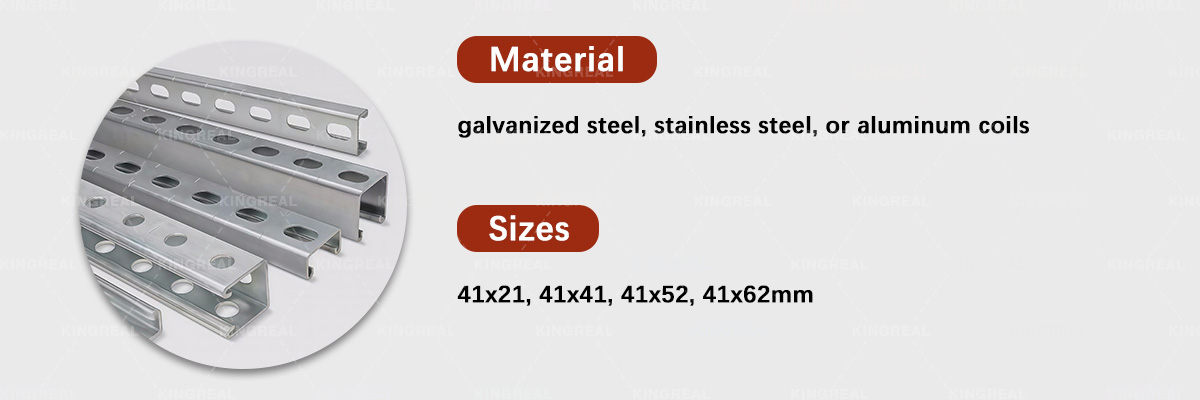
Depending on their cross-section, solar channels are generally constructed of aluminum or steel and fall under the categories C-type or U-type. Along their length, these profiles have equally spaced slots that enable the attachment of connectors, clamps, and other equipment. Perfect for uses needing great structural flexibility and adjustability, solar channels may be constructed of stainless steel, galvanized steel, or other coated materials to withstand corrosion in challenging surroundings. With the increasing demand for solar channels, advanced photovoltaic mounting machine forming machines have emerged.
Different Types of Solar Channels
There are several kinds of solar channels, each with own applications and specifications. Consequently, in choosing an appropriate solar channel one has to carefully evaluate variables including project demands, cost-effectiveness, and geographic surroundings.
1. Based on Cross-Section
1.1 C Solar Channel
The C solar channel has a C-shaped cross-section with flanges on both sides and rolled edges. This structure makes it not only lightweight and aesthetically pleasing but also relatively strong in bending resistance, especially in the direction perpendicular to the web. Under the same material thickness and cross-sectional conditions, the C solar channel can withstand greater bending moments. Therefore, it performs well in fixing solar panels and handling lateral wind loads. Through custom-designed flange and web bolt connections, the C solar channel significantly enhances connection strength and is suitable for areas with high loads, such as ground-mounted photovoltaic power stations, mountainous areas, and coastal areas.
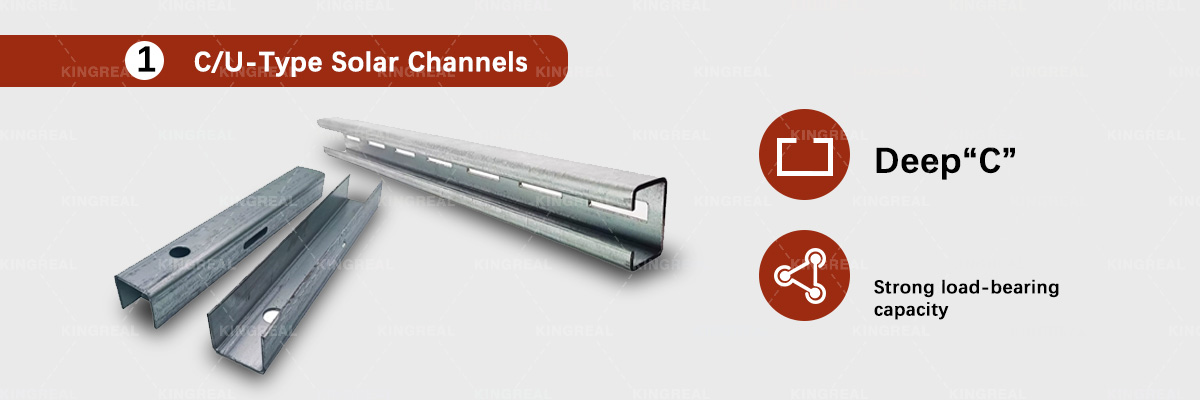
1.2 U Solar Channel
The U solar channel has a U-shaped cross-section and a simple appearance. While exhibiting good bending resistance parallel to the bottom edge, its bending resistance perpendicular to the bottom edge is slightly insufficient. However, through a reasonable structural combination, the U Solar Channel can still meet the mechanical requirements of photovoltaic mounting systems. Its mounting points are pre-processed during manufacturing, allowing for flexible adjustment according to site requirements. The U Solar Channel offers flexibility in its opening direction, making it particularly suitable for PV systems requiring bracket adjustment or easy installation of other components, and is commonly used in rooftop PV power plants.
2. By Material
Currently, the mainstream materials for solar channels are three: concrete, steel, and aluminum alloy.
2.1 Concrete Solar Channel
Concrete solar channels are typically used in large-scale PV power plants. Due to their significant weight, these mounting systems generally can only be installed in areas with good foundations. However, they offer extremely high stability and can effectively support large solar panels.
2.2 Aluminum Alloy Solar Channel
Aluminum alloy solar channels are generally used for residential building roofs. Aluminum alloys are favored for their corrosion resistance, light weight, and aesthetic appeal. However, their load-bearing capacity is relatively low, making them unsuitable for large-scale PV power plants. In addition, aluminum alloys are slightly more expensive than hot-dip galvanized steel, but remain an ideal choice for solar channels.
2.3 Steel Solar Channels
Steel solar channels are widely used in civil and industrial solar channels and photovoltaic power plants due to their stable performance, mature manufacturing process, and strong load-bearing capacity. During manufacturing, solar channels are factory-produced, with standardized specifications, stable performance, corrosion resistance, and an aesthetically pleasing appearance. The integrated steel support system requires only specially designed connectors for on-site installation, resulting in fast construction speed and eliminating the need for welding, thus ensuring the integrity of the anti-corrosion layer. Although the connectors for this product have complex processes, a wide variety, and high requirements for manufacturing and design, this also leads to its higher price.
3. Based on Hole/Groove Design
3.1 Solid Channel
Solid channels are designed to provide maximum strength and rigidity. Because they have no grooves, they offer a secure connection solution for projects requiring fixed and stable installations. This design is often used in frames and support systems that require stable alignment and do not require adjustment.
3.2 Punched Channel
Punched channels facilitate the connection of solar panels to the support structure using bolts or other fasteners, thereby enhancing the stability and wind resistance between the solar panels and the support.
3.3 Slotted Channel
Slotted channels feature evenly distributed rectangular holes (typically 14×28 mm) along the length of the channel. This eliminates the need for on-site drilling, speeds up alignment, allows for thermal expansion, and reduces the chance of installation errors.
KINGREAL Customized Solar Channel Manufacturing Solutions
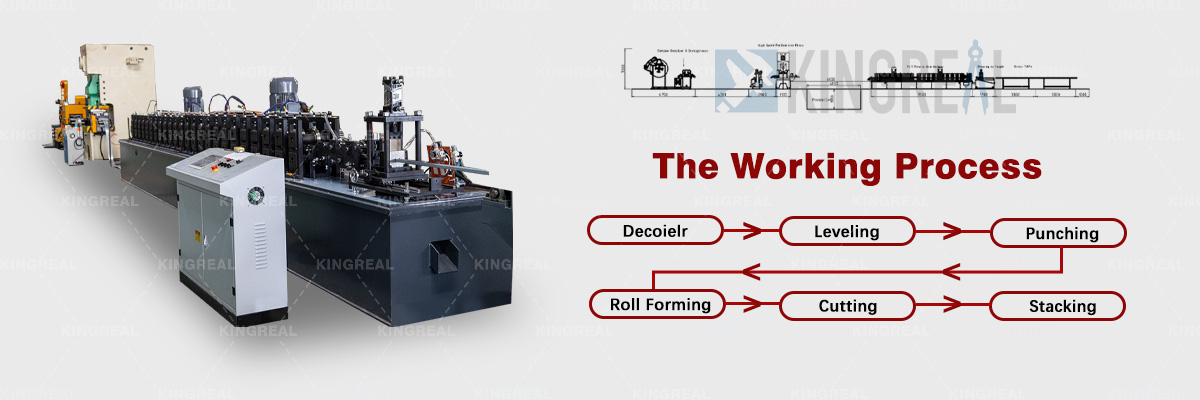
KINGREAL offers a variety of photovoltaic support CU solar channel machines, covering parameters such as processable material thickness, number of roll forming rollers, punching technology, and operating speed. All can be customized to meet the specific project requirements of KINGREAL customers. For more information about KINGREAL solar channel machines, please contact the KINGREAL team for professional consultation and support!