


Metal Perforated Machine Working Principle: A Complete Guide for 2026
2026-03-04 17:58In modern manufacturing, have you ever wondered how uniform, multi-patterned holes are created on the surface of metal materials? The answer lies in metal perforated machines, sometimes called plano-type perforated metal machines. These steel perforated machines, characterized by their high efficiency and speed, are specifically designed for punching holes in metal surfaces and are widely used in industries such as construction, automotive, aerospace, and electronics. Equipped with customized punching dies and high-tonnage metal punching machines, metal perforated machines allow for precise punching of metal materials. Compared to manual drilling or manual machines, metal perforated machines significantly reduce labor costs and improve production efficiency and product quality.
In this article, we will explore the following topics in depth:
● How Metal Perforated Machines Work
● Key Components of Metal Perforated Machines
● Types of Metal Perforated Machines
● Advantages of Metal Perforated Machines Compared to Other Methods
Let's understand the principle of one of the most efficient punching processes in modern manufacturing—the steel perforated machine!
How Metal Perforated Machines Work
Steel perforated machines' main operating idea is to employ impact force to create holes of a set shape by punching the metal material. Usually, specialized punching machines which govern criteria like pressure and speed to guarantee exact hole dimensions and consistent shapes perform this procedure.
Basic Working Principle:
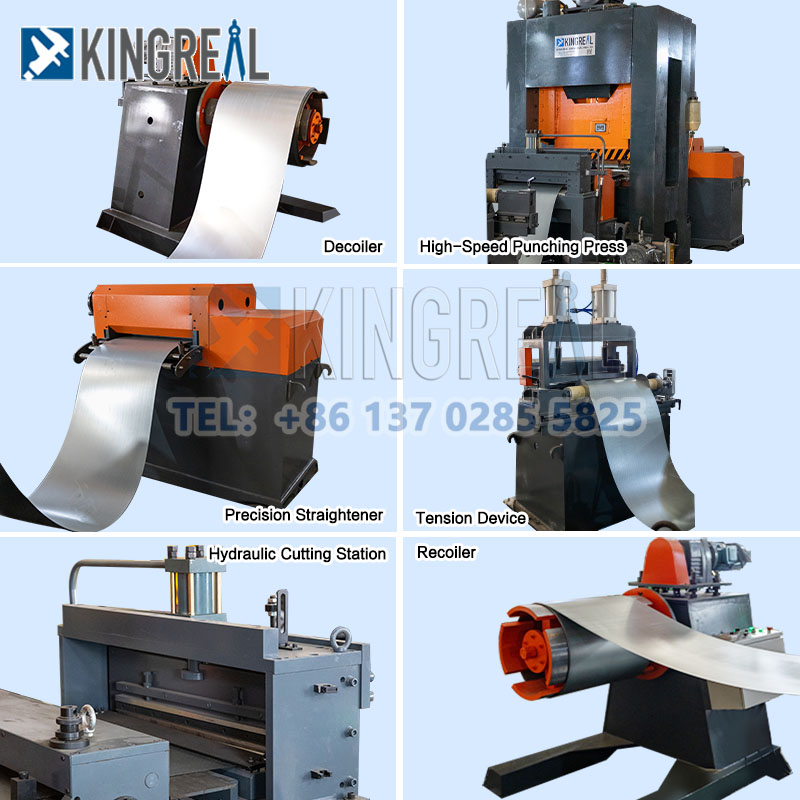
Material Unwinding: First, the metal coil is unwound and fed into the steel perforated machine. This step ensures the metal material is evenly flattened for subsequent processing.
Material Leveling: Next, the steel perforated machine uses a leveling machine to level the metal material, restoring its flatness to meet the punching accuracy requirements.
Material Punching: After ensuring the material is flat, the machine continuously punches holes in the material surface. This step is the core of the entire process, precisely punching holes in the metal material using pre-set dies and the punch press.
Cutting or Rewinding: Finally, the punched material can be selectively cut to the required size or rewound for convenient subsequent transportation and processing.
Professional Tip: Constant punching maximizes hole accuracy, therefore guaranteeing excellent punched items in addition to boosting manufacturing effectiveness. In mass manufacturing especially, this technique guarantees consistency in the diameter and form of every hole to satisfy the demands of many industrial uses.
Key Components of Metal Perforated Machine
A high-quality steel perforated machine consists of several key components that work together to produce metal punched materials with high precision and efficiency.
Main Components and Their Functions:
Decoiler: Responsible for fixing and unwinding the metal coil for feeding into the machine. The design of the decoiler directly affects the stability of the material and the feeding accuracy; therefore, selecting a high-quality decoiler is crucial.
Leveling machine: The leveling machine levels the material to ensure the flatness of the metal surface and improve punching accuracy. It works by applying uniform pressure from multiple rollers to flatten the material.
Feeding Guide System: This system is responsible for accurately aligning and guiding the material into the punch press, ensuring a smooth punching process. The precision of the feeding guide system is crucial to the entire punching process and effectively reduces production errors.
Punch Press: The punch press is the core component for creating the required hole shape on the metal surface. It uses the powerful pressure from the punch to create holes in the metal surface. Punch presses can be configured with different punches to meet diverse design requirements and different production needs.
Cutting or Rewinding Machine: After punching, the material can be sheared to a specific length by a shearing machine or rewound by a recoiler. Both methods are extremely important for downstream processing.
PLC Control System: Automating and monitoring the whole punching process, the PLC control system offers an effective human-machine interface that guarantees operators can easily set and monitor production parameters.
KINGREAL offers customized metal perforated machines with advanced automation and precision control systems to meet various customer production needs.
Types of Metal Perforated Machines
Metal perforated machines are available in several types and configurations depending on the application requirements. Each steel perforated machine offers unique advantages and is suitable for different production environments and product requirements.
Metal Perforated Machine Types:
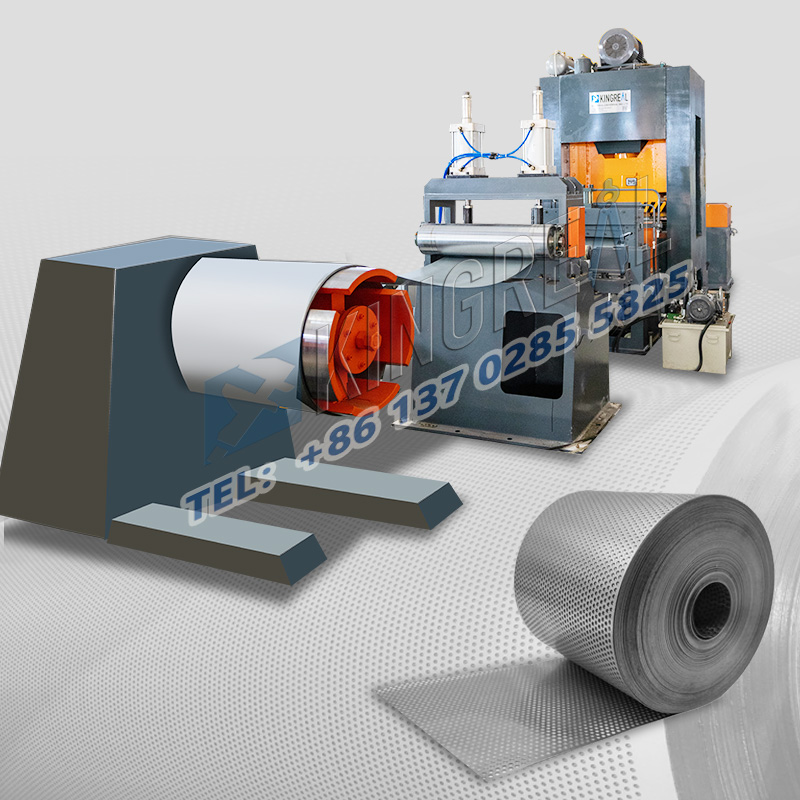
Coil to Coil Perforation Line: This type of metal perforated machine is equipped with a recoiler, allowing the metal material to be rewound after punching, facilitating subsequent long-distance transportation or secondary processing.
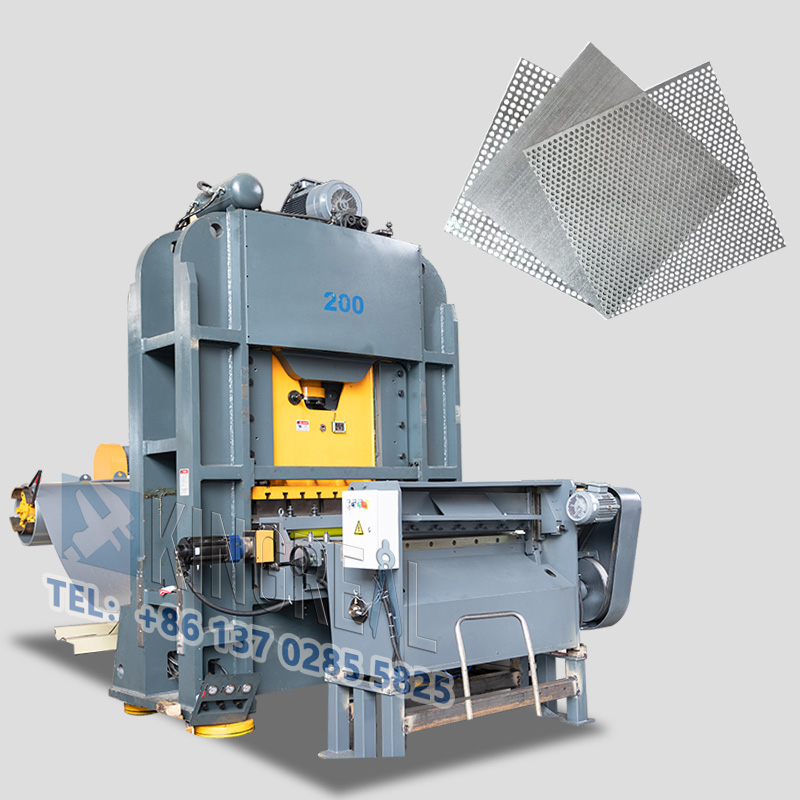
Metal Sheet Perforated Machine: This type of steel perforated machine uses a cutting machine to cut the material to a specific length after punching for subsequent processing.
Dual-function Metal Perforated Machine: For customers with both punching and shearing needs, KINGREAL can equip steel perforated machines with both a cutting station and a recoiler. Flexible control of the cutting station and recoiler improves overall production efficiency. However, these two components cannot be used simultaneously.
Advantages of Metal Perforated Machines Compared to Other Methods
Steel perforated machines are increasingly favored by companies due to their high efficiency, precision, and economy. Compared to manual punching and other punching methods, metal perforated machines offer significant advantages.
Reasons to choose steel perforated machines:
Reduced labor costs and automated processes: Automation significantly reduces labor requirements, lowers production costs, and improves overall economic efficiency.
Flexible tonnage selection: KINGREAL offers a variety of punching press options to suit different production needs, including 120-ton, 125-ton, 160-ton, and 200-ton models. Specific configurations can be determined based on factors such as hole shape, material width, material type, and material thickness.
Consistency and High Quality: Through a high-precision production process, metal perforated machines ensure the mass production of highly consistent metal perforated materials. Whether in shape, size, or surface quality, there is virtually no variation between products, meeting industry standards.
High Adaptability: Steel perforated machines can be flexibly configured to meet diverse market demands, making them suitable for various types of metal materials and industrial applications.
High Production Efficiency: Continuous punching operations minimize production cycles and maximize production efficiency, resulting in extremely high equipment utilization.
Looking for customized steel perforated machine manufacturing solutions? KINGREAL provides high-speed, high-precision metal perforated machines to manufacturers worldwide.