Global Ceiling T Bar Machine Projects
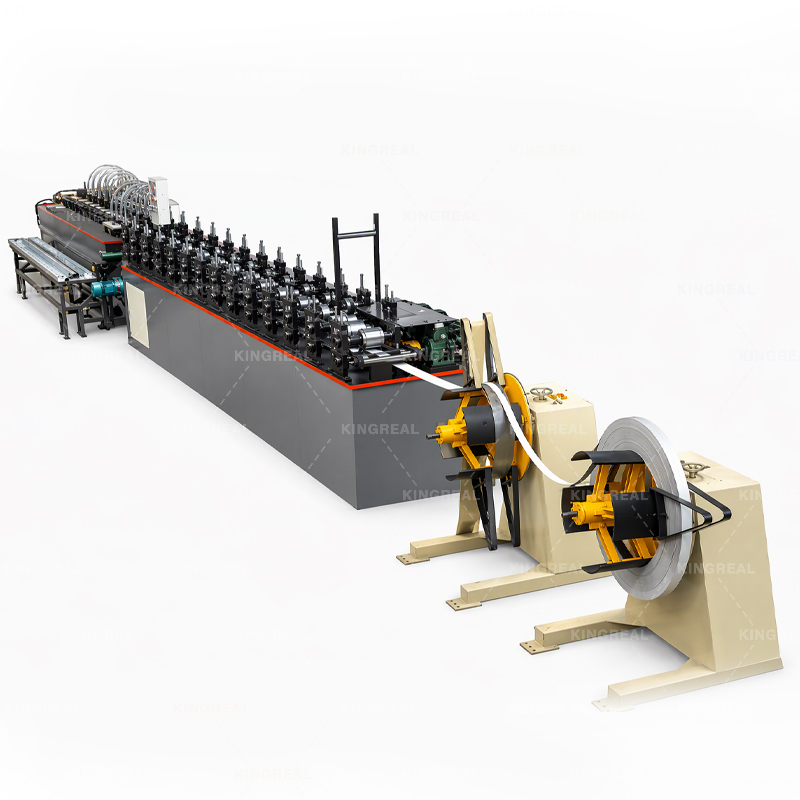
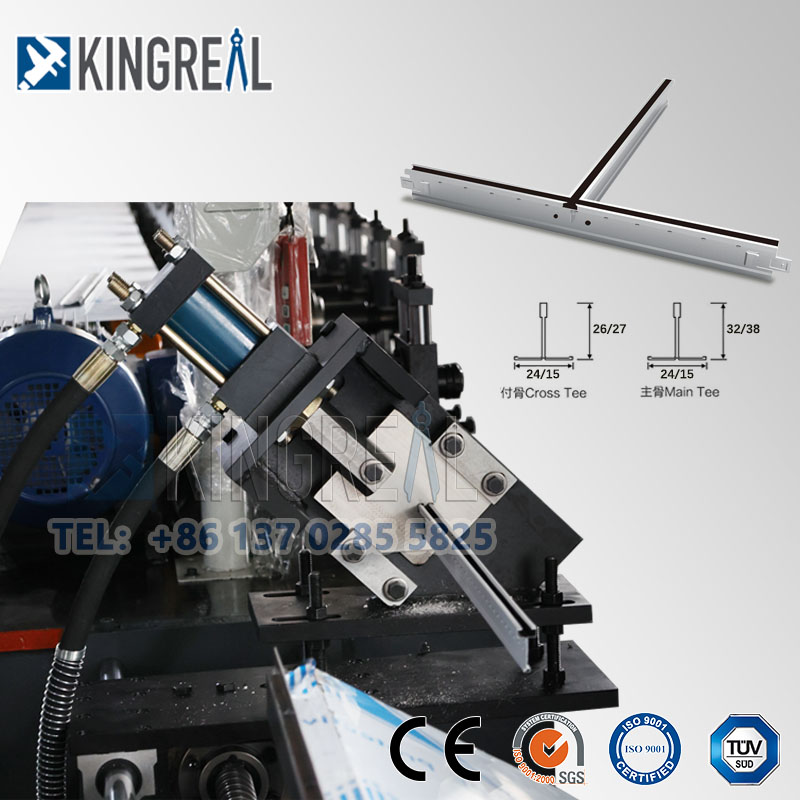
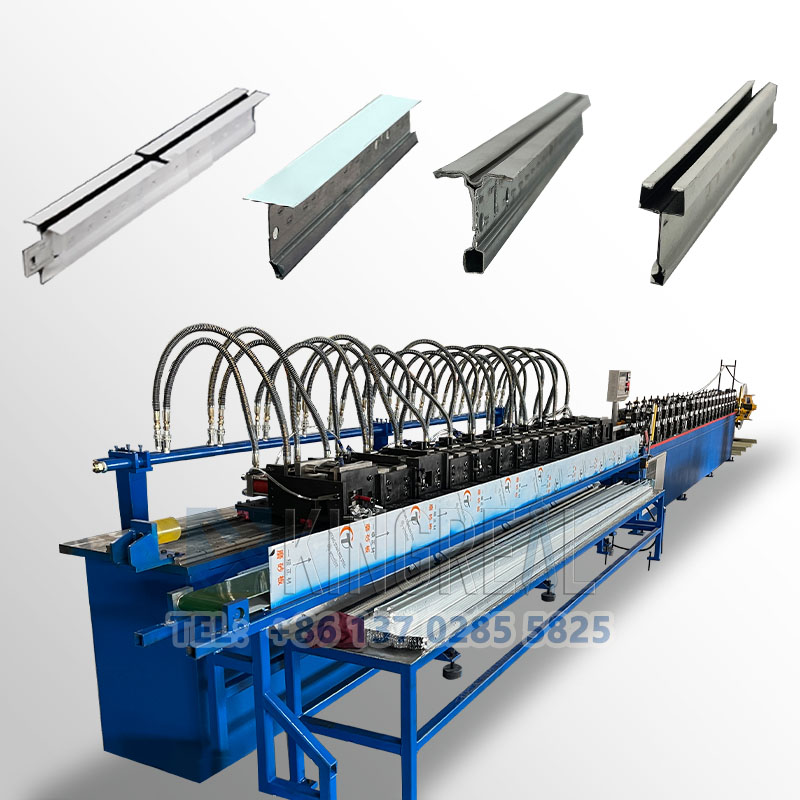
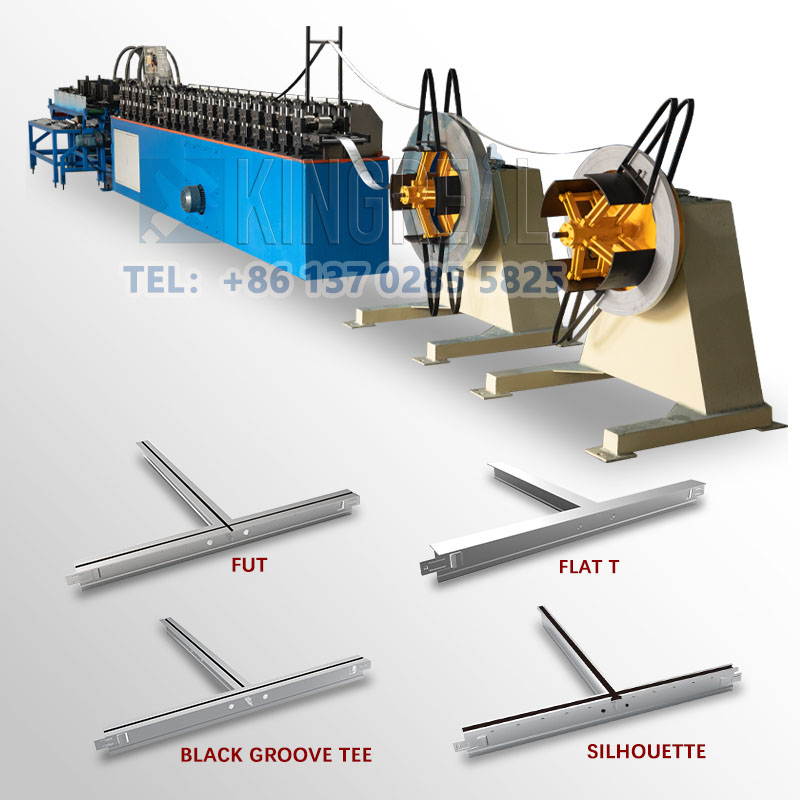
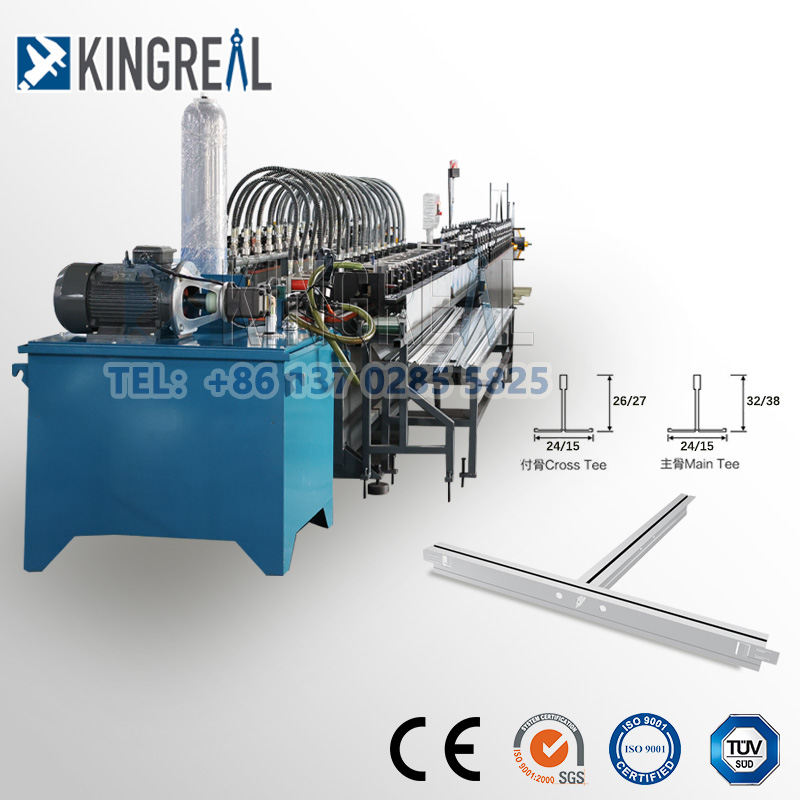
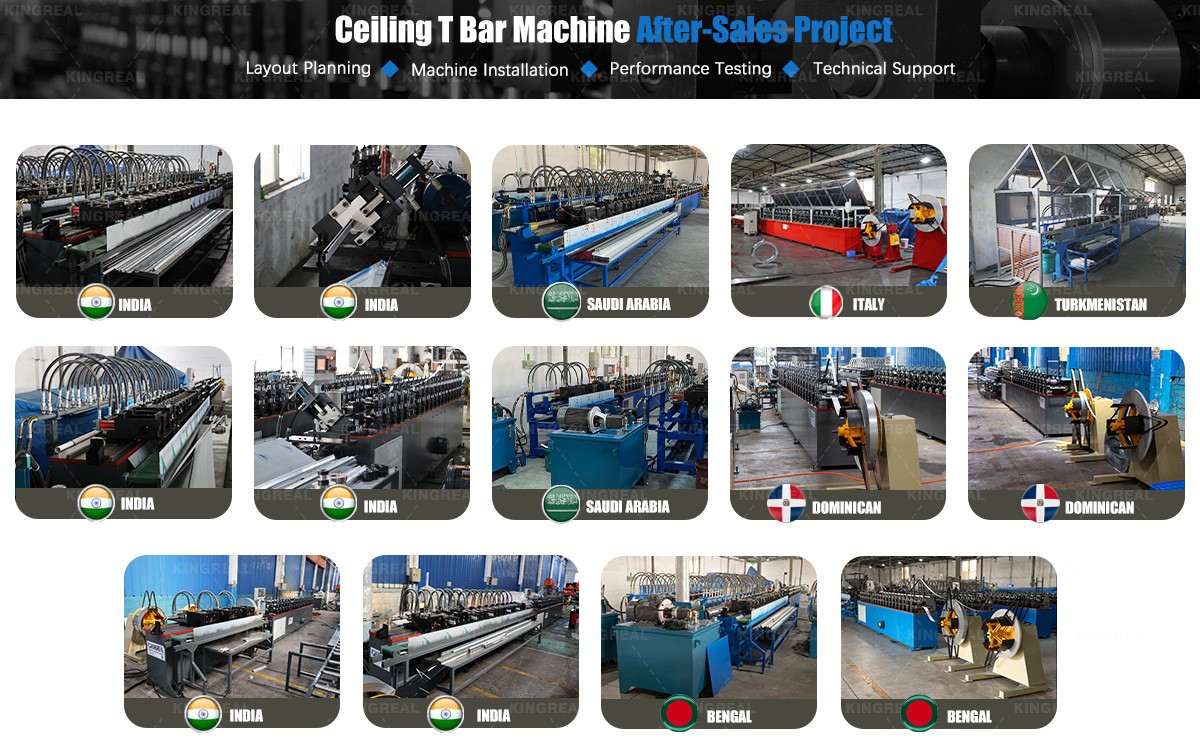
To date, KINGREAL has successfully delivered ceiling t bar machines to numerous countries—including India, Saudi Arabia, Italy, Turkmenistan, the Dominican Republic, and Bangladesh—enabling clients to achieve high-volume, efficient production of ceiling T grids and fully meet the processing requirements for both main and cross tees. India stands out as one of KINGREAL core markets for this ceiling t bar machine.
KINGREAL understands the diverse requirements across different regions regarding equipment selection, finished product specifications, and product types, offering customized design and manufacturing services tailored to each client's specific operational conditions.
The arrival of the ceiling t bar machine at the client's factory marks not the end of the service, but the beginning of KINGREAL after-sales support. KINGREAL technical team provides a comprehensive service package—including on-site installation and commissioning, operator training, spare parts supply, and equipment maintenance—to ensure the stable operation of the client's production line.
Complete Ceiling T Bar System Solutions
Beyond supplying high-performance ceiling t bar machine, KINGREAL offers a full suite of auxiliary equipment tailored to specific project conditions, meeting the installation requirements for various suspended ceiling systems.
●Metal Ceiling Tile Production Line & L Angle Profile Roll Forming Machine:
KINGREAL provides Metal Ceiling Tile Production Lines dedicated to producing Lay-in ceiling tiles, as well as L Angle Profile Roll Forming Machines capable of processing various specifications of wall angles.
These systems work in tandem to produce Lay-in ceiling tiles, ceiling T grids, and wall angles; once assembled, these components form a structurally sound, complete metal ceiling system.
●Open Cell Ceiling Machine:
Main t and cross t produced by KINGREAL ceiling t bar machine form the standard support grid, while open cell ceiling machines produce grilyato ceilings, which are assembled into standard 600×600mm square open-cell metal modules.
These modules can be snapped or laid directly into the ceiling T grid framework, creating a visually consistent, geometric, and open-grid aesthetic while effectively concealing the overhead structural slab.
KINGREAL One-Stop Service
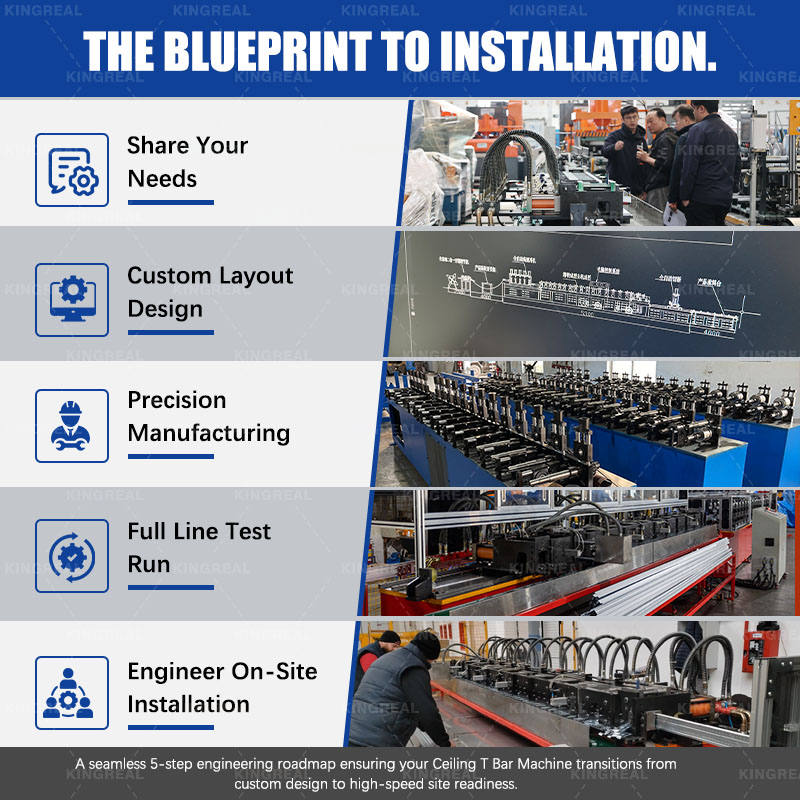
KINGREAL provides clients with a comprehensive, one-stop service covering the entire process—from pre-sales consultation and in-process support to after-sales service.
Our service begins with accompanying the client to visit the factory, where we conduct on-site equipment inspections and performance assessments. We then thoroughly analyze the client's project requirements to develop a customized equipment manufacturing plan, with production and commissioning carried out by our in-house team.
Upon completion, KINGREAL invites the client to the facility for ceiling t bar machine acceptance testing to ensure the machinery perfectly matches actual operating conditions and consistently produces high-quality finished products. Shipment is arranged only after the client has verified and approved the ceiling t bar machine.
Following delivery, KINGREAL maintains ongoing monitoring of the ceiling t bar machine's operational status and ensures rapid response times, providing a comprehensive range of services including installation and commissioning, operation training, spare parts supply, and maintenance and repair.
FAQ About Ceiling T Bar Machine
Q1:What safety protection is provided?
A1:The ceiling t bar machine can be equipped with protective shield, light curtain, and emergency stop device to prevent accidents.
Q2: What is the typical maintenance needed for the ceiling t grid machine?
A2: Ceiling t bar machine maintenance includes tasks such as lubricating bearings, cleaning debris from the forming stations, and replacing worn parts. Regular training on machine operating procedures for operators is also required.
Q3: How many people do you need to run a ceiling t grid machine?
A3: Once the ceiling t bar machine is turned on, only one worker is needed at the output station to organize the finished products.