
Suspended ceiling roll forming machines are designed for the mass production of various ceiling types—such as linear strip ceilings, baffle ceilings, and open cell ceilings—and are widely used in shopping malls, office buildings, airports, and hotels.
As a professional supplier of suspended ceiling making machine, KINGREAL offers customized solutions tailored to specific client needs, including project scale, product positioning, and production environments.
This article provides a detailed guide on how to select the right suspended ceiling roll forming machine, helping businesses make precise and suitable purchasing decisions.
Clarify Business Requirements
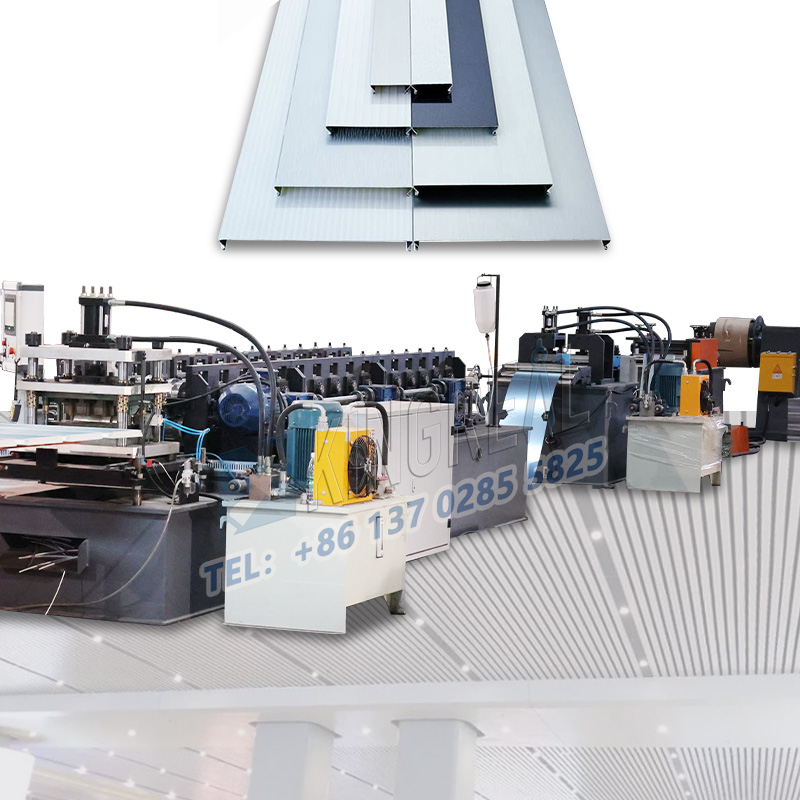
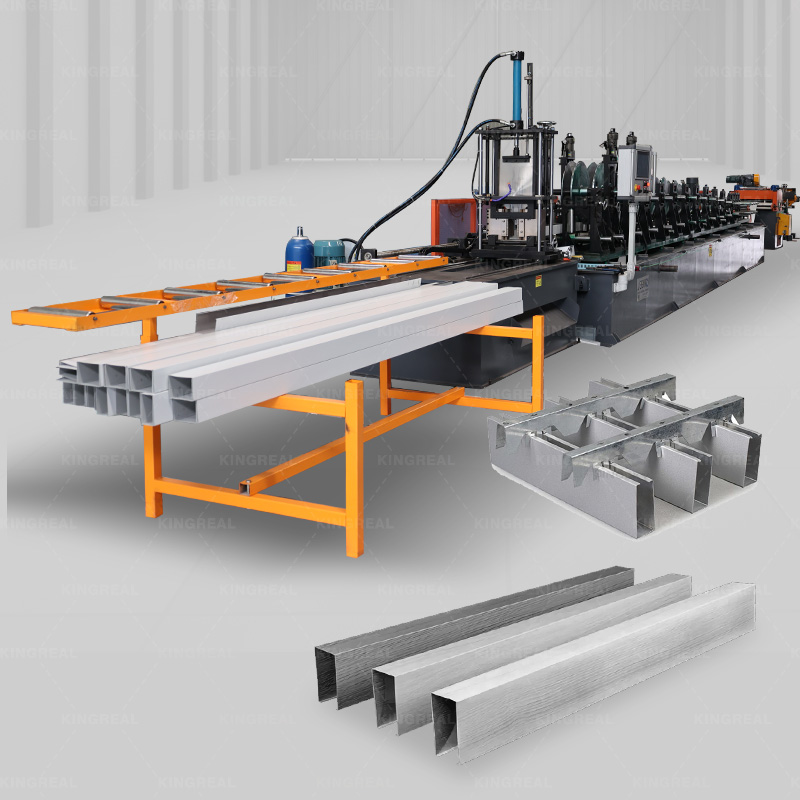
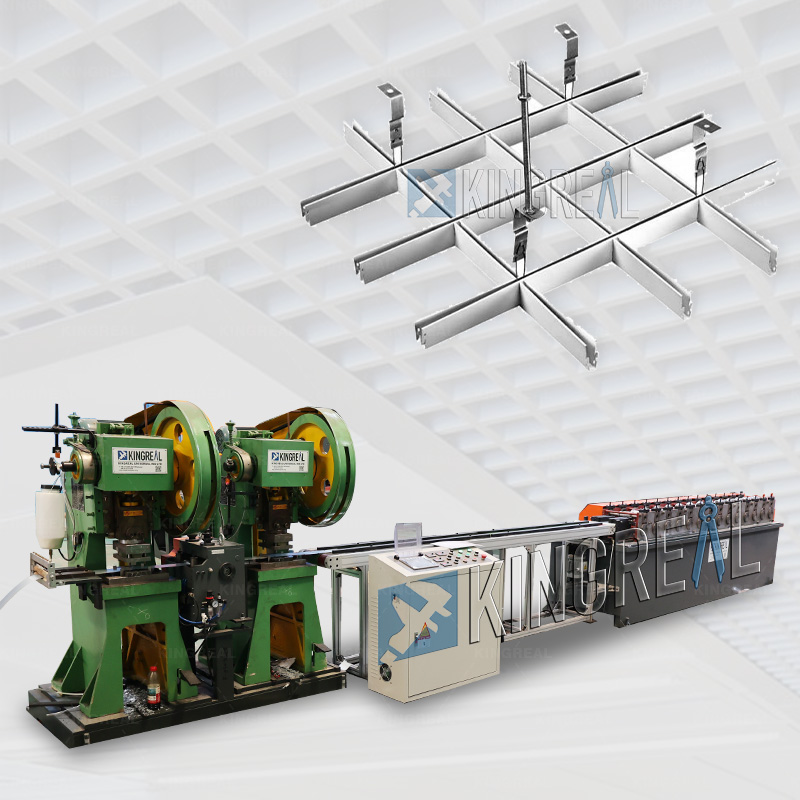
Suspended ceiling making machines can be categorized based on the specific product type they manufacture: linear strip ceiling machine, open cell ceiling machine, and baffle ceiling machine.
Enterprises with different business models have distinct requirements for these suspended ceiling roll forming machines. Small-to-medium-sized factories focusing on a single product category may only need one specialized machine to meet their production needs. Conversely, large building material enterprises, retailers, and major contractors—who handle production, sales, and project support—require a comprehensive product range. They need to configure multiple suspended ceiling making machines (linear strip ceiling machine, baffle ceiling machine, and open cell ceiling machine) to enable full-category production and meet the diverse procurement needs of various clients.
Focus on Key Features
(1) Assess Production Needs
Regarding output, accurately calculate your current average daily and monthly production volumes. Factor in future business expansion trends to estimate capacity growth, using this data to determine the required production speed and capacity configuration of the suspended ceiling roll forming machine.
Regarding product diversity, clarify your production positioning: determine whether you will manufacture products with a single specification and material, or if you require flexible production capabilities to handle multiple categories, specifications, and materials.
(2) Analyze Budget Constraints
In terms of cost structure, the total cost of a suspended ceiling making machine encompasses the initial investment, installation and commissioning, ongoing maintenance, and the cost of replacing consumables. Enterprises should align their equipment configuration with their budgets, ensuring that core performance standards for the suspended ceiling roll forming machine are met while avoiding either excessive investment or the purchase of low-quality, cheap equipment that could lead to skyrocketing future costs.
In terms of Return on Investment (ROI), high-performance suspended ceiling making machines offer high production precision and low defect rates, effectively minimizing raw material waste and reducing production costs. Suspended ceiling roll forming machines with high levels of automation reduce the need for manual labor, thereby saving on labor expenses. Furthermore, stable production capacity and high operating speeds enable enterprises to handle larger order volumes and increase revenue.
Evaluating Suspended Ceiling Making Machine Quality
The quality of a suspended ceiling roll forming machine is determined by several key components, including the frame structure, core roll-forming parts, the drive system, and surface treatment processes; the quality of each component impacts the machine's overall operational performance.
First is the frame structure, which must possess exceptional stability and load-bearing capacity. It must effectively withstand the continuous stress and high-frequency vibrations generated during the roll-forming process, preventing issues such as deformation, wobbling, or misalignment after prolonged operation.
Next are the rollers and drive shafts. These components should be constructed from high-hardness quenched steel or alloy materials and undergo precision grinding and heat treatment to ensure superior wear resistance, deformation resistance, and corrosion resistance. High-quality rollers maintain consistent forming profiles over the long term, ensuring uniform dimensions and standardized shapes across batches, with dimensional errors kept to a minimum.
Finally, the drive system—comprising critical components such as the motor, gears, chains, and drive bearings—directly influences operational stability and production efficiency. High-quality suspended ceiling making machines feature heavy-duty drive systems characterized by high load capacity, precise power transmission, and low noise levels. These systems are designed for continuous, uninterrupted production, avoiding malfunctions such as transmission stalling, insufficient power, or slippage-induced shutdowns, thereby ensuring stable output and minimizing losses associated with equipment downtime.
Finally, consider the equipment's surface treatment and coating processes. High-quality suspended ceiling roll forming machines—including both the main unit and vulnerable components—undergo anti-rust, anti-corrosion, and wear-resistant coating treatments. These measures effectively withstand harsh workshop conditions such as humidity and dust, preventing rust, aging, and damage, thereby significantly extending the suspended ceiling making machine's overall service life.
Consider Automation Needs
Standard automated suspended ceiling roll forming machines integrate four core components—a decoiler, a leveler, a roll forming machine, and a cutting station—to enable a fully automated workflow covering metal coil loading, leveling, forming, and cutting operations.
For enterprises focused on large-scale mass production and high efficiency, suspended ceiling making machines can be equipped with automatic feeding trolley. This enables fully automated coil transport and loading, completely replacing manual handling, reducing labor intensity, and ensuring loading precision.
For enterprises requiring the production of multiple ceiling specifications, KINGREAL offers customizable, adjustable suspended ceiling roll forming machines equipped with intelligent CNC control systems. Operators simply input parameters—such as product width and length—into the control panel, and the forming rollers automatically and precisely adjust. This allows for rapid switching between specifications without manual disassembly or machine recalibration, drastically reducing changeover times, enhancing production flexibility, and perfectly meeting diverse product manufacturing needs.
Make an Informed Decision
First, enterprises should carefully evaluate a supplier's industry experience and project portfolio. Priority should be given to manufacturers deeply rooted in the suspended ceiling making machine sector with a track record of successful, proven projects. It is essential to verify past sales cases, customer testimonials, and operational feedback regarding their suspended ceiling roll forming machines to confirm the supplier possesses mature R&D, manufacturing, and customization capabilities capable of precisely meeting specific production requirements. Secondly, it is advisable to conduct an on-site visit to the supplier's factory to gain a firsthand understanding of the manufacturing processes, assembly workflows, quality control standards, and production scale.
By examining the craftsmanship details and core component specifications of the suspended ceiling making machines on the shop floor, you can assess the manufacturer's production capabilities and quality control standards, thereby avoiding the purchase of inferior machines characterized by shoddy workmanship or cost-cutting measures.
Finally, it is crucial to verify the supplier's after-sales service system. Suspended ceiling making machines operate continuously over long periods, making issues such as consumable wear, equipment adjustment, and repairs inevitable; a robust after-sales service system ensures the equipment's long-term, stable operation. You should confirm whether the supplier offers services such as installation and commissioning, technical training, equipment warranties, lifetime maintenance, and rapid response times. This ensures that any problems encountered during operation can be resolved promptly without disrupting production schedules.
As a professional manufacturer dedicated to the R&D and production of suspended ceiling making machines, KINGREAL has deep industry expertise. We specialize in developing, manufacturing, and customizing suspended ceiling roll forming machines for various ceiling types—including linear strip ceiling, baffle ceiling, and grilyato ceiling. With mature production processes and extensive project implementation experience, we provide tailored, one-on-one solutions to meet the specific needs and scales of different clients. KINGREAL also maintains a comprehensive service system covering pre-sales consultation, solution customization, installation and commissioning, technical training, and lifetime maintenance.
Please feel free to contact KINGREAL for more information regarding specifications, pricing, and customization options for suspended ceiling making machines.