


What Does a Roll Forming Machine Do?
2026-04-27 12:00A roll forming machine feeds large coils of metal stock through a series of roller sets; through this rolling process, the material is shaped and formed into the desired final cross-sectional profile. These roll forming machines enable the efficient, large-scale production of precise, consistent, and complex profiles, finding application across a wide spectrum of industries.
Introduction to Roll Forming Machines
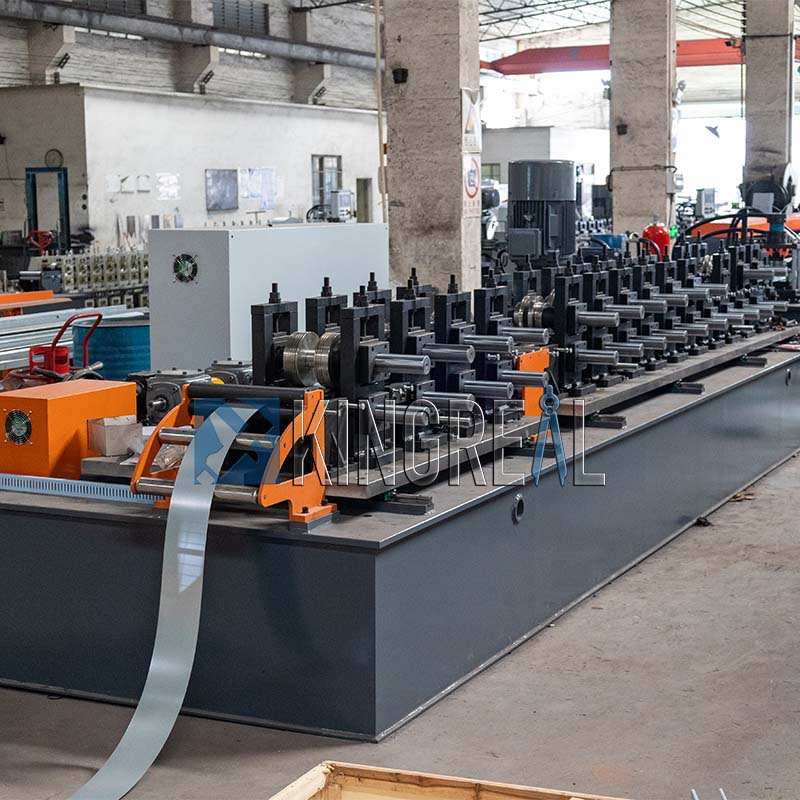
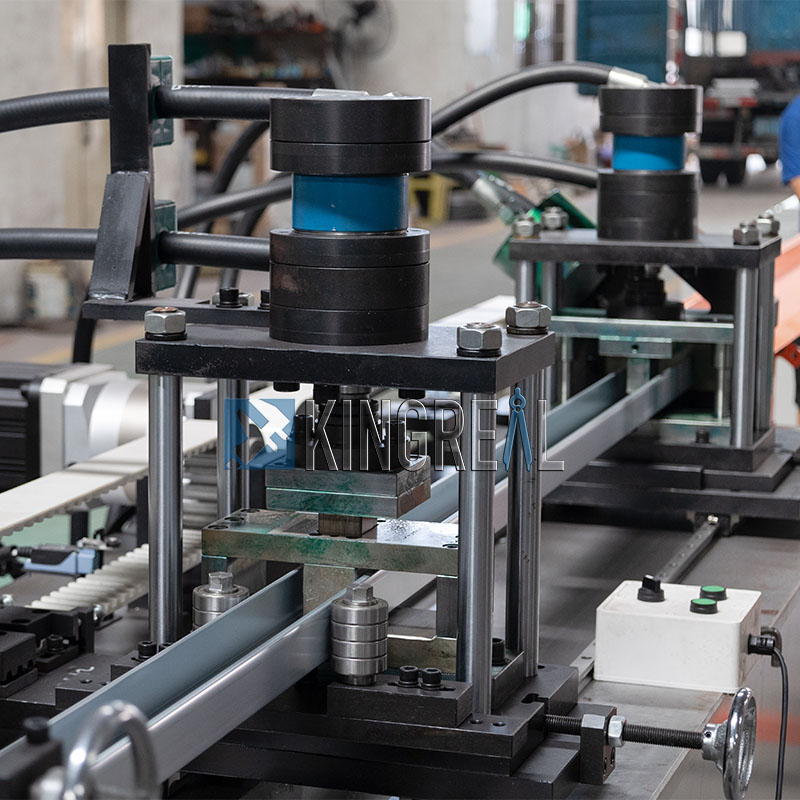
A roll forming machine typically consists of a decoiler, a leveling machine, the main forming unit, a shearing station, a hydraulic system, and an electrical control system. It facilitates a fully automated processing workflow, spanning the entire journey from raw material input to finished product output. Depending on the specific requirements of the finished product, the roll forming machine may also be equipped with auxiliary components—such as a punching station—to integrate punching and forming operations into a single process. This integration further boosts production efficiency and minimizes the need for subsequent processing steps. Notably, the cross-sectional profile of the product is determined by the specific geometry of the roller dies; while each roll forming machine is typically configured to produce only one specific cross-sectional shape, the base width dimension can often be adjusted to produce finished products of varying sizes.
KINGREAL specializes deeply in the field of roll forming machine, offering customized machine designs tailored to meet the unique requirements of each client. KINGREAL roll forming machines provide exact and accurate processing outcomes whether handling materials from thin coils (as fine as 0.35mm) to thick coils (up to 4mm) or processing various metal types including stainless steel, GI, or aluminum. Moreover, to meet a range of product specifications, KINGREAL can fit roll forming machine extra parts to create a large array of final products—including profiles with reinforcing ribs, embossed patterns, or imprinted brand logos.
Applications of Roll Forming Machines
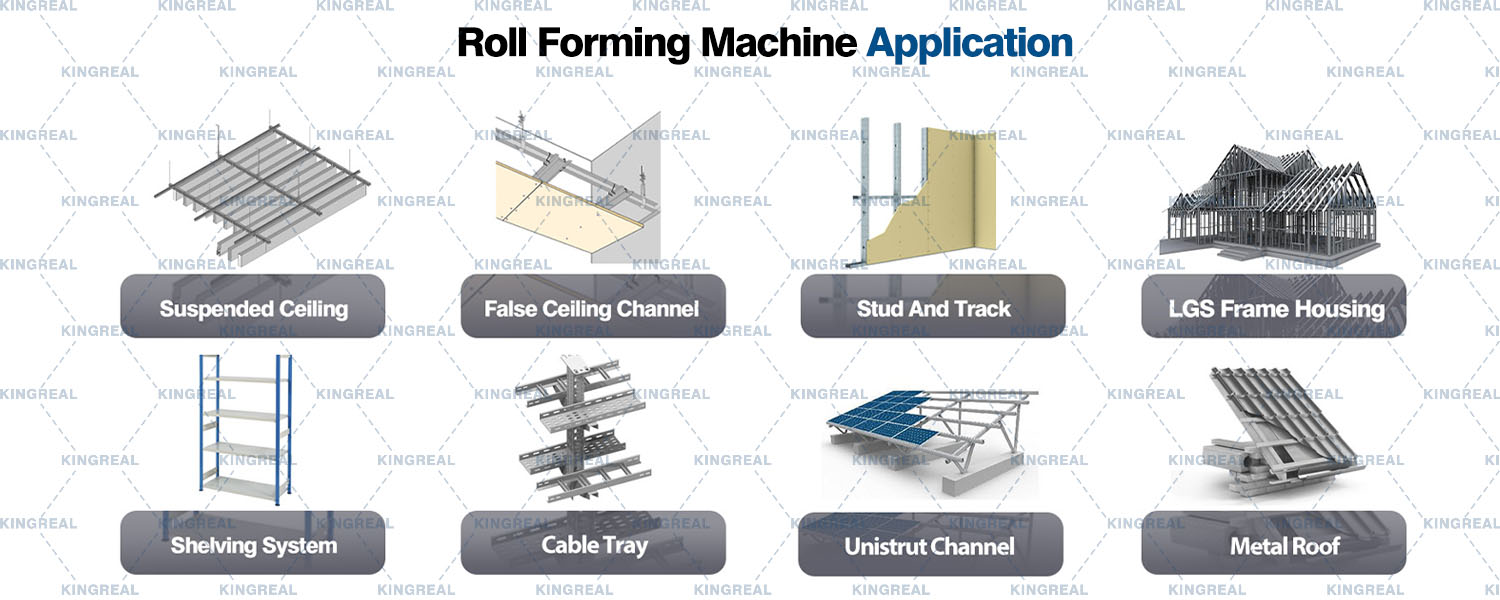
The scope of applications for roll forming machines is continuously expanding. Thanks to their diverse range of configurations and stable operational performance, KINGREAL roll forming machines are capable of meeting the production demands of numerous industries.
Specific application sectors include: metal roofing tiles, false ceiling channels, studs and tracks, solar channels, cable trays, light gauge steel framing profiles (such as the C89/C140 series), shelving uprights, shelving beams, supermarket shelf panels, air damper frames, air damper blades, and metal door frames, among others.
Advantages of Using a Roll Forming Machine
High Flexibility
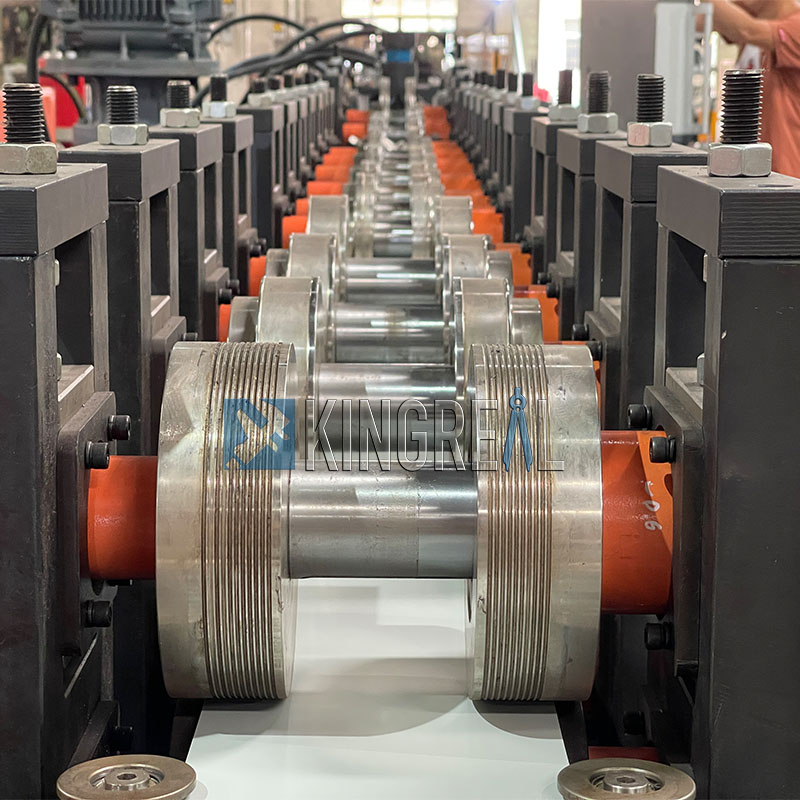
A single roll forming machine can typically produce finished products of various specifications without the need to replace the entire piece of equipment. By simply swapping out the roller sets—or by making quick parameter adjustments on the control panel, which automatically adjusts the roller width—the production of different product specifications can be achieved with ease. This offers convenient and efficient operation, significantly enhancing production flexibility and adaptability. Furthermore, the roll forming machine features a user-friendly control panel interface, allowing operators to freely adjust production parameters such as output volume, product specifications, and production speed. Customers can fine-tune the machine's production parameters in real-time based on the latest status of their projects—for instance, adjusting production speed according to project progress or modifying product specifications to meet specific client demands—thereby ensuring that the manufactured products precisely align with project requirements and preventing issues such as product stockpiling or specification mismatches.
High Speed
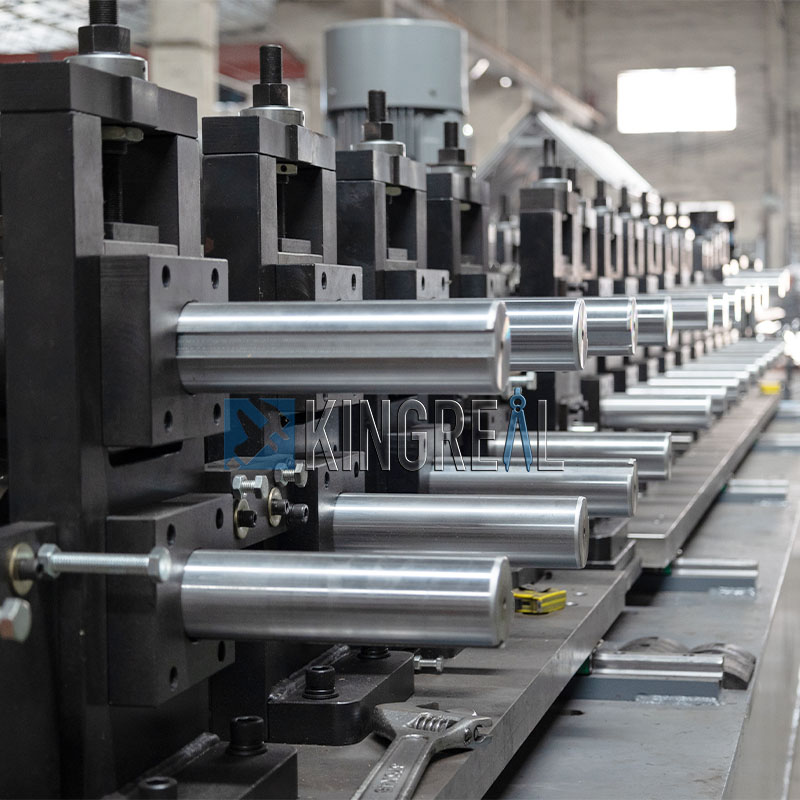
Among the elements that affect a roll forming machine's operating speed are the equipment arrangement, the particular manufacturing process, and the materials used. Various roll forming machines have different production rates; in particular, some high-speed models can attain speeds of up to 120m/min. This feature meets the demands of big businesses production by enabling the quick creation of high quantities of finished products within a limited time-frame.
For businesses needing the mass manufacturing of metal profiles, the high-speed benefit of a roll forming machine speeds up order fulfillment and lowers production cycles. Furthermore, the machine has stable performance free from problems like stalling or mechanical failure even during high-speed running, so guaranteeing continuous production continuity.
High Precision
Leveraging high-quality components and advanced machining technologies, roll forming machines achieve exceptionally high levels of forming and cutting precision. This ensures that the resulting profiles feature smooth surfaces, burr-free edges, and a high degree of dimensional consistency, allowing them to be directly integrated into client projects without the need for subsequent secondary processing.
The forming rollers equipped on the machine are manufactured from Cr12MoV mold steel. This particular quality of die steel is distinguished by great strength, great wear resistance, and remarkable toughness. After a particular heat treatment, the rollers reach a hardness level of HRC 58–60, allowing them to resist continuous wear and tear from rolling processes. This guarantees the long-run stability of the roller accuracy and so avoids any decline in product generating accuracy resulting from operating wear. Furthermore, the forming rollers are precision-machined using CNC equipment; renowned for their high processing accuracy and robust stability, these CNC machines enable precise control over the dimensions and geometric profiles of the forming rollers. Furthermore, the blades within the roll forming machine's shearing station are also crafted from Cr12MoV material. Following a quenching treatment, these blades achieve a hardness of HRC60, enabling precise and rapid shearing operations that ensure minimal length deviation in the finished products, as well as flat, burr-free edges.
KINGREAL is dedicated to providing clients with customized roll forming machine solutions. Whether the requirement involves processing metals of varying materials and thicknesses, or producing finished products of diverse specifications and styles, KINGREAL roll forming machines can be precisely tailored to meet those needs. If you are looking to purchase a roll forming machine, please contact KINGREAL directly. Simply provide us with details regarding your finished product requirements and technical drawings; we will respond promptly to offer you professional and efficient customization services for your roll forming machine.