

Light Gauge Steel Frame Machine
1)What is a Metal Framing Machine?
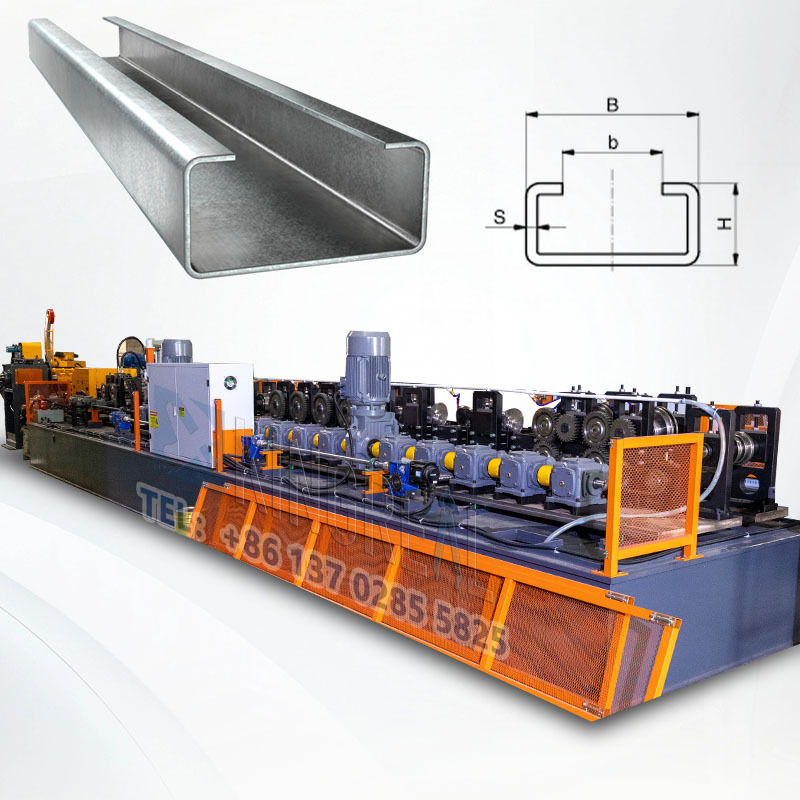
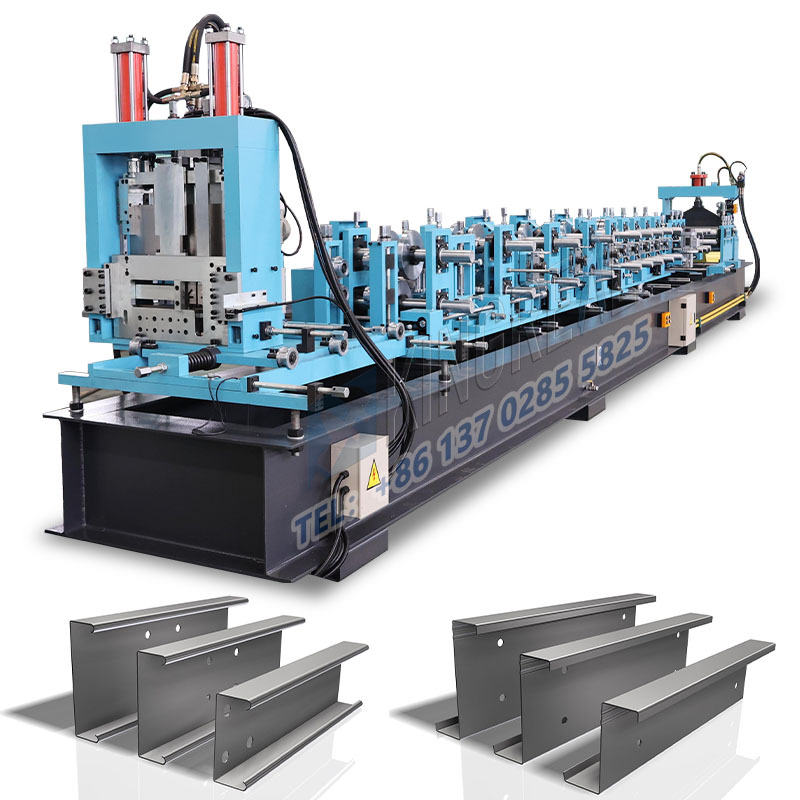
A metal framing machine is a device that uses advanced roll forming, cutting, and punching processes to process steel coils into precise structural components. This steel framing machine not only efficiently produces customized high-strength building frames, but also produces lightweight profiles with excellent durability and a long service life, making them ideal for prefabricated structures in modern buildings. Lightweight steel frames processed by metal framing machines are widely used in residential, warehouse, modular building, and commercial projects, enabling rapid and efficient construction. The steel framing machine automatically passes steel coils through special molds and rollers to form prefabricated building profiles of various specific shapes. The strength and stability of these profiles allow buildings using lightweight steel structures to withstand various natural and man-made challenges, making them a popular choice in the construction industry.
2)How Does a Metal Framing Machine Work?
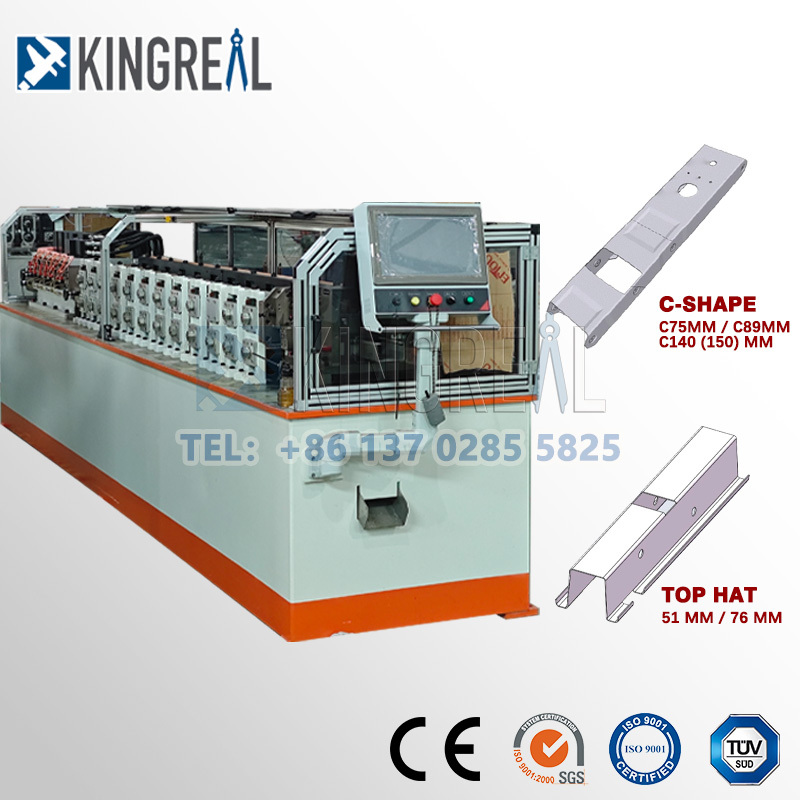
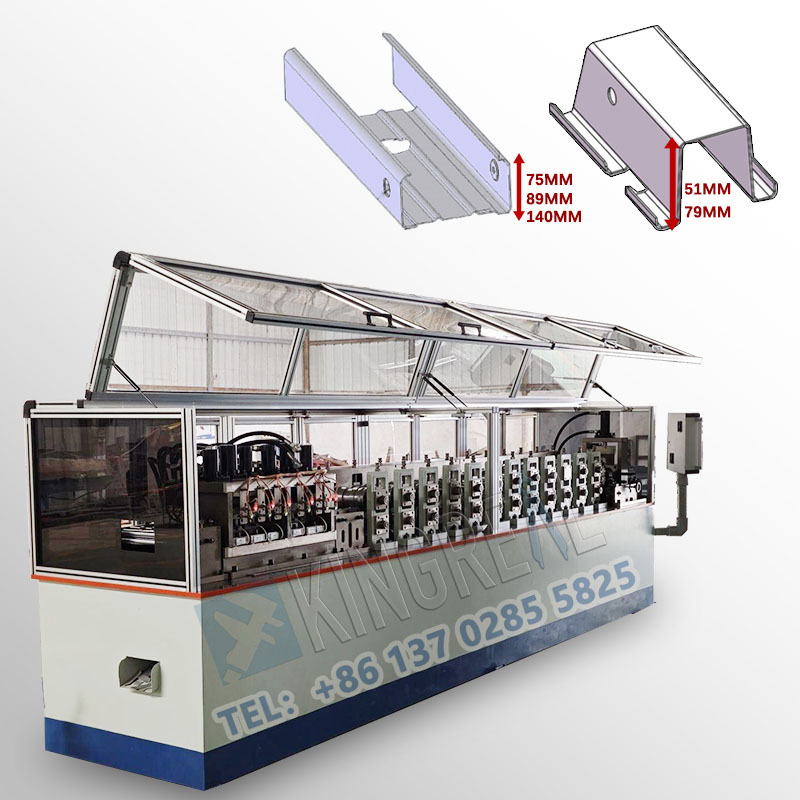
An advanced steel framing machine typically consists of multiple precision components, including a decoiler, punching station, roll forming machine, and cutting station. These components work together to produce top hats or c-shaped profiles. During operation, steel framing machines primarily process materials such as galvanized and aluminized zinc sheets. The width and thickness of the coils depend on specific project requirements, typically ranging from 0.7 mm to 2 mm, and sometimes up to 2.5 mm. During the forming process, the steel framing machine punches holes, recesses, and cuts according to the specifications in the CAD/CAM design documents. This series of processing steps, combined in a continuous production process, greatly improves the processing efficiency of the metal framing machine. After forming, the steel framing machine cuts the cross-section to precise lengths with millimeter-level accuracy, ensuring that each profile meets the project's height requirements. This integrated process significantly improves both production speed and processing quality, making it highly regarded in the construction industry. Through the efficient processing of steel framing machines, builders can complete prefabrication of structures in a shorter time, thereby accelerating the overall project schedule.
3)How to Choose the Right Metal Framing Machine for Your Project?
Choosing the right metal framing machine for your project requires first determining the machine's compatibility with your actual needs. This includes factors such as profile type, hole type, production speed, material thickness, and level of automation. KINGREAL offers in-depth customer needs analysis services to develop customized steel framing machine manufacturing solutions.
First, customers need to confirm the application areas of the profiles to be produced, such as roof trusses, wall panels, truss beams, and floor beams. Different profiles have different design and performance requirements, so clearly defining the specific application scenario directly impacts the choice of metal framing machine.
Second, punching configuration is also a crucial consideration when selecting a metal framing machine. Different projects will have different requirements for the profile hole type. Common hole types include dimple hole, chamfer cut, web notch, lip cut, service hole, swage, shear, and bolt hole. Therefore, when customers provide drawings, KINGREAL engineers can manufacture precise punching dies according to the requirements, ensuring that the produced profiles have the necessary functionality and adaptability.
In addition, KINGREAL also offers mobile metal framing machines. This innovative equipment, resembling a small van equipped with a steel framing machine and material rolls, can be deployed directly to construction sites for production. The advantage of these mobile metal framing machines lies in their ability to enable on-site production, quickly respond to customer needs, and significantly improve production efficiency. This flexibility allows builders to implement construction according to the actual schedule, meeting customers' demands for efficient and timely delivery.