


Metal Cut To Length Line For Automotive Industry
2025-12-02 10:31"Metal cut to length lines are precision coil processing equipment commonly used in the automotive industry, primarily for uncoiling, straightening, cutting, and stacking large metal coils used in automobile manufacturing. In the automotive industry, metal cut to length machines provide manufacturers with high-quality metal sheets that offer high surface quality, burr-free cuts, optimal flattening effects, and neat, standardized finished product stacks, ensuring no collisions or scratches. Because the precision sheets produced by metal cut to length lines undergo secondary processing, they can be used to manufacture important automotive components such as chassis, axles, suspension parts, doors and hoods, fuel tanks, interior parts, and body panels, thus enjoying widespread market demand."
▎Basic Introduction to Metal Cut to Length Line in Automotive Industry
The workflow of a metal cut to length machine mainly includes four steps: uncoiling, leveling, cutting, and stacking, aiming to produce high-quality metal sheets. These metal cut to length lines are highly automated, typically requiring only 1 to 2 people to operate. They offer high cutting precision, with the flatness error of the sheared edges controlled within 0.05 mm, fully meeting the automotive industry's acceptable error requirements for sheet metal. The maximum operating speed of metal cut to length machines can reach 80m/min, providing the automotive industry with large-scale metal sheet processing capabilities.
▍Metal Cut to Length Line Applications in Automotive Industry
Flexible material adaptability, metal cut to length machines process a range of metal coils including steel, aluminum, copper, magnesium, titanium, and alloys to different thicknesses and diameters. The sheet metal produced can be more treated (such as forming, stamping, and bending) to finally produce a range of structural components utilized inside and exterior of automobiles including pillars, roof beams, reinforcements, and seat structures. These parts help to improve vehicle stability, therefore guaranteeing general performance and safety.
The ideal material for enclosed panel applications is high-quality sheet metal made by metal cut to length lines. Sheet metal gives automotive design both functionality and aesthetic whether it be door panels, fenders, roofs, tailgates, or hoods. This adaptability enables one to personalize the desired look and feel.
▍Types and Selection of Metal Cut to Length Line
In the automotive industry, manufacturers typically select customized metal cut to length machines that match their specific production needs and projects. The following are common shearing line types chosen by automakers:
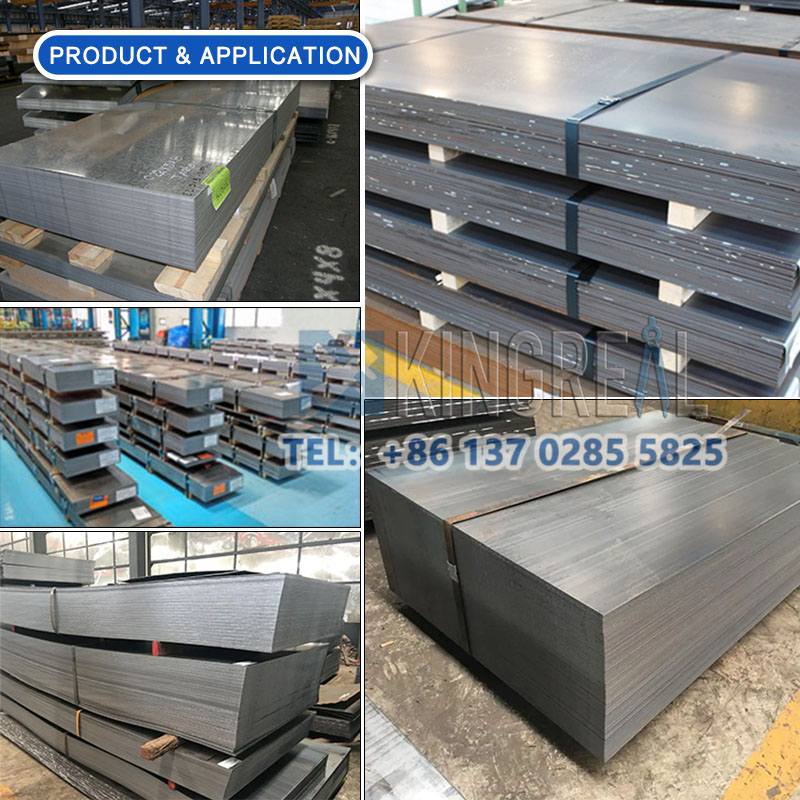
(1) Metal Cut to Length Line Selection Based on Material
The automotive industry requires various metal sheets to manufacture different finished products, which is crucial for improving vehicle performance, safety, and overall quality. Stainless steel cut to length machines and steel cut to length lines are KINGREAL signature metal cut to length machines. Furthermore, KINGREAL can provide metal cut to length lines specifically for processing aluminum, stainless steel, cold-rolled steel, galvanized steel, copper, etc., and can also design metal cut to length machines compatible with processing multiple materials.
● Considerations for Metal Material Selection in Metal Cut to Length Line
1
Application of Aluminum in Automotive Industry
Lightweight, high strength, and corrosion resistance make aluminum the most often utilized substance in the automobile sector. Reducing carbon emissions can be accomplished in automobiles by use of aluminum, which also lowers fuel usage.
Though light, aluminum is exceptionally strong, hence it is perfect for producing vehicle parts needing high structural integrity such engine hoods, doors, and fenders. Its thermal conductivity also helps to improve the heat dissipation performance of engine parts, hence increasing vehicle performance.
2
Applications of Steel Sheet in Automotive Industry
Steel is the oldest and most widely used metallic material in automotive parts manufacturing, possessing extremely high strength and durability. Currently, steel is widely used in the manufacture of vehicle frames and structural components.
Steel comes in various grades, each with different characteristics, such as the balance between strength and weight, making it suitable for a variety of automotive manufacturing scenarios. High-strength steel is favored for its excellent energy absorption properties and is often used in front and rear collision structures, while stainless steel is widely used in the manufacture of exhaust systems and mufflers.
3
Applications of Copper Sheet in Automotive Industry
With great electrical conductivity, copper is perfect for interior car parts including electrical connections.
Copper's remarkable thermal conductivity also makes it a recommended material for radiators and heat exchangers, components needing heat dissipation.
Cold-rolled steel sheet provides designers a range of material alternatives with varying strengths so that they may choose the best material depending on application demands. Cold-rolled steel sheet is also very sought after because of its great formability, high strength, and superb weldability.
4
Applications of Galvanized Steel Sheets in Automotive Industry
Galvanized steel sheets have a zinc protective coating, enhancing their corrosion resistance.
This type of steel is commonly used in vehicle chassis structures and enclosed panels requiring additional rust prevention and environmental corrosion resistance.
(2) Metal Cut to Length Line Selection Based on Thickness
The thickness of sheet metal used in the automotive manufacturing industry varies widely, typically ranging from 0.4 to 4.0 mm. Common thicknesses for steel used in vehicle bodies range from 0.6 to 2.0 mm, while the thickness of commonly used cold-rolled materials for automotive panels is typically between 1.2 and 2.0 mm. The selection of sheet metal of different thicknesses is based on the functional requirements of various parts of the vehicle, as well as factors such as weight reduction and improved corrosion resistance.
KINGREAL simple cut to length line (suitable for thicknesses of 0.2-3 mm) and medium duty cut to length machine (suitable for thicknesses of 0.3-6 mm) can well meet customers' production needs.
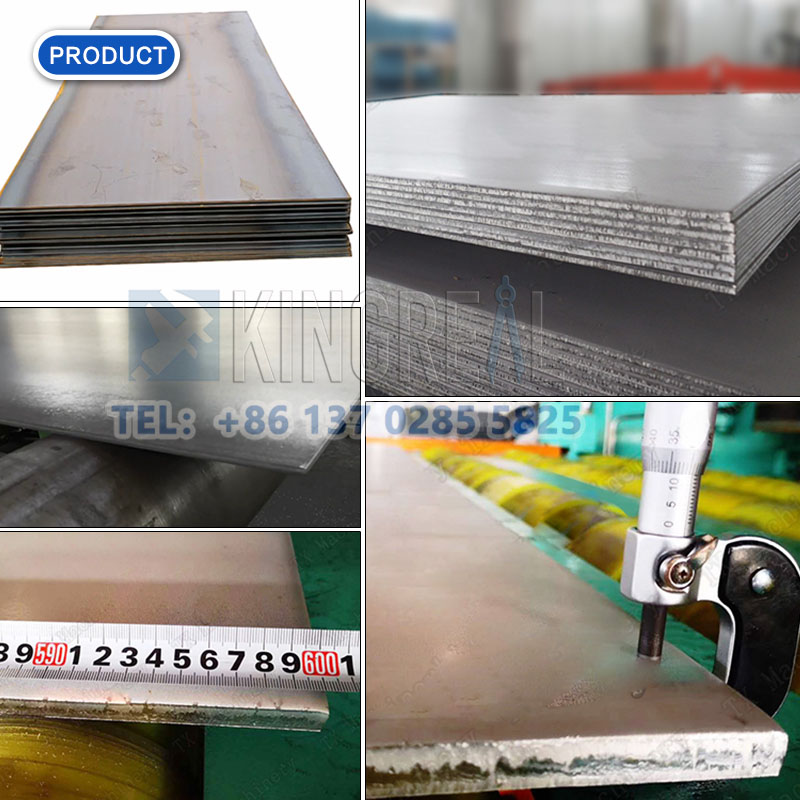
●Considerations for Material Thickness Selection at Metal Cut to Length Line
For automotive body structural components, such as the frame and crossbeams, thicker steel plates are typically chosen, generally between 1.0 mm and 2.0 mm thick. This is because these parts need to withstand greater stress and impact, and thicker steel plates ensure sufficient strength and rigidity for the vehicle body, thus providing a safe driving environment for occupants.
For exterior panels, such as the hood and door panels, the steel plate thickness is typically between 0.6 mm and 1.0 mm. These components need to maintain a certain strength to withstand minor collisions and scratches during daily use, while also considering reducing vehicle weight to improve fuel economy or increase the driving range of electric vehicles; therefore, excessively thick steel plates are not used.
For interior trim components, thinner stainless steel plates are used, typically between 0.4 mm and 0.8 mm thick. These trim components primarily serve an aesthetic purpose and do not require high strength; thinner steel plates can simultaneously meet aesthetic requirements and reduce costs.
KINGREAL can provide customized metal cut to length lines for automotive manufacturing customers based on specific project needs. KINGREAL metal cut to length machines deliver higher-quality parts to automakers that are more wear-resistant, corrosion-resistant, thinner, and have greater structural integrity. By enabling large-scale production of high-quality sheet metal at low cost, the metal cut to length machines improve processing accuracy and repeatability, reduce human error, and minimize material waste. These advantages result in a more abundant supply of sheet metal, thereby reducing production costs and making automobiles and their components more affordable. Furthermore, the ease of metal cut to length machine maintainability and replacement reduces maintenance costs.
If you are looking for an advanced metal cut to length line for the automotive industry, don't hesitate to contact KINGREAL today!